

When cat owners search “can cats eat wheatgrass,” they are usually trying to understand whether this green plant is safe or beneficial for their pets. Cats are naturally curious animals, and many of them are attracted to grass-like plants. Wheatgrass is often seen in homes, pet stores, and even cat cafes, which makes people wonder if it is actually good for cats or just another decorative plant.
Understanding wheatgrass in relation to cats is important because not all plants are safe for pets. Some plants are harmless, some are beneficial, and some can cause digestive issues depending on how they are consumed. Wheatgrass falls into an interesting category because it is generally considered safe, but its effects vary depending on the cat’s health, behavior, and how much is eaten.
To fully answer whether cats can eat wheatgrass, it is important to look at how cats behave around plants, what wheatgrass actually is, and how it interacts with a feline digestive system.
What Exactly Is Wheatgrass?
Wheatgrass is the young green shoot of the wheat plant, scientifically known as Triticum aestivum. It is usually harvested early, before the wheat grain develops. At this stage, it is soft, tender, and full of chlorophyll, vitamins, and plant-based nutrients.
For humans, wheatgrass is often consumed as juice or added to health drinks due to its nutrient content. It is considered a “super green” in many health communities.
However, cats do not process plant nutrients the same way humans do. Their bodies are designed primarily for meat digestion. This means that even though wheatgrass contains vitamins, cats do not rely on it for nutrition.
Instead, cats interact with wheatgrass more through instinct and behavior rather than nutritional need.
Why Cats Are Attracted to Wheatgrass
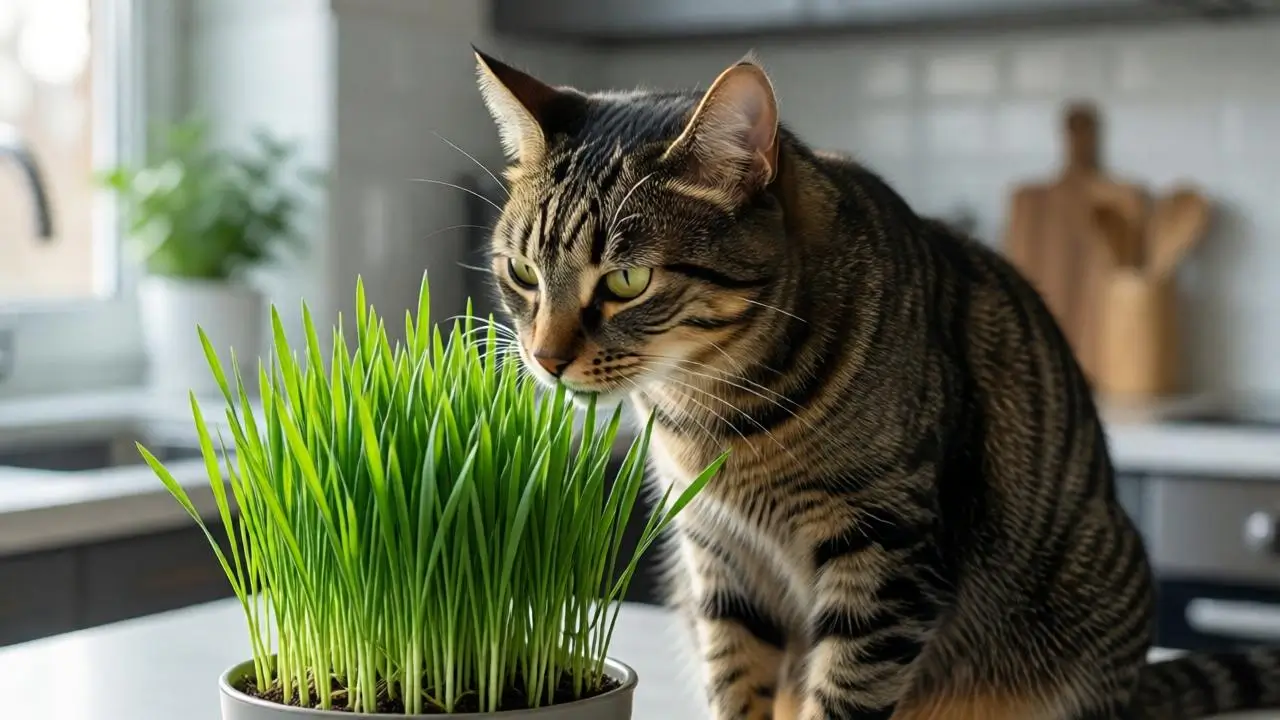
Many cat owners notice that their pets show interest in wheatgrass as soon as it is placed indoors. This behavior is completely natural and has several possible explanations.
One reason is texture. Cats often enjoy chewing on grass-like plants because of their soft, fibrous structure. Wheatgrass is gentle and easy to chew, making it appealing.
Another reason is instinct. In the wild, cats sometimes consume small amounts of plant material indirectly through prey. This may influence their curiosity toward grass-like plants.
Some experts also believe that cats may use grass as a way to help with digestion or to trigger natural cleansing behavior. While this is still debated, it is commonly observed that cats occasionally eat grass and then vomit.
Wheatgrass, being softer and safer than outdoor grass, becomes an indoor alternative that many cats naturally gravitate toward.
Can Cats Eat Wheatgrass Safely?
The short answer is yes, cats can eat wheatgrass safely in most cases.
Wheatgrass is not toxic to cats and is generally considered safe for occasional consumption. Many veterinarians agree that small amounts are harmless and may even support certain natural behaviors.
However, “safe” does not mean “necessary.” Cats do not require wheatgrass in their diet for nutrition. It is more of a behavioral plant than a dietary requirement.
The key factor is moderation. If a cat eats wheatgrass occasionally, it is usually fine. If a cat consumes large amounts regularly, it may lead to mild digestive issues.
So while wheatgrass is not dangerous, it should not replace proper cat food or become a major part of the diet.
Possible Benefits of Wheatgrass for Cats
Even though cats do not rely on plants for nutrition, wheatgrass can offer some indirect benefits.
One commonly observed effect is digestive support. Some cats eat grass-like plants to help move hairballs through their system. Wheatgrass can sometimes assist in this process by stimulating digestion or triggering natural vomiting when needed.
Another possible benefit is mental stimulation. Indoor cats often lack access to natural environments. Having wheatgrass available gives them something safe to explore, chew, and interact with.
Wheatgrass may also provide trace nutrients like chlorophyll, which some believe can support freshness in breath and general well-being. However, these benefits are mild and not essential for survival.
The most important benefit is behavioral satisfaction. It allows cats to express natural instincts in a controlled and safe environment.
Risks of Feeding Wheatgrass to Cats
Although wheatgrass is generally safe, there are still some risks to consider.
One of the most common issues is vomiting. Cats sometimes eat grass-like plants to induce vomiting naturally. If a cat eats too much wheatgrass, it may upset the stomach and cause temporary discomfort.
Another concern is overconsumption. Eating large amounts of wheatgrass can lead to mild diarrhea or digestive imbalance, especially in sensitive cats.
In rare cases, wheatgrass that is not grown properly may contain mold, pesticides, or contaminants. These can be harmful to cats, so quality matters.
Also, cats with certain medical conditions, such as gastrointestinal disorders, may react differently to plant material. For these cats, even safe plants like wheatgrass should be introduced carefully.
Overall, the risks are low but not completely absent.
Indoor Wheatgrass vs Outdoor Grass
Many cat owners wonder whether indoor wheatgrass is better than outdoor grass.
Outdoor grass can sometimes be unsafe due to pesticides, pollution, or unknown plant species. Cats that roam outside may also consume plants that are not safe for digestion.
Indoor wheatgrass, on the other hand, is controlled and grown specifically for consumption. It is cleaner, safer, and easier to monitor.
This is why many pet owners prefer growing wheatgrass at home. It gives cats a safe alternative to outdoor plants while satisfying their natural curiosity.
However, even indoor wheatgrass should be monitored. Cats should not be allowed to overeat it or treat it as a meal replacement.
How Cats Typically React to Wheatgrass
Different cats react differently to wheatgrass.
Some cats simply chew on it occasionally and lose interest quickly. Others may return to it frequently, especially if they enjoy the texture.
A small number of cats may eat wheatgrass and then vomit shortly after. This is not always a sign of illness; it can be a natural response to help clear the stomach.
There are also cats that ignore wheatgrass completely. This depends on personality, age, and individual preferences.
There is no “correct” reaction. Each cat behaves based on instinct and comfort level.
Should You Include Wheatgrass in a Cat’s Diet?
Wheatgrass should not be considered a dietary requirement for cats. It is not essential for nutrition, energy, or long-term health.
However, it can be included as an optional enrichment item. Many pet owners grow wheatgrass in small pots at home and allow their cats to interact with it occasionally.
The key is supervision. Cats should not be forced to eat it, and it should not replace balanced cat food.
Think of wheatgrass as a safe plant toy rather than a food source.
Veterinary Perspective on Wheatgrass
Most veterinary opinions agree that wheatgrass is safe in moderation. It is not toxic and does not pose serious health risks for healthy cats.
Veterinarians often recommend observing the cat’s behavior after eating wheatgrass. If vomiting or digestive upset happens frequently, it may indicate sensitivity.
For cats with health conditions, especially digestive issues, consultation is always recommended before introducing any plant-based material.
Overall, wheatgrass is considered low-risk and acceptable as long as it is used responsibly.
Why Wheatgrass Is Popular Among Pet Owners
Wheatgrass has become popular in pet care because it offers a simple and natural way to satisfy feline curiosity.
It is easy to grow, inexpensive, and safe when handled properly. Many pet owners like the idea of providing something “natural” indoors that mimics outdoor grass.
It also fits into modern pet care trends where enrichment and mental stimulation are considered just as important as diet.
Because of these factors, wheatgrass has become a common addition in homes with indoor cats.
FAQs About Can Cats Eat Wheatgrass
Can cats eat wheatgrass safely?
Yes, cats can eat wheatgrass safely in small amounts. It is non-toxic and generally harmless.
Why do cats eat wheatgrass?
Cats eat wheatgrass due to natural instinct, curiosity, and sometimes to help with digestion or hairball removal.
Is wheatgrass good for cats?
Wheatgrass is not essential but may offer mild digestive support and enrichment benefits.
Can wheatgrass make cats sick?
In rare cases, eating too much wheatgrass may cause vomiting or mild stomach upset.
Should kittens eat wheatgrass?
Kittens can interact with wheatgrass, but it should be offered carefully and in very small amounts.
Is wheatgrass better than outdoor grass for cats?
Yes, indoor wheatgrass is safer because it is free from pesticides and unknown contaminants.
How often can cats eat wheatgrass?
Cats can eat wheatgrass occasionally, but it should not be a daily or primary food source.
Final Thoughts
So, can cats eat wheatgrass? The answer is yes, but with moderation and understanding. Wheatgrass is safe for cats and can be a harmless part of their environment, but it is not necessary for their nutrition.
Cats are carnivores, and their main diet should always come from high-quality animal-based food. Wheatgrass serves more as enrichment rather than nourishment.
When used correctly, it can support natural behaviors, provide mild digestive assistance, and offer indoor stimulation. However, it should always remain a small and controlled part of a cat’s lifestyle.
For pet owners, the best approach is balance—allowing curiosity while ensuring safety and proper nutrition remain the priority.
For More Visits: Animalsinfo