


When it comes to relationships in the animal kingdom, many species form lasting pair bonds, sharing responsibilities like mating, raising offspring, and protecting territory. But what about our feline friends — are cats monogamous? The answer is more complex than a simple yes or no. Cats have fascinating mating behaviors driven by instincts, environment, and biology rather than emotions like loyalty or attachment.
In this detailed exploration, we’ll uncover whether cats are truly monogamous, how their mating instincts work, and what influences their relationships with other cats and humans.
Understanding the Concept of Monogamy in Animals
Before we answer are cats monogamous, it’s important to understand what monogamy means in the animal world. Monogamy refers to a long-term pair bond between a male and a female — they mate exclusively with each other for life or for a breeding season.
Animals like swans, wolves, and penguins are known for their monogamous behavior. They share responsibilities like raising young and protecting territory. However, most mammals — including cats — are not naturally monogamous. Their mating instincts are designed to maximize reproduction rather than build lasting partnerships.
So, Are Cats Monogamous?
In simple terms — no, cats are not monogamous. Both male and female cats are polygamous by nature, meaning they mate with multiple partners. Their mating behavior is influenced by biology and the drive to reproduce rather than emotional attachment.
A female cat in heat (also known as being “in estrus”) will attract multiple males through pheromones and vocal signals. Several males may compete for her attention, and she may mate with more than one male during her heat cycle. This behavior increases the chances of successful fertilization.
As a result, kittens in a single litter can have different fathers — a phenomenon known as superfecundation.
Why Cats Are Not Monogamous
Cats’ reproductive strategies are shaped by nature. Here’s why monogamy doesn’t fit their instincts:
- Survival of the Species:
By mating with multiple partners, cats increase genetic diversity in their offspring, strengthening the species’ adaptability. - Short Mating Bonds:
Male cats are driven by the instinct to mate with as many females as possible. Once mating is done, they typically move on and don’t participate in raising kittens. - No Need for Pair Parenting:
Unlike birds or some mammals, female cats raise their kittens alone. The male doesn’t play a role in feeding, protecting, or nurturing them. - Territorial Behavior:
Cats are solitary and territorial creatures. Their social structure doesn’t support long-term pair bonding or shared living arrangements.
All of these biological factors answer the question — are cats monogamous? No, their instincts favor multiple mating partners and independence.
The Female Cat’s Mating Cycle
To understand feline relationships better, it helps to know how the female’s reproductive cycle works. Female cats reach sexual maturity around 5 to 9 months of age. When they go into heat, they become more affectionate, vocal, and restless — signaling their readiness to mate.
During this period, a single female may attract several males, and mating can occur many times over a few days. The male cat’s mating behavior is also driven by strong instincts, and competition among males for one female is common.
This natural process further supports the fact that cats are not monogamous — their entire reproductive cycle encourages multiple partnerships.
Do Male Cats Form Bonds with Females?
Male cats are not known to form exclusive bonds with females. Their interest in a female usually fades once mating is over. However, in rare situations, if a male and female cat are raised together from a young age, they might form a social bond — but it’s not romantic or monogamous in nature. It’s more about familiarity and companionship.
In the wild or among feral cats, males may show some protective behavior toward kittens they believe are theirs, but this is uncommon and not a sign of monogamy.
What About Domestic Cats — Do They Behave Differently?
Domestication changes a lot about a cat’s behavior. While the natural instinct to mate with multiple partners remains, indoor cats that are spayed or neutered often form strong social attachments — to humans or even other cats.
These relationships might look monogamous to humans, but they’re based on companionship, comfort, and territory sharing rather than mating.
For example:
- A neutered male cat may bond closely with a spayed female.
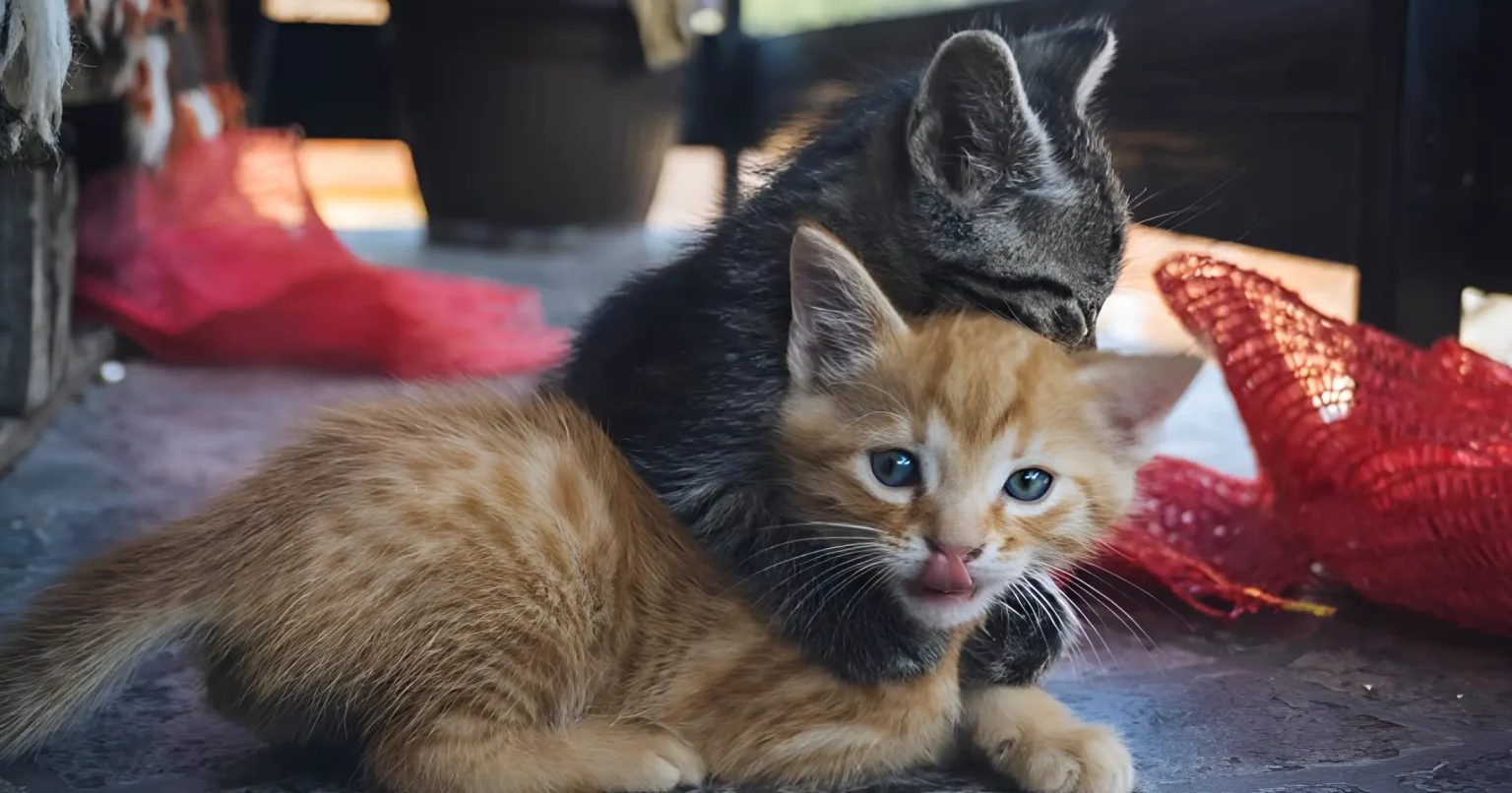
- Two cats may groom each other and sleep together, mimicking pair-like behavior.
- Cats may show jealousy or possessiveness toward their bonded partner or owner.
However, these behaviors stem from social bonding, not romantic or reproductive monogamy.
How Spaying and Neutering Affect Cat Relationships
Once cats are spayed or neutered, their reproductive hormones decline drastically. This reduces mating instincts and territorial aggression, making them calmer and more social.
After sterilization, cats often form closer emotional bonds with humans and other pets. While this can appear monogamous, it’s purely a social connection, not a mating-based relationship.
So, while a spayed or neutered pair may seem inseparable, it’s more about companionship than exclusive mating — meaning they’re still not truly monogamous.
The Role of Environment in Cat Relationships
Environment plays a big role in how cats interact with one another. In multi-cat households, you may notice cats forming preferred companionships. They may eat, sleep, or play together more often than with others.
In feral cat colonies, females sometimes live in cooperative groups to raise kittens together. These alliances are practical, not monogamous — designed for protection and kitten survival.
Thus, environment can shape behavior, but it doesn’t change the fundamental truth: cats are not biologically built for monogamy.
Are Cats Emotionally Attached to Humans?
While cats aren’t monogamous in mating, they can be deeply loyal and affectionate toward their owners. Cats bond based on trust, care, and familiarity. They may follow you around, sleep near you, and show signs of affection like purring or rubbing against you.
So, while the answer to “are cats monogamous” is no biologically, emotionally, they can form lasting bonds with humans that resemble loyalty. This emotional connection makes them wonderful companions — even if it’s not romantic in the traditional sense.
Do Big Cats (Lions, Tigers, etc.) Show Monogamous Behavior?
The question “are cats monogamous” doesn’t just apply to domestic cats. Larger members of the cat family, like lions and tigers, also display polygamous behavior.
- Lions: Male lions often mate with multiple females within their pride.
- Tigers and Leopards: These big cats are solitary and mate with multiple partners during the breeding season.
- Cheetahs: Female cheetahs raise cubs alone, and males form coalitions, not monogamous pairs.
Across the cat family, polygamy remains the natural order — proving that feline independence extends beyond house cats.
FAQs About Cat Monogamy
1. Are cats monogamous with humans?
No, cats don’t experience monogamy the way humans do, but they can form deep emotional bonds with one person and show loyalty.
2. Do male cats stay with their mates?
No, male cats do not stay with females after mating. They usually move on once breeding is complete.
3. Can two cats form a lifelong bond?
Yes, cats can form close social bonds with each other, especially if raised together. But it’s companionship, not monogamy.
4. Why do cats mate with multiple partners?
It increases genetic diversity and ensures higher chances of successful reproduction.
5. Are spayed and neutered cats still interested in mating?
No, sterilized cats lose the hormonal drive to mate but may form affectionate bonds with other cats or humans.
Final Thoughts
So, are cats monogamous? No — not in the biological or mating sense. Cats are naturally solitary and polygamous animals, driven by instinct rather than lifelong loyalty to one partner. Their reproductive system and social structure are designed for independence and variety, not exclusive pair bonding.
However, while cats may not be monogamous, they’re capable of forming deep, loyal, and lasting emotional connections with humans and other pets. That’s what makes them truly special — their love may not follow human rules, but it’s real, affectionate, and enduring in its own feline way.
For More Visits: Animalsinfo


