

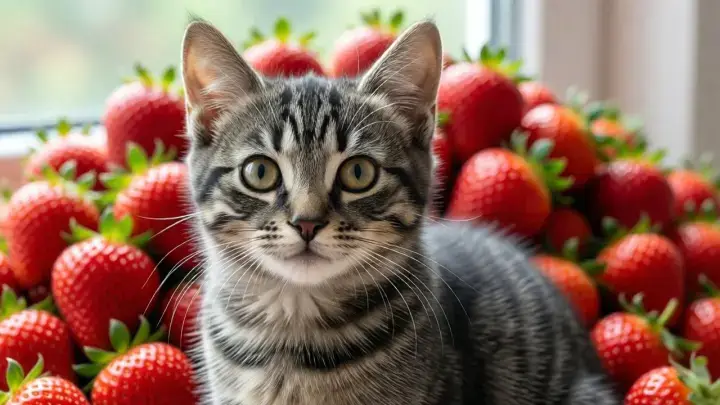
Strawberries are among the most popular fruits in many households. Their bright color, sweet aroma, and juicy taste make them a favorite snack for people of all ages. When pet owners are enjoying strawberries, it is common for their cats to become curious about what is on the plate. Cats often approach food out of curiosity, sniffing or pawing at it before deciding whether it interests them. This behavior naturally raises an important question for many pet owners: can cats eat strawberries?
The simple answer is yes, cats can eat strawberries in small amounts. Strawberries are not toxic to cats, and a small piece will usually not harm them. However, there are several important factors that cat owners should understand before offering this fruit to their pets. Cats have very different dietary needs compared to humans, and foods that are healthy for people may not always be beneficial for animals.
While strawberries contain nutrients that are valuable for human health, they are not necessary for cats. Felines rely mainly on animal-based proteins to maintain proper health. Because of this, strawberries should only be considered an occasional treat rather than a regular part of a cat’s diet.
Understanding how strawberries affect cats, how much is safe, and how to prepare them properly can help ensure that your pet stays healthy and happy. This guide explores everything cat owners should know about feeding strawberries to their feline companions.
Understanding the Natural Diet of Cats
To understand whether strawberries are suitable for cats, it is helpful to first examine how cats are designed to eat. Cats are known as obligate carnivores. This means their bodies require nutrients that come primarily from animal sources.
In the wild, cats hunt prey such as birds, mice, and small animals. These prey provide essential proteins, fats, and amino acids that cats need for energy, muscle maintenance, and overall health. One of the most important nutrients for cats is taurine, which is found naturally in meat.
Because of their carnivorous biology, cats have digestive systems that are not designed to process large amounts of plant-based foods. Fruits and vegetables may be tolerated in small quantities, but they do not provide the core nutrition that cats require.
Commercial cat foods are carefully formulated to meet feline nutritional needs. These foods contain balanced levels of protein, fat, vitamins, and minerals that support long-term health. When a cat eats high-quality cat food, it usually receives everything it needs nutritionally.
For this reason, fruits such as strawberries should only be offered occasionally and in small portions.
Are Strawberries Safe for Cats?
Strawberries are generally safe for cats when consumed in moderation. They do not contain substances that are known to be toxic to felines. If a cat eats a small piece, it will usually pass through the digestive system without causing harm.
However, strawberries contain natural sugars and fiber. While these components are beneficial for humans, cats do not require them in significant amounts. Excessive sugar consumption can contribute to weight gain and other health concerns if given too frequently.
Another important factor to consider is that cats cannot taste sweetness in the same way humans can. Their taste receptors lack the ability to detect sweet flavors, which means strawberries are unlikely to taste sweet to them.
Despite this, some cats may still show interest in strawberries due to their smell or soft texture. Others may simply ignore them completely.
Nutritional Components of Strawberries
Strawberries contain several vitamins and minerals that support human health. They are well known for being rich in vitamin C, antioxidants, and small amounts of fiber.
For humans, vitamin C helps support the immune system and maintain healthy skin. Cats, however, naturally produce their own vitamin C inside their bodies. Because of this ability, they do not depend on dietary sources of the vitamin.
The antioxidants found in strawberries help protect human cells from damage caused by environmental stress and aging. While these compounds are not harmful to cats, they are not essential for their diet either.
Fiber is another component found in strawberries. Small amounts of fiber can assist with digestion, but too much fiber may lead to stomach upset in cats.
Overall, strawberries contain safe nutrients, but they do not offer significant benefits for feline health.
Why Some Cats Show Interest in Strawberries
Cats are curious animals by nature. Even though they are carnivores, they often investigate foods that appear unfamiliar or interesting.
Strawberries have a bright color and a distinct aroma that may attract a cat’s attention. A cat might sniff the fruit or lick it simply out of curiosity. The soft texture may also feel unusual compared to their regular food.
In many cases, a cat’s interest in fruit is not related to taste. Since cats cannot detect sweetness, their curiosity usually comes from smell, texture, or the simple desire to explore something new.
Some cats may play with strawberries like toys rather than eat them. This playful interaction is common and usually harmless as long as the fruit is safe.
Potential Risks of Feeding Strawberries to Cats
Although strawberries are not toxic, there are still a few risks that pet owners should consider before offering them to their cats.
One possible issue is digestive upset. Cats are not used to eating fruit regularly, and sudden changes in diet can sometimes cause vomiting or diarrhea. Even a safe food can trigger stomach discomfort if introduced too quickly.
Another concern is sugar content. Strawberries contain natural sugars that are unnecessary for cats. Feeding sugary foods too often can contribute to weight gain and increase the risk of health problems over time.
Pesticides are another potential risk. Strawberries purchased from stores may contain chemical residues from farming practices. If the fruit is not washed properly, these chemicals could affect your pet.
Finally, large pieces of strawberry could pose a choking hazard. Cats should only be given very small pieces that are easy to chew and swallow.
How to Safely Offer Strawberries to Your Cat
If you decide to give your cat a taste of strawberry, preparation plays an important role in safety.
Start by washing the strawberry thoroughly under clean water. This helps remove dirt, bacteria, and chemical residues that may be present on the surface.
Next, remove the leafy top and cut the fruit into very small pieces. Tiny portions reduce the risk of choking and make it easier for your cat to chew.
Offer only one small piece at first. This allows you to observe how your cat reacts to the fruit. Some cats may show interest, while others may ignore it completely.
After feeding the strawberry, monitor your cat for any signs of digestive discomfort. If your cat appears healthy and behaves normally, the small portion likely did not cause any problems.
Remember that strawberries should only be given occasionally.
When Cats Should Avoid Strawberries
There are situations where feeding strawberries may not be appropriate for a cat. Cats with certain health conditions may need stricter dietary control.
For example, cats with diabetes should avoid sugary foods, including fruit. Even natural sugars can affect blood sugar levels in sensitive animals.
Cats with digestive disorders may also react poorly to fruit because their stomachs may struggle to process fiber or plant matter.
Kittens are another group that should generally avoid strawberries. Young cats require nutrient-dense foods that support growth and development, and fruit does not provide the nutrients they need.
When in doubt, consulting a veterinarian before introducing new foods is always a safe choice.
Healthier Treat Options for Cats
Although strawberries are safe in small amounts, there are better treat options that align with a cat’s natural diet.
Protein-based treats are usually the most suitable. Small pieces of plain cooked chicken or turkey can be very appealing to cats. Cooked fish without seasoning can also serve as an occasional treat.
Commercial cat treats are another good option because they are specifically formulated for feline nutrition. Many of these treats support dental health or provide additional nutrients.
Choosing treats that match a cat’s natural dietary needs helps maintain healthy weight and energy levels.
The Importance of Moderation
Moderation is essential when feeding any treats to cats. Even safe foods can become harmful if given too frequently.
Cats rely on a balanced diet that contains specific nutrients in the right proportions. Too many treats can disrupt this balance and lead to nutritional problems.
A simple rule followed by many veterinarians is that treats should make up only a small percentage of a cat’s daily food intake. This helps maintain a healthy weight and ensures that the cat continues to receive proper nutrition from its regular meals.
When strawberries are given as an occasional snack, they are unlikely to cause problems.
Frequently Asked Questions (FAQs)
1. Can kittens eat strawberries?
Kittens should generally avoid strawberries. Their growing bodies require specialized kitten food that provides the nutrients necessary for development.
2. How many strawberries can a cat eat?
Cats should only eat a very small amount, such as a tiny piece of strawberry. Feeding whole strawberries or large portions is not recommended.
3. Are strawberry leaves safe for cats?
Strawberry leaves are not considered toxic, but they may be difficult for cats to digest. It is best to remove them before offering the fruit.
4. What happens if a cat eats too many strawberries?
Eating too many strawberries may cause stomach upset, including vomiting or diarrhea. If symptoms persist, contacting a veterinarian is recommended.
5. Do cats like strawberries?
Many cats are indifferent to strawberries because they cannot taste sweetness. Some may show curiosity due to the smell or texture.
6. Can strawberries improve a cat’s health?
Strawberries do not provide significant health benefits for cats. Their nutritional needs are best met through high-quality cat food.
Final Thoughts-Can cats eat strawberries
So, can cats eat strawberries? Yes, they can eat small amounts safely, but strawberries should only be offered occasionally. Cats do not require fruit in their diet, and their nutritional needs are best met through protein-rich foods designed specifically for felines.
When offering strawberries, it is important to wash the fruit thoroughly, cut it into small pieces, and monitor your cat’s reaction. Keeping portions small helps prevent digestive problems and ensures your cat remains healthy.
Responsible feeding habits are an essential part of pet care. By understanding what foods are safe and which ones should be limited, cat owners can provide a balanced diet that supports long-term health and happiness.
For More Visits: Animalsinfo
Also Read: Can Cats Eat Asparagus? Surprising Truth for 2026