

Cats are naturally curious animals, and anyone who lives with a cat knows how interested they can be in human food. When you are enjoying fresh fruit, it’s common for a cat to sniff, paw, or even try to taste it. One fruit that often raises questions among pet owners is the blackberry. These small, juicy berries are popular because of their flavor and nutritional value for humans, but many people wonder if they are safe for cats.
Understanding which foods are safe for cats is essential for responsible pet care. Cats have a very different digestive system compared to humans, and some foods that are healthy for people can cause problems for pets. Because of this, many cat owners ask an important question: can cats eat blackberries?
The short answer is yes, cats can eat blackberries in small amounts. Blackberries are not toxic to cats, and a small taste will usually not cause harm. However, there are several important details that every pet owner should understand before offering this fruit to their feline companion. From digestion and nutritional value to possible risks and proper feeding methods, it is important to look at the topic carefully.
This guide will explain everything you need to know about feeding blackberries to cats so you can make safe and informed decisions for your pet.
Understanding a Cat’s Natural Diet
Before discussing blackberries specifically, it helps to understand what cats are designed to eat. Cats are classified as obligate carnivores. This means their bodies are built to get most of their nutrients from animal-based protein rather than plant foods.
In the wild, cats hunt small animals such as birds and rodents. Their digestive system is specialized for processing meat, fats, and animal proteins. Unlike humans, cats do not have a strong biological need for fruits or vegetables.
Because of this natural diet, fruits are not necessary for a cat’s health. They may occasionally taste fruit out of curiosity, but it does not play a major role in their nutrition. A balanced commercial cat food already provides the nutrients cats require.
However, some fruits can still be offered as occasional treats if they are safe and given in very small portions. Blackberries fall into this category.
Are Blackberries Safe for Cats?
Blackberries are generally considered safe for cats when eaten in moderation. They do not contain compounds that are toxic to felines, and most cats that nibble a small amount will not experience any serious problems.
These berries contain natural vitamins, fiber, and antioxidants. While these nutrients are beneficial for humans, cats do not rely on them in the same way. Their bodies obtain most essential nutrients from meat-based foods.
If a cat eats a small piece of blackberry, it will usually pass through the digestive system without issue. Some cats may enjoy the soft texture or the slight sweetness, while others may completely ignore it.
Even though blackberries are not poisonous, they should still be treated as an occasional snack rather than a regular part of a cat’s diet.
Nutritional Components of Blackberries
Blackberries are well known for their rich nutritional profile. They contain several natural compounds that support human health, including vitamin C, vitamin K, fiber, and antioxidants.
For cats, these nutrients are not harmful, but they also are not particularly necessary. Cats produce their own vitamin C internally, so they do not depend on dietary sources the way humans do.
The fiber found in blackberries can sometimes assist with digestion if eaten in very small amounts. However, too much fiber can cause stomach upset in cats. Their digestive system is not built to handle large amounts of plant material.
Antioxidants are another component found in blackberries. These compounds help protect cells from damage. While they may provide minor benefits, they are not essential for cats because their main nutritional needs revolve around protein, taurine, and specific amino acids found in animal tissue.
Overall, blackberries contain safe nutrients, but they should still be offered sparingly.
Why Some Cats Show Interest in Fruit
Many people assume cats dislike sweet foods because they cannot taste sweetness the way humans can. Cats lack the taste receptors that detect sweet flavors, which means sugary foods are not naturally appealing to them.
Despite this, some cats still show curiosity toward fruit. This interest usually comes from texture, smell, or simple curiosity rather than taste. Cats explore the world with their senses, and anything new can attract their attention.
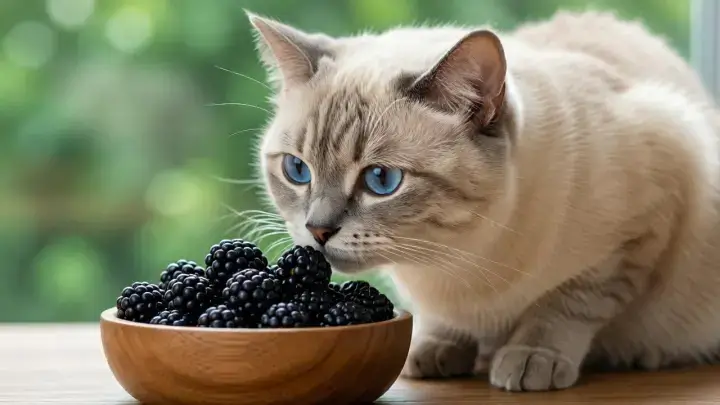
For example, the soft and juicy texture of a blackberry may feel interesting to a cat. Some cats may lick the fruit or play with it rather than actually eating it.
In most cases, fruit curiosity is harmless, but it should always be supervised to ensure the cat does not consume something unsafe.
Potential Risks of Feeding Blackberries to Cats
Although blackberries are not toxic, feeding them to cats does come with a few potential risks. Understanding these risks helps pet owners avoid problems.
One possible issue is digestive upset. Cats have sensitive stomachs, and sudden dietary changes can cause vomiting or diarrhea. Even safe foods can lead to mild stomach discomfort if eaten in larger quantities.
Another concern is sugar content. Blackberries contain natural sugars, which are safe in small amounts but unnecessary for cats. Feeding sugary foods too frequently may contribute to weight gain or other health problems.
Choking hazards should also be considered. While blackberries are soft, large pieces may still be difficult for some cats to chew. Cutting the fruit into smaller pieces can help reduce this risk.
Finally, pesticides or chemicals on fruit skins can cause problems if the berries are not washed properly. Always rinse fresh fruit thoroughly before offering it to a pet.
How to Safely Offer Blackberries to Your Cat
If you decide to give your cat a small taste of blackberry, preparation is important. Simple steps can help ensure the experience is safe.
Start by washing the fruit thoroughly to remove any dirt, pesticides, or chemical residue. Even organic fruit should be rinsed carefully.
Next, cut the blackberry into very small pieces. This makes it easier for your cat to chew and reduces the chance of choking.
Offer only a tiny portion at first. A small piece is enough to test whether your cat likes it and how their stomach reacts.
Observe your cat for a while after feeding. If there are no signs of vomiting, diarrhea, or unusual behavior, the fruit likely did not cause any issues.
Remember that fruit treats should remain rare. A small taste once in a while is more than enough.
Signs Your Cat Should Not Eat Blackberries
Every cat is different, and some cats may react poorly to foods that others tolerate easily. After offering blackberry, watch your cat for signs of digestive discomfort.
Common warning signs include vomiting, diarrhea, excessive drooling, or unusual lethargy. If any of these symptoms appear, it is best to avoid feeding the fruit again.
Cats with certain medical conditions may also need stricter diets. For example, cats with diabetes or digestive disorders should not consume sugary fruits.
If your cat already has health problems or follows a special diet, it is always best to avoid introducing unnecessary foods.
Healthier Treat Alternatives for Cats
While blackberries are safe in small amounts, there are other treats that better match a cat’s natural dietary needs. Protein-based snacks are usually the best choice.
Cooked chicken without seasoning is a popular treat for many cats. Small pieces of plain fish or turkey can also work well. These foods provide protein, which aligns more closely with what cats naturally eat.
Commercial cat treats are another convenient option. Many of them are designed specifically to support feline health while still being enjoyable.
Choosing treats that support a cat’s nutritional needs helps maintain overall health and energy levels.
Should Blackberries Be a Regular Treat?
Blackberries should never become a routine part of a cat’s diet. Even though they are safe in small quantities, they do not offer significant benefits for cats.
A balanced cat food already contains the nutrients needed for proper growth, energy, and organ function. Adding unnecessary foods can upset this balance if done too frequently.
If your cat enjoys the occasional piece of fruit and does not experience any digestive problems, a tiny portion once in a while is acceptable. However, it should always remain an occasional treat rather than a daily snack.
Responsible feeding habits help prevent obesity, digestive issues, and nutritional imbalances.
When to Contact a Veterinarian
Most cats that eat a small piece of blackberry will be completely fine. However, there are situations where contacting a veterinarian may be necessary.
If your cat eats a large amount of fruit and begins showing signs of illness, professional advice is recommended. Persistent vomiting, severe diarrhea, or unusual weakness should never be ignored.
Veterinary guidance is also helpful if you are unsure about introducing new foods to your pet. A veterinarian understands your cat’s health history and can provide personalized recommendations.
Taking quick action when something seems wrong can prevent small problems from becoming serious health issues.
Frequently Asked Questions (FAQs)
1. Can kittens eat blackberries?
Kittens have more sensitive digestive systems than adult cats. While a tiny taste of blackberry may not be harmful, it is generally better to avoid giving fruit to kittens. Their diet should focus on high-quality kitten food that supports growth and development.
2. How many blackberries can a cat eat?
Cats should only eat a very small portion. One small piece of blackberry is usually enough for a treat. Feeding multiple berries or large amounts is not recommended.
3. Are blackberry leaves or stems safe for cats?
Cats should not eat the leaves or stems of blackberry plants. These parts are harder to digest and may contain substances that can irritate the stomach.
4. What happens if my cat eats too many blackberries?
Eating too many blackberries may cause digestive upset such as vomiting or diarrhea. In most cases, the symptoms are mild and temporary, but a veterinarian should be consulted if they continue.
5. Do cats like the taste of blackberries?
Most cats cannot taste sweetness, so the flavor may not be appealing. Some cats may still show curiosity because of the texture or smell.
6. Can blackberries improve a cat’s health?
Blackberries do not provide significant health benefits for cats. They contain nutrients that help humans, but cats obtain their essential nutrients mainly from animal protein.
Final Thoughts-can cats eat blackberries
Blackberries are not toxic to cats, which means a small taste is generally safe. However, they should only be offered occasionally and in very small portions. Cats do not require fruit in their diet, and their nutritional needs are best met through high-quality cat food and protein-based treats.
Pet owners should always prioritize foods that support a cat’s natural dietary requirements. While sharing a tiny piece of fruit may seem harmless, moderation is the key to keeping pets healthy.
By understanding what cats truly need to eat and by introducing new foods carefully, you can ensure your feline companion stays happy, safe, and well nourished.
For More Visits: Animalsinfo
Also Read: Can Cats Eat Lima Beans? Safe Guide 2026