

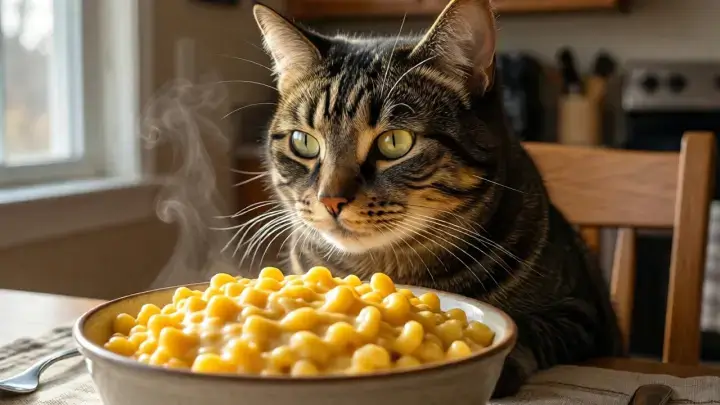
Many cat owners enjoy sharing small bits of their food with their pets, especially when their cat shows interest at mealtime. One of the most commonly asked questions is: can cats eat mac and cheese? At first glance, this popular comfort food may seem harmless. After all, it mainly contains pasta, cheese, and milk-based ingredients. However, when it comes to feline health, things are not as simple as they appear.
Cats have very specific dietary needs that are quite different from humans. While mac and cheese may be delicious and comforting for people, it can present several risks for cats depending on ingredients, portion size, and frequency of feeding.
To fully understand whether mac and cheese is safe, we need to look at how cats digest food, what ingredients are involved, and how their bodies react to dairy, carbohydrates, and processed foods.
Understanding a Cat’s Natural Diet
Domestic cats such as domestic cat are obligate carnivores, meaning their bodies are designed to survive on animal-based protein. In the wild, cats consume small prey like birds and rodents, which provide essential nutrients such as taurine, protein, and fats.
Unlike humans, cats do not require carbohydrates or dairy products in their diet. Their digestive system is specialized for meat digestion, and they lack certain enzymes needed to process large amounts of dairy or starch-heavy foods like pasta.
This biological difference is the foundation of understanding why foods like mac and cheese are not naturally suitable for cats.
What Is Mac and Cheese Made Of?
Mac and cheese is typically made from macaroni pasta, cheese, milk, butter, and sometimes additional ingredients like cream, salt, or seasoning. While each ingredient is safe for humans in moderation, cats process these components very differently.
Pasta is made from wheat, which is a carbohydrate. Cheese and milk are dairy products that contain lactose. Butter adds fat content, and seasoning often includes salt or spices.
Each of these elements may affect cats differently, especially when combined in one dish.
Can Cats Eat Mac and Cheese Safely?
Technically, a small bite of plain mac and cheese is unlikely to be immediately toxic to cats. However, that does not mean it is safe or healthy for them.
The main issue is not a single ingredient but the combination of carbohydrates, fats, dairy, and seasoning. Cats are not adapted to digest these ingredients efficiently, which can lead to digestive discomfort or longer-term health concerns if consumed regularly.
So while accidental ingestion is usually not dangerous, mac and cheese should not be considered a suitable food for cats.
The Problem with Dairy in Cats
One of the biggest concerns in mac and cheese is dairy content. Many cats are lactose intolerant to some degree. This means they have difficulty digesting lactose, the sugar found in milk and cheese.
When lactose is not properly digested, it can cause digestive issues such as diarrhea, gas, bloating, and stomach discomfort. Even though some cats may tolerate small amounts of cheese, it does not mean their bodies handle it well.
This is why dairy-heavy foods like mac and cheese can be problematic.
Carbohydrates and Cats
Pasta, the main base of mac and cheese, is high in carbohydrates. Cats do not require carbohydrates as a primary energy source. Their bodies are designed to get energy from protein and fat instead.
When cats consume too many carbs, it does not provide meaningful nutrition. Instead, it can contribute to unnecessary calorie intake without any real benefit.
Over time, frequent exposure to carbohydrate-rich foods may also contribute to weight gain or digestive imbalance.
Seasonings and Hidden Risks
Another concern with mac and cheese is seasoning. Many recipes include salt, pepper, garlic powder, or onion powder. These ingredients can be harmful to cats, especially garlic and onion, which are known to be toxic even in small amounts.
Salt content can also be too high for cats. Excess sodium can lead to dehydration or other health issues if consumed regularly.
Because of these hidden ingredients, even a small portion of mac and cheese may not be as safe as it appears.
What Happens If a Cat Eats Mac and Cheese?
If a cat eats a small amount of mac and cheese, most of the time there will be no serious consequences. However, some cats may experience mild digestive upset.
Possible symptoms include vomiting, diarrhea, loss of appetite, or mild lethargy. These symptoms are usually temporary and resolve on their own.
If the mac and cheese contained harmful ingredients like onion or garlic, the risk increases, and veterinary attention may be necessary.
Why Cats Are Attracted to Mac and Cheese
Cats are often drawn to mac and cheese because of its smell and fat content. Cheese has a strong aroma, and fats are naturally appealing to cats due to their instinctual preference for energy-rich foods.
However, attraction does not mean suitability. Cats may show interest in many human foods that are not good for them, simply because of smell rather than nutritional need.
Is Cheese Safe for Cats in Small Amounts?
Cheese itself is not toxic to cats, but it should be given in very small amounts and only occasionally. Some cats tolerate cheese better than others, but many still experience mild lactose intolerance.
Cheese should never become a regular part of a cat’s diet. Even small amounts can add unnecessary fat and calories.
Healthier Alternatives for Cats
Instead of mac and cheese, cats should be given foods that align with their natural dietary needs. High-quality cat food is designed to provide complete nutrition, including essential amino acids and vitamins.
If you want to give your cat a treat, plain cooked chicken or specially formulated cat treats are much safer options.
These alternatives provide protein without the digestive risks associated with dairy or carbohydrates.
Long-Term Effects of Feeding Mac and Cheese
Feeding mac and cheese occasionally is unlikely to cause long-term harm. However, regular feeding can lead to nutritional imbalance.
Cats that consume too many human foods may develop poor eating habits, weight gain, or digestive sensitivity. Over time, this can affect their overall health and energy levels.
Maintaining a consistent, species-appropriate diet is essential for long-term well-being.
Behavioral Impact of Human Food Feeding
When cats are frequently given human food, they may start expecting it. This can lead to begging behavior or refusal to eat their regular food.
Once this habit develops, it can be difficult to correct. That is why it is generally recommended to avoid feeding cats table food altogether.
Responsible Feeding Practices
Responsible pet ownership means understanding what is safe and what is not. While sharing food may feel like a bonding experience, not all human foods are suitable for cats.
Mac and cheese is a clear example of a comfort food that should remain human-only. Even though it is not highly toxic in small amounts, it does not support feline health.
Final Thoughts
So, can cats eat mac and cheese? The answer is that they can eat a small amount accidentally without serious harm, but it is not a safe or healthy food for regular consumption.
The combination of dairy, carbohydrates, fats, and seasonings makes it unsuitable for a cat’s digestive system. While curiosity may lead cats to try it, their nutritional needs are very different from humans.
Cats thrive on protein-rich diets designed specifically for their biology. Keeping mac and cheese off their menu helps ensure better digestion, long-term health, and overall well-being.
Understanding what foods are appropriate for cats is a key part of responsible pet care. While sharing food may feel kind, the best way to show care is by feeding them what truly supports their health.
FAQs
1. Can cats eat mac and cheese safely?
No, it is not recommended due to dairy, carbs, and seasoning content.
2. What happens if a cat eats mac and cheese?
They may experience mild digestive issues like diarrhea or vomiting.
3. Is cheese harmful to cats?
Not toxic, but many cats are lactose intolerant and may react poorly.
4. Can kittens eat mac and cheese?
No, kittens should avoid human food and stick to proper kitten nutrition.
5. Why do cats like mac and cheese?
They are attracted to the smell and fat content, not nutritional value.
6. Is pasta safe for cats?
Plain pasta is not toxic but offers no nutritional benefit.
7. What should I do if my cat eats mac and cheese?
Monitor for symptoms and contact a vet if anything unusual appears.
8. What is a better alternative to mac and cheese?
Plain cooked meat or vet-approved cat treats are safer options.
For More Visits: Animalsinfo