

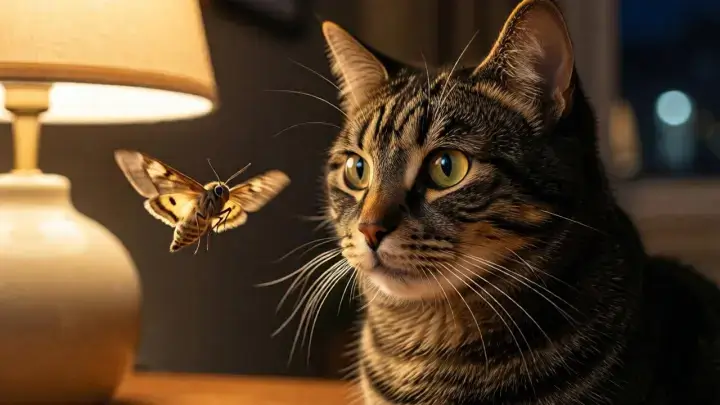
Cats are naturally curious animals. Anyone who has lived with a cat knows how easily they get fascinated by small moving objects. A flying insect like a moth often becomes an instant target for chasing, pawing, and sometimes even eating. This behavior raises a very common question among pet owners: can cats eat moths?
At first glance, it may seem harmless. After all, cats in the wild hunt insects and small creatures regularly. However, when it comes to domestic cats such as domestic cat, the answer is not as simple as yes or no. While eating a moth is usually not dangerous, there are important details every cat owner should understand about safety, digestion, behavior, and possible risks.
This article explores everything you need to know about cats and moths, including whether it is safe, what happens if they eat one, and what precautions you should take as a responsible pet owner.
Why Cats Chase Moths
Before understanding whether cats can eat moths, it helps to understand why they are so interested in them in the first place. Cats are natural hunters. Their instincts are deeply rooted in stalking and catching small moving prey.
Moths trigger this instinct because of their movement and unpredictable flight pattern. Even indoor cats that are well-fed will often chase insects simply out of instinct rather than hunger.
This behavior is completely normal. It is a part of their natural predatory drive and mental stimulation.
Can Cats Eat Moths Safely?
In most cases, yes—cats can eat moths, and it is generally not harmful. If a cat catches and eats a moth, there is usually no serious health risk. Moths are not toxic to cats, and their bodies are small enough that they are easily digested.
However, “safe” does not mean “ideal.” While a single moth is unlikely to cause harm, it is not something cats should regularly consume. There are several factors that determine whether it is completely harmless or potentially risky.
What Happens When a Cat Eats a Moth?
When a cat eats a moth, the insect usually goes through the digestive system without issue. Most cats will experience no noticeable side effects. Their stomach acids are strong enough to break down small insects.
However, in some cases, mild reactions may occur. These can include slight stomach discomfort or temporary vomiting, especially if the cat eats multiple insects or swallows them too quickly.
The reaction also depends on the type of moth and whether it has been exposed to chemicals or toxins in the environment.
Are All Moths Safe for Cats?
Not all moths are the same. While most household moths are harmless, some may come into contact with pesticides, insect sprays, or contaminated environments. If a moth has been exposed to chemicals, it could potentially cause irritation or mild poisoning symptoms in cats.
Additionally, some moth species have fuzzy bodies that may be harder to digest. While this rarely causes serious problems, it can sometimes lead to mild digestive discomfort.
This is why occasional accidental ingestion is usually fine, but regular consumption is not recommended.
Do Moths Provide Any Nutrition?
Moths offer almost no nutritional value to cats. While insects can contain small amounts of protein, a moth is far too small to contribute meaningfully to a cat’s diet.
Cats require a diet rich in animal protein, taurine, and essential nutrients that come from properly formulated cat food. A moth does not provide anything beneficial in this regard.
So while a cat may enjoy catching and eating a moth, it is purely instinctual behavior rather than nutritional need.
Possible Risks of Cats Eating Moths
Even though moths are generally not harmful, there are a few potential risks that cat owners should be aware of.
One of the main concerns is chemical exposure. If a moth has come into contact with insecticides or household cleaning chemicals, it may carry residues that can affect a cat’s digestive system.
Another risk is choking, although this is rare. Some cats may swallow insects too quickly, which could cause brief gagging or coughing.
In sensitive cats, eating insects may occasionally lead to vomiting or mild gastrointestinal upset.
Indoor vs Outdoor Cats and Moth Exposure
Indoor cats are more likely to interact with moths inside the house. These are usually harmless household insects attracted by light sources. In most cases, these moths do not pose a significant risk.
Outdoor cats, however, may encounter a wider variety of insects, some of which could be exposed to pesticides or environmental toxins. This slightly increases the risk level, although serious issues are still uncommon.
Regardless of whether a cat is indoor or outdoor, occasional insect hunting is a natural behavior.
Should You Stop Your Cat From Eating Moths?
In most situations, there is no need to panic if your cat eats a moth. It is a natural behavior and usually harmless. However, if you notice your cat eating insects frequently, it may be worth observing their environment.
If moths are present in large numbers inside the home, it could indicate an underlying issue such as open food sources or lighting attracting insects.
Instead of punishing the behavior, it is better to manage the environment. Reducing insect presence naturally lowers the chances of repeated ingestion.
Behavior and Mental Stimulation
For cats, chasing moths is more than just eating—it is mental stimulation. The act of stalking, chasing, and catching engages their natural instincts and helps prevent boredom.
This is especially important for indoor cats who do not have access to outdoor hunting opportunities. In this sense, chasing a moth can actually be a form of enrichment.
However, allowing uncontrolled insect hunting should still be balanced with safety considerations.
What to Do If Your Cat Eats a Moth
If your cat eats a moth, the first step is to remain calm. In most cases, nothing needs to be done. Observe your cat for any unusual symptoms such as vomiting, lethargy, or loss of appetite.
If no symptoms appear, there is usually no cause for concern. If mild symptoms do occur but resolve quickly, it is generally not serious.
However, if symptoms persist or worsen, it is always wise to consult a veterinarian for reassurance.
Preventing Excessive Insect Eating
While it is impossible to completely stop a cat’s instinct to chase insects, you can reduce exposure by keeping your home clean and minimizing insect attraction.
Using window screens, reducing outdoor lighting near windows, and keeping food areas clean can help reduce moth presence indoors.
Providing toys that mimic hunting behavior can also redirect your cat’s energy in a safe way.
The Role of Instinct in Cat Behavior
Understanding why cats eat moths comes down to instinct. Even well-fed domestic cats retain strong hunting behaviors inherited from their wild ancestors.
Eating small insects is simply an extension of this instinct. It does not mean the cat is hungry or missing nutrients in its diet.
This is why it is important not to misinterpret the behavior as a dietary issue.
Final Thoughts
So, can cats eat moths? Yes, they can, and in most cases, it is harmless. Moths are not toxic, and a single insect is unlikely to cause any serious health problems.
However, that does not mean it is something to encourage. Moths provide no nutritional value and may carry minor risks depending on environmental exposure.
The behavior itself is completely natural and rooted in instinct. As a cat owner, the best approach is to allow natural curiosity while ensuring a safe environment.
Understanding this balance helps keep your cat both mentally stimulated and physically safe.
FAQs
1. Can cats eat moths safely?
Yes, most moths are not toxic and are generally safe if eaten accidentally.
2. What happens if a cat eats a moth?
Usually nothing serious, though mild stomach upset is possible in some cases.
3. Are moths poisonous to cats?
Most moths are not poisonous, but those exposed to chemicals may be harmful.
4. Do moths provide nutrition for cats?
No, moths offer no meaningful nutritional value.
5. Should I stop my cat from eating moths?
Occasional eating is fine, but frequent insect eating should be managed.
6. Can indoor cats eat moths?
Yes, indoor cats may eat moths that enter the home, usually without harm.
7. Can eating moths make cats sick?
Rarely, but possible if the moth has been exposed to toxins or chemicals.
8. Why do cats like eating moths?
It is an instinctive hunting behavior driven by movement and curiosity.
For More Visits: Animalsinfo
Also Read: Can Cats Eat Cooked Salmon – Safe & Powerful Guide 2026