

When it comes to feeding cats, many pet owners want to offer something both nutritious and enjoyable. Fish is often seen as a healthy option, and among all types of fish, salmon is one of the most popular. This naturally leads to an important question: can cats eat cooked salmon?
The short answer is yes, cats can eat cooked salmon in moderation. However, the full answer is more detailed. While salmon can be beneficial for cats when prepared correctly, there are also important safety considerations, nutritional facts, and feeding guidelines every cat owner should understand.
To make the best decision for your pet, it is essential to explore how cats process food, what benefits salmon offers, and what risks may come with improper feeding.
Understanding a Cat’s Natural Diet
Domestic cats such as domestic cat are obligate carnivores. This means their bodies are biologically designed to thrive on animal-based protein. In the wild, cats consume small prey that provides essential nutrients like protein, taurine, and fats.
Unlike omnivores or herbivores, cats do not rely on plant-based foods for nutrition. Their digestive systems are optimized for meat digestion, which is why protein-rich foods like fish and poultry are often well tolerated.
Salmon, being a fatty fish rich in protein, naturally fits into this category when prepared properly.
Nutritional Value of Cooked Salmon
Cooked salmon is considered a nutrient-dense food. It contains high-quality protein, omega-3 fatty acids, vitamins like B12, and essential minerals such as selenium. These nutrients can support a cat’s overall health when given in appropriate amounts.
Protein is essential for muscle development, energy, and tissue repair. Omega-3 fatty acids help maintain a healthy coat and may support joint and brain health. These benefits make salmon an appealing occasional treat for cats.
However, it is important to remember that while salmon is nutritious, it should not replace a complete and balanced cat food diet.
Can Cats Eat Cooked Salmon Safely?
Yes, cats can eat cooked salmon safely, but only when it is properly prepared. Cooking is essential because raw salmon may contain harmful parasites or bacteria that can make cats sick.
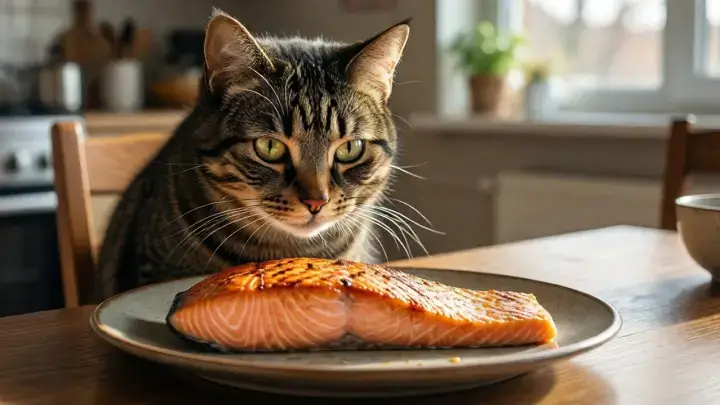
The safest way to serve salmon to cats is plain and fully cooked, without any seasoning, oil, garlic, onion, or spices. Cats have very sensitive digestive systems, and even small amounts of added ingredients can cause issues.
Grilled, baked, or steamed salmon without additives is generally the best option.
Why Raw Salmon Is Dangerous
While some people assume raw fish is natural for cats, raw salmon can actually be harmful. It may contain parasites or bacteria that are dangerous to both cats and humans.
One of the biggest risks is a parasite that can affect digestion and cause serious illness if consumed. Cooking eliminates these risks and makes the fish safe for consumption.
This is why veterinarians generally recommend only cooked fish for cats.
Benefits of Cooked Salmon for Cats
When given correctly, cooked salmon can offer several benefits for cats. The omega-3 fatty acids found in salmon may support a shiny coat and healthy skin. Cats that experience dry skin or dull fur may benefit from occasional salmon treats.
The high protein content also supports muscle maintenance and energy levels. Since cats rely heavily on protein, salmon can be a valuable supplement to their diet when used occasionally.
Some cats also enjoy the taste of salmon, which can be helpful for picky eaters.
Risks of Feeding Too Much Salmon
Even though cooked salmon is safe in moderation, overfeeding can lead to problems. One of the main concerns is nutritional imbalance. Cats require a very specific balance of nutrients, and too much fish can disrupt this balance.
Excessive fish consumption may also lead to digestive upset, including diarrhea or vomiting. Additionally, some salmon may contain small amounts of heavy metals or contaminants depending on its source.
Another risk is that cats may develop a preference for fish over their regular balanced cat food, which can lead to nutritional deficiencies over time.
Seasoning and Additives to Avoid
When preparing salmon for cats, it is extremely important to avoid seasoning. Ingredients such as salt, garlic, onion, butter, and spices are not safe for feline consumption.
Garlic and onions, in particular, are toxic to cats and can cause serious health issues even in small amounts. Butter and oils may also cause digestive upset or contribute to weight gain.
The safest approach is always plain, unseasoned salmon.
How Much Cooked Salmon Can Cats Eat?
Cooked salmon should only be given as an occasional treat. It should not replace regular cat food, which is specifically formulated to meet all nutritional needs.
A small portion once or twice a week is generally considered safe for most healthy adult cats. The portion size should be small enough not to affect their regular diet.
Kittens or cats with health conditions may require even more limited amounts, depending on veterinary advice.
Signs Your Cat Enjoys or Reacts Poorly to Salmon
Most cats enjoy the smell and taste of salmon. However, not all cats react the same way. Some may experience mild digestive sensitivity when introduced to new foods.
If a cat tolerates salmon well, there should be no signs of discomfort. If there are issues such as vomiting, diarrhea, or loss of appetite, it is best to stop feeding it and consult a veterinarian.
Every cat has a unique digestive system, so careful observation is important when introducing any new food.
Salmon in Commercial Cat Food
Many commercial cat foods already include salmon as an ingredient. These formulas are specifically designed to provide balanced nutrition while using salmon as a protein source.
The advantage of commercial cat food is that it includes all necessary vitamins, minerals, and nutrients in proper proportions. This ensures that cats receive the benefits of salmon without the risks of imbalance.
This is often a safer and more consistent way to include salmon in a cat’s diet.
Should Salmon Be a Regular Part of a Cat’s Diet?
Salmon should not be a daily food for cats. While it is nutritious, cats require a complete diet that includes a variety of nutrients in precise amounts.
Regular cat food is designed to meet these requirements, whereas salmon alone cannot provide everything a cat needs for long-term health.
It is best used as an occasional treat rather than a staple food.
Preparing Salmon for Cats at Home
If you choose to prepare salmon at home for your cat, the process should be simple. The fish should be fully cooked, cooled, and served plain. No seasoning or additives should be used.
It is also important to remove any bones before serving, as fish bones can pose a choking hazard or cause internal injury.
Freshness is another important factor. Always use high-quality salmon to ensure safety.
Final Thoughts
So, can cats eat cooked salmon? Yes, they can—but only when it is properly prepared and given in moderation. Cooked salmon can be a healthy and enjoyable treat for cats, offering protein and beneficial fatty acids.
However, it should never replace a balanced diet specifically designed for feline health. The key is moderation, simplicity, and proper preparation.
Understanding your cat’s dietary needs helps ensure they stay healthy, active, and happy. While salmon can be a tasty addition to their diet, it should always be treated as an occasional supplement rather than a daily meal.
FAQs
1. Can cats eat cooked salmon safely?
Yes, cooked salmon is safe for cats when served plain and in moderation.
2. Is raw salmon safe for cats?
No, raw salmon can contain harmful parasites and should be avoided.
3. How often can cats eat salmon?
It should be given as an occasional treat, not a daily food.
4. Can kittens eat cooked salmon?
Kittens can have very small amounts, but only under guidance and not regularly.
5. Is salmon good for cats’ fur?
Yes, omega-3 fatty acids in salmon may support a healthy and shiny coat.
6. What should I avoid when feeding salmon to cats?
Avoid seasoning, garlic, onion, salt, and cooking oils.
7. Can salmon replace cat food?
No, salmon cannot provide complete nutrition on its own.
8. What happens if a cat eats too much salmon?
It may cause digestive upset or nutritional imbalance over time.
For More Visits: Animalsinfo
Also Read: Can Cats Eat Spaghetti – Safe Guide & Powerful Facts 2026