

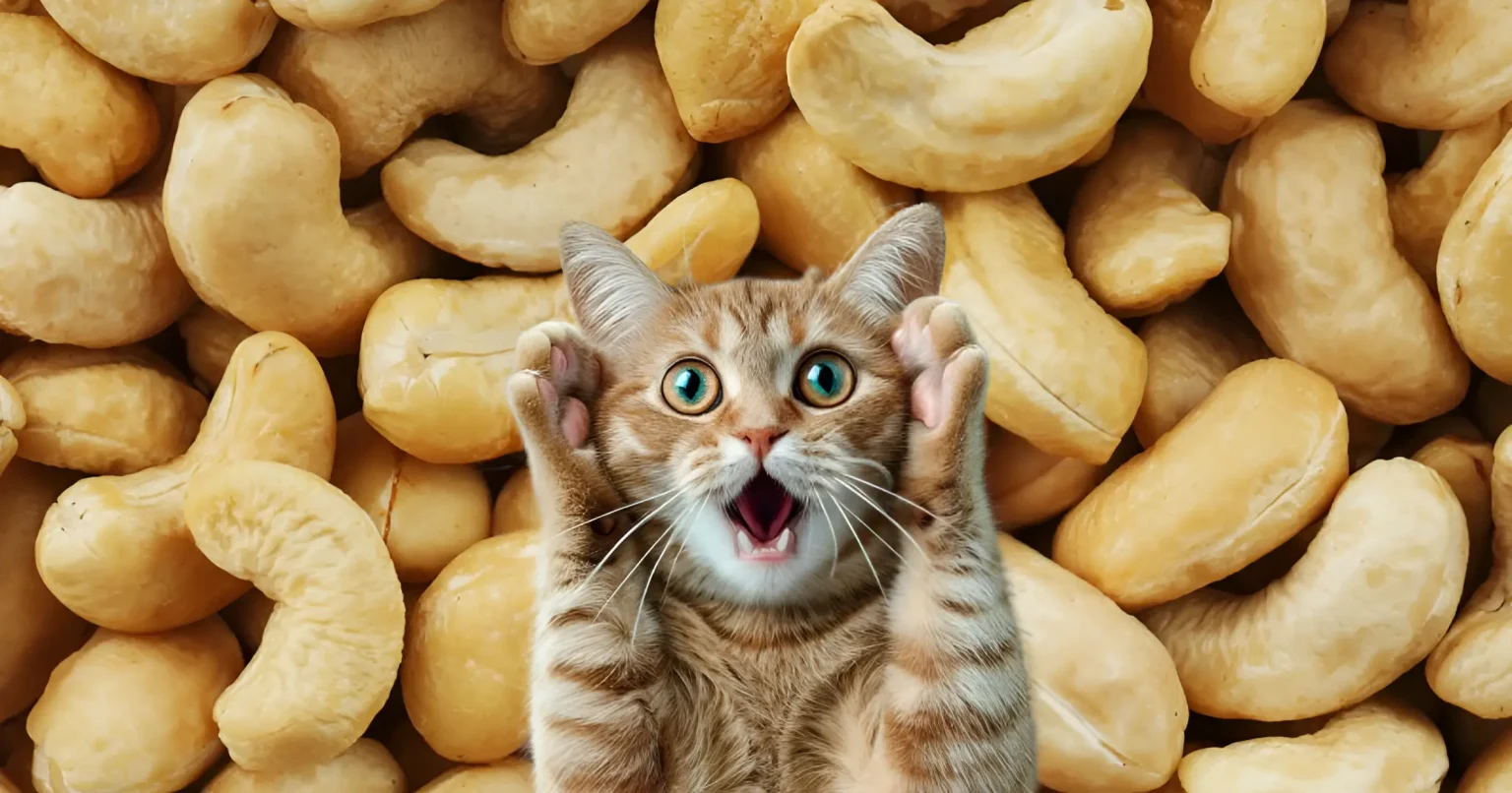
If you’re snacking on a handful of cashews and your cat gives you that familiar “feed me” stare, you might wonder — can cats eat cashews? After all, they’re soft, creamy, and packed with nutrients for humans. But when it comes to your feline friend, cashews are a different story.
While a single cashew won’t necessarily harm your cat, these nuts are not ideal for regular feeding. Let’s look at why that’s the case, what happens if your cat eats cashews, and what safer snack alternatives exist.
Are Cashews Safe for Cats?
The short answer: cats can eat cashews in very small amounts, but they’re not recommended. Cashews are not toxic to cats like some other foods (for example, onions or chocolate), but they can still cause digestive issues and long-term health problems if eaten too often.
Cats are obligate carnivores, meaning their bodies are designed to digest and thrive on meat — not nuts, grains, or plant-based fats. Cashews are high in fat and calories, which can easily upset your cat’s stomach or lead to weight gain.
So, while a single piece won’t hurt, feeding cashews regularly can do more harm than good.
Why Cashews Aren’t Good for Cats
Here’s a breakdown of why feeding cashews to cats isn’t a smart choice:
1. Too Much Fat
Cashews are rich in unsaturated fats. While these are healthy for humans, cats process fat differently. Too much fat can cause vomiting, diarrhea, or pancreatitis, a painful condition involving the pancreas.
2. High in Calories
Even a few cashews add unnecessary calories to a cat’s diet. Because cats are small, just one or two nuts can contribute significantly to their daily intake, increasing the risk of obesity and related issues like diabetes.
3. Sodium Concerns
Most store-bought cashews are salted or seasoned, which makes them even worse for cats. Excess sodium can cause dehydration and, in severe cases, sodium poisoning.
4. Risk of Choking
Cashews are large and firm compared to a cat’s usual kibble or meat chunks. They can easily become a choking hazard, especially for kittens or older cats with dental issues.
5. No Real Nutritional Value for Cats
While cashews contain healthy fats, magnesium, and protein, these nutrients aren’t particularly beneficial to cats. Their digestive systems can’t absorb or use plant-based nutrients as efficiently as they do from meat.
What Happens If Your Cat Eats Cashews?
If your cat sneaks a single cashew, don’t panic — it’s unlikely to cause harm. However, you should watch them closely for the next 24 hours for any signs of digestive upset.
Symptoms to look for include:
- Vomiting or diarrhea
- Lethargy
- Loss of appetite
- Excessive thirst or urination
- Abdominal discomfort
If your cat eats a large number of cashews or salted nuts, it’s best to call your vet immediately. High sodium levels or excessive fat intake can stress their kidneys and liver.
Can Cats Eat Raw or Unsalted Cashews?
If the cashews are raw and unsalted, a tiny piece as a rare treat is generally safe. Still, it shouldn’t become a habit. Even without salt or seasoning, the fat content remains high.
In short — unsalted cashews are safer but not healthy.
Can Kittens Eat Cashews?
No, kittens should never be given cashews. Their digestive systems are still developing, and even small amounts of fatty or plant-based foods can cause severe stomach upset. Stick to a proper kitten diet with balanced nutrients.
Better Snack Alternatives for Cats
If you want to treat your cat to something special, there are plenty of safer, healthier options than cashews:
- Cooked chicken, turkey, or beef: High in protein and easy to digest.
- Freeze-dried meat treats: Great texture and flavor for cats without added salt or preservatives.
- Catnip treats or tuna flakes: Specially made for feline enjoyment.
These options align with your cat’s natural carnivorous diet — offering taste, nutrition, and safety.
Can Cashew Milk or Cashew Butter Be Given to Cats?
Cashew-based products might seem gentler, but they’re still not suitable for cats.
- Cashew milk: Contains oils and sometimes added sugar or flavoring. Cats are also lactose intolerant, so milk alternatives can still cause stomach upset.
- Cashew butter: Even small amounts are very fatty and could lead to pancreatitis or obesity.
Avoid both and stick to cat-safe hydration (fresh water) or occasional treats like tuna juice.
When Cashews Become Dangerous
Cashews are not inherently poisonous, but certain factors can make them dangerous to cats:
- Salted or flavored cashews (especially with onion or garlic powder).
- Moldy cashews, which can contain harmful toxins.
- Overconsumption, leading to fat overload and dehydration.
Always keep nuts sealed and out of reach from your cat to prevent accidental snacking.
FAQs About Cats and Cashews
Q1: Are cashews toxic to cats?
No, cashews are not toxic — but they’re still unhealthy due to their fat and sodium content.
Q2: Can cats eat roasted cashews?
No. Roasted cashews usually contain oil, salt, or seasonings that can upset a cat’s stomach.
Q3: My cat ate a cashew — what should I do?
If it was just one or two pieces, observe your cat for any signs of illness. If they show vomiting, diarrhea, or lethargy, call your vet.
Q4: Are any nuts safe for cats?
Most nuts — including almonds, walnuts, and pistachios — are not recommended for cats. They offer little nutrition and can cause digestive distress.
Q5: What human foods are safe for cats?
Small portions of cooked chicken, turkey, salmon, or plain eggs are far better options than nuts or dairy.
Final Thoughts – Can cats eat cashews
So, can cats eat cashews? The answer is technically yes, but it’s not a good idea. While a single unsalted cashew won’t poison your cat, it offers no nutritional value and carries several risks — from digestive issues to obesity.
Cats thrive on meat-based diets, not fatty nuts. If you want to reward your pet, choose treats made specifically for cats or offer small pieces of cooked meat.
Keeping cashews — and other nuts — off your cat’s snack list will ensure their diet stays safe, balanced, and healthy. Remember, the best treats for cats aren’t the ones we enjoy but those designed to match their natural needs.
For More Visits: Animalsinfo