


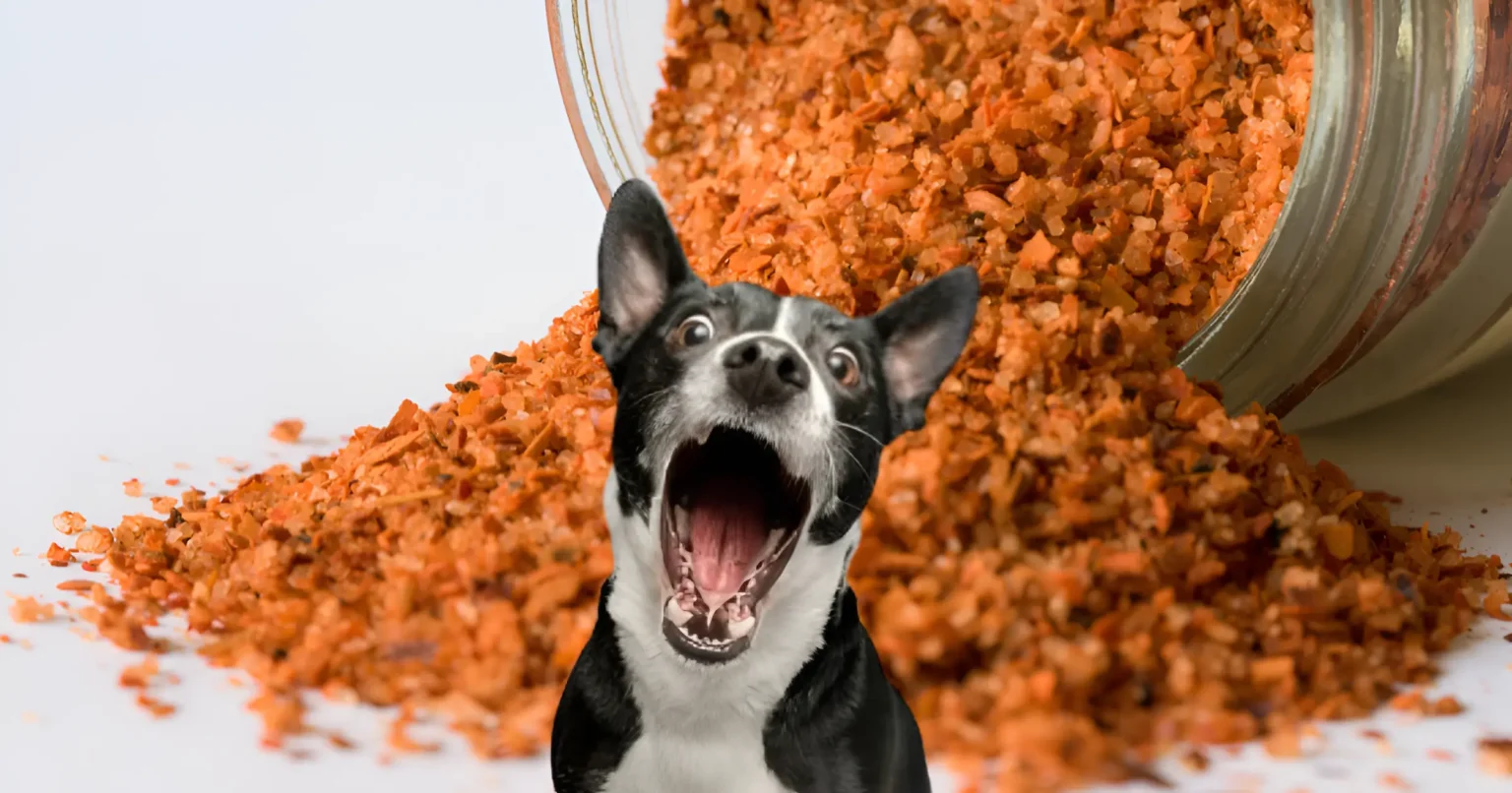
Tajin is a popular Mexican seasoning made from chili peppers, lime, and salt. It adds a tangy, spicy kick to fruits, vegetables, snacks, and beverages. While humans enjoy its zesty flavor, dog owners often wonder: Can dogs eat Tajin? The answer is clear—dogs should not consume Tajin under any circumstances. Although small amounts of lime or mild seasoning may seem harmless, Tajin contains ingredients that can be harmful to a dog’s health, particularly the chili and high salt content.
Dogs have a very different digestive system than humans. What may be tasty for a human can cause discomfort, pain, or even toxicity for dogs. To help pet owners make informed decisions, this guide examines why Tajin is unsafe, what can happen if your dog eats it, potential health risks, and safer alternatives for adding flavor or treats to a dog’s diet.
What Is Tajin and Why It’s Popular
Tajin is a powdered seasoning typically made with three main ingredients:
- Chili peppers – These provide heat and flavor.
- Dehydrated lime – Adds tangy acidity.
- Salt – Enhances taste and preserves the mix.
Humans enjoy Tajin for its combination of spicy, sour, and salty flavors. It is often sprinkled on fruits like mangoes, watermelon, pineapple, or snacks like popcorn and chips. However, this combination of ingredients makes it unsuitable for dogs. Dogs do not require added salt, spices, or acidic flavors in their diets, and even a small amount of Tajin can trigger digestive or systemic problems.
Why Tajin Is Unsafe for Dogs
Although the ingredients in Tajin are common in human food, each presents potential risks for dogs.
1. Chili Peppers
Chili peppers contain capsaicin, the compound that produces the spicy sensation. Dogs are much more sensitive to capsaicin than humans. Consumption can lead to:
- Burning sensation in the mouth or throat
- Drooling
- Vomiting
- Diarrhea
- Abdominal pain
- Irritation of the gastrointestinal tract
Even a tiny sprinkle of Tajin on a dog’s food can cause intense discomfort and lead to long-term digestive irritation if consumed repeatedly.
2. Salt
Tajin contains a significant amount of salt, which is another ingredient dogs cannot safely handle in large quantities. Too much salt can cause:
- Excessive thirst and urination
- Dehydration
- Sodium poisoning
- Vomiting and diarrhea
- In severe cases, tremors, seizures, and death
Small dogs are particularly susceptible to salt-related health issues.
3. Lime
Dehydrated lime powder is acidic, and while citrus in small amounts is generally not toxic, concentrated forms can irritate a dog’s stomach. Lime can lead to:
- Nausea
- Stomach cramps
- Vomiting
- Loose stools
Repeated exposure to acidic foods may cause chronic digestive upset or even dental issues over time.
4. Additives in Commercial Tajin
Some Tajin products include anti-caking agents or preservatives. These additives are not toxic in tiny amounts but can irritate sensitive dogs or worsen allergies. Dogs do not benefit nutritionally from these chemicals.
Potential Health Effects of Tajin on Dogs
Feeding Tajin to dogs, even accidentally, can lead to multiple health problems. The severity depends on the dog’s size, age, and general health.
Immediate Effects
- Drooling
- Pawing at the mouth
- Vomiting
- Diarrhea
- Whining or signs of discomfort
Intermediate Effects
- Dehydration from excessive vomiting and diarrhea
- Lethargy due to discomfort
- Abdominal pain
Severe Effects
- Sodium poisoning if a large quantity is ingested
- Gastrointestinal damage from repeated exposure to chili or acidic foods
- Increased risk of pancreatitis in sensitive dogs from irritation of the digestive system
Small breeds and puppies are especially vulnerable to these effects. Even minor exposure should be treated seriously.
Why Dogs React Differently Than Humans
Dogs’ taste buds and digestive systems differ significantly from humans. Dogs:
- Lack the ability to neutralize capsaicin in chili peppers
- Have kidneys less efficient at processing excess salt
- Digest carbohydrates and sugars differently, leading to rapid energy spikes
- Have a lower tolerance for acidic foods
Because of these differences, a snack like Tajin, enjoyable for humans, can be irritating or dangerous for dogs.
Signs Your Dog Has Eaten Tajin
If your dog accidentally consumes Tajin, watch for the following signs:
- Coughing or gagging
- Excessive drooling
- Vomiting or diarrhea
- Pawing at the face or mouth
- Whining or signs of discomfort
- Lethargy
In severe cases, dogs may show symptoms of sodium poisoning or severe gastrointestinal distress. Immediate veterinary attention may be necessary.
What to Do If Your Dog Eats Tajin
If your dog ingests Tajin:
- Assess the quantity – Small accidental amounts may only cause minor discomfort, but larger quantities increase the risk of serious effects.
- Monitor for symptoms – Watch for vomiting, diarrhea, lethargy, or signs of abdominal pain.
- Provide water – Encourage hydration to help flush excess salt and acids.
- Call your veterinarian – Especially if your dog ate a significant amount or shows severe symptoms.
- Do not induce vomiting without guidance – Some reactions may worsen with vomiting, depending on the ingredients consumed.
Early intervention is key to preventing complications.
Why Some Dogs Are More Vulnerable
Not all dogs react the same way. Several factors influence sensitivity to Tajin:
- Size: Small dogs are more affected by spices and salt.
- Age: Puppies have delicate digestive systems, while senior dogs may have weaker immunity and organ function.
- Health status: Dogs with kidney, liver, heart, or gastrointestinal conditions are at higher risk.
- Breed: Some breeds are more prone to pancreatitis or digestive sensitivities.
Even a small amount of Tajin may cause discomfort in sensitive dogs, so it is best to avoid it entirely.
Safe Alternatives to Tajin for Dogs
Dog owners may want to add flavor or variety to meals without risking health issues. Some safe alternatives include:
1. Plain Fruits
- Apples (without seeds)
- Blueberries
- Strawberries
- Watermelon (seedless)
These fruits are low in sugar and free of harmful spices.
2. Vegetables
- Carrot sticks
- Green beans
- Sweet potatoes
- Cucumbers
Vegetables provide crunch, fiber, and vitamins.
3. Dog-Safe Seasoning
Instead of Tajin, you can use small amounts of dog-safe herbs or spices like:
- Parsley
- Turmeric
- Cinnamon (in very small amounts)
Always check the safety of any spice before offering it to your dog.
4. Homemade Treats
Create homemade snacks using ingredients dogs tolerate:
- Oatmeal and banana bites
- Pumpkin cookies
- Sweet potato chews
These provide flavor and nutrition without risk.
Tips for Preventing Accidental Consumption
Preventing access to Tajin is key:
- Store Tajin on high shelves or in closed cabinets
- Educate family members not to share snacks with dogs
- Use pet gates to prevent dogs from reaching counters
- Provide safe alternatives to discourage begging
Training your dog to “leave it” is one of the most effective ways to prevent accidental ingestion.
Frequently Asked Questions (FAQs)
1. Can dogs have a tiny sprinkle of Tajin?
Even a tiny amount can irritate a dog’s digestive system. It is best to avoid it completely.
2. Is lime in Tajin safe for dogs?
Concentrated lime powder is acidic and can cause nausea or stomach upset in dogs.
3. What if my dog accidentally ate Tajin?
Monitor for vomiting, diarrhea, or discomfort. Contact a veterinarian if symptoms are severe.
4. Can Tajin cause long-term health issues in dogs?
Regular ingestion may lead to gastrointestinal irritation, obesity, pancreatitis, or kidney strain due to salt.
5. Are there any human seasonings safe for dogs?
Yes, certain herbs and spices like parsley, turmeric, and cinnamon in small amounts are safe.
6. Can puppies have Tajin?
No. Puppies’ digestive systems are sensitive and should not be exposed to spices, lime, or salt.
Conclusion – Can dogs eat tajin
Tajin may be a tasty and zesty seasoning for humans, but it is not suitable for dogs. The chili peppers, salt, and lime create a combination that can cause digestive upset, dehydration, and long-term health issues. Even a small amount may be uncomfortable, especially for small breeds, puppies, or sensitive dogs.
Dog owners should avoid offering Tajin intentionally and store it securely to prevent accidental ingestion. Safer alternatives such as dog-friendly fruits, vegetables, or homemade treats can satisfy a dog’s cravings without risking their health. Keeping your dog safe means understanding which human foods are harmful and consistently providing nutritious, safe snacks.
By following these guidelines, dog owners can protect their pets from discomfort and health risks while still allowing them to enjoy safe and tasty treats. Always prioritize canine health over convenience or sharing human snacks.
For More Visits: Animalsinfo
Also Read: Can Dogs Have Oatmeal Cream Pies – Smart 2025 Guide