


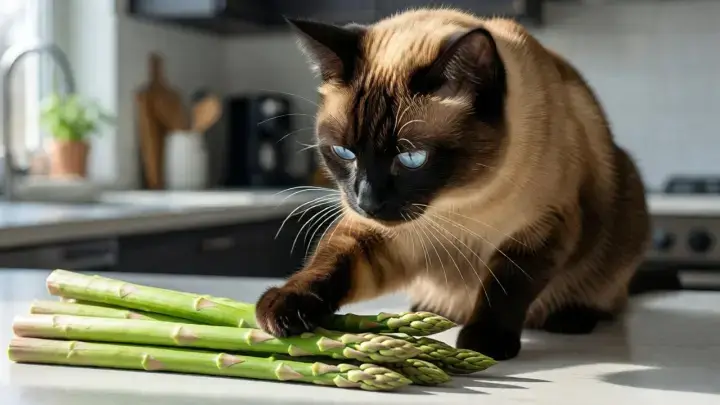
Many cat owners enjoy sharing small pieces of food with their pets, especially when preparing meals in the kitchen. When vegetables like asparagus appear on the table, it’s natural to wonder whether they are safe for cats. Because cats are curious animals, they may sniff, paw, or even try to taste whatever their owners are eating. This often leads to an important question: can cats eat asparagus?
The short answer is yes, cats can eat asparagus in small amounts. Asparagus is not toxic to cats, which means a small bite usually will not harm them. However, there are important things to understand before feeding this vegetable to your feline companion. Cats have different nutritional needs than humans, and vegetables do not play a major role in their diet.
Although asparagus contains several beneficial nutrients for humans, cats rely mainly on animal-based foods for proper health. Because of this difference, asparagus should only be considered an occasional treat rather than a regular food item for cats.
In this detailed guide, you will learn whether asparagus is safe for cats, how it affects their digestion, how to feed it properly, and when it may be best to avoid giving it to your pet.
Understanding a Cat’s Natural Diet
To understand whether asparagus is appropriate for cats, it is helpful to look at what cats are naturally designed to eat. Cats are classified as obligate carnivores, meaning their bodies depend on nutrients that come primarily from animal tissue.
In nature, cats hunt prey such as birds, mice, and small reptiles. These animals provide protein, fats, vitamins, and amino acids that cats need to survive. One of the most important nutrients for cats is taurine, which is found almost exclusively in animal-based foods.
Because of this biological design, a cat’s digestive system is not built to process large amounts of plant matter. While cats can sometimes tolerate small quantities of vegetables, these foods do not provide the same essential nutrients that meat does.
Commercial cat food is formulated to meet these nutritional requirements. When a cat eats a balanced diet made for felines, there is usually no need to add vegetables. However, certain vegetables can still be offered occasionally without causing harm.
Is Asparagus Safe for Cats?
Asparagus is generally considered safe for cats when given in moderation. It does not contain toxins that are known to harm felines, and many cats can eat a small piece without experiencing negative effects.
The vegetable is soft when cooked and contains fiber, vitamins, and minerals. These nutrients are beneficial for humans, but they are not particularly necessary for cats because their nutritional needs are different.
Some cats may show interest in asparagus because of its smell or texture. Others may ignore it completely. Unlike humans, cats cannot taste sweetness in the same way, which means vegetables usually do not appeal strongly to them.
If a cat eats a small piece of asparagus, it will typically pass through the digestive system without problems. Still, moderation is very important because too much plant material can upset a cat’s stomach.
Raw vs Cooked Asparagus for Cats
When considering feeding asparagus to a cat, the way it is prepared matters. Raw asparagus can be tough and fibrous, which makes it difficult for cats to chew and digest. Large or hard pieces may also present a choking risk.
Cooked asparagus is usually a safer option because it becomes softer and easier to chew. Steaming or boiling the vegetable without seasoning makes it more manageable for a cat to eat.
However, it is important to avoid adding ingredients such as salt, garlic, butter, onions, or spices. Many seasonings used in human cooking are unsafe for cats and can lead to digestive problems or more serious health issues.
If you want to share asparagus with your pet, plain and well-cooked pieces in very small portions are the safest choice.
Nutritional Content of Asparagus
Asparagus is widely known as a healthy vegetable for humans because it contains a range of vitamins and minerals. It provides vitamin K, vitamin A, vitamin C, and folate, along with small amounts of fiber and antioxidants.
While these nutrients support human health, cats do not rely on them in the same way. Cats naturally produce some vitamins within their bodies and obtain many others from meat-based foods.
The fiber in asparagus may slightly assist digestion if consumed in tiny amounts. However, excessive fiber can cause stomach discomfort in cats, leading to loose stools or vomiting.
Because of this, asparagus should not be viewed as a nutritional supplement for cats. Its value lies mainly in being a safe, occasional snack rather than a necessary addition to their diet.
Why Some Cats Are Curious About Vegetables
Cats often investigate foods that appear unfamiliar or interesting. Even though vegetables are not a natural part of their diet, some cats enjoy exploring them.
This curiosity can come from texture, smell, or movement. For example, a long asparagus spear may look like a toy to a playful cat. Some cats may bat it with their paws or chew it slightly out of curiosity.
In many households, cats become interested in whatever their owners are eating. They may approach the plate or sniff food simply because they want to explore something new.
It is important for pet owners to monitor this behavior. Allowing a cat to taste safe foods occasionally is fine, but supervision ensures they do not eat something harmful.
Potential Risks of Feeding Asparagus to Cats
Even though asparagus is not toxic, feeding it to cats still carries a few potential risks. One common issue is digestive upset. Because cats are not used to eating vegetables, introducing them suddenly may lead to mild stomach discomfort.
Another concern involves choking hazards. If the asparagus is raw or cut into large pieces, it may be difficult for a cat to chew properly. Small, soft portions are much safer.
Seasonings present another risk. Many human dishes containing asparagus include garlic, onions, sauces, or oils. These ingredients can be harmful to cats and should never be included in their food.
Finally, some cats simply do not tolerate vegetables well. If a cat shows signs of stomach upset after eating asparagus, it is best to avoid feeding it again.
How to Safely Offer Asparagus to Your Cat
Can cats eat asparagus, If you decide to let your cat try asparagus, proper preparation is essential. Start by washing the vegetable thoroughly to remove any dirt or chemical residue.
Cook the asparagus until it becomes soft. Steaming or boiling without adding any seasoning is the best approach. Once cooked, cut the vegetable into tiny pieces that your cat can chew easily.
Offer only a small amount at first. A single bite-sized piece is enough to test whether your cat likes it and whether their stomach tolerates it well.
Observe your cat after feeding. If there are no signs of vomiting, diarrhea, or unusual behavior, the small portion likely caused no harm.
Remember that treats should make up only a tiny portion of a cat’s overall diet.
When Cats Should Avoid Asparagus
There are certain situations where asparagus may not be appropriate for cats. Cats with sensitive stomachs or digestive disorders may react poorly to plant-based foods.
Pets that follow strict veterinary diets should also avoid unnecessary treats unless approved by a veterinarian. Medical conditions such as diabetes, obesity, or gastrointestinal problems may require careful food management.
Kittens may also struggle with digesting vegetables because their digestive systems are still developing. For young cats, it is generally best to stick with specially formulated kitten food.
If you are ever unsure about introducing new foods, consulting a veterinarian can provide clarity and peace of mind.
Better Treat Options for Cats
Can cats eat asparagus, Although asparagus is safe in moderation, there are other treats that better match a cat’s natural dietary needs. Protein-based snacks are usually the best option.
Small pieces of plain cooked chicken are a favorite treat for many cats. Cooked fish without seasoning can also be offered occasionally. These foods provide protein and nutrients that align more closely with what cats eat in nature.
Commercial cat treats are another convenient choice. Many are designed to support dental health, digestion, or overall nutrition.
Choosing treats that support a cat’s natural diet helps maintain a healthy weight, strong muscles, and good energy levels.
The Importance of Moderation
Even safe foods can become problematic when given too frequently. Cats thrive on routine and balanced nutrition, which is why their main meals should always consist of high-quality cat food.
Occasional treats can strengthen the bond between a cat and its owner, but moderation is essential. Vegetables like asparagus should only be given in tiny portions and not on a regular basis.
A simple rule many veterinarians recommend is that treats should make up no more than a small fraction of a cat’s daily food intake. Following this guideline helps prevent weight gain and digestive problems.
By focusing on balanced meals and limiting treats, cat owners can support their pet’s long-term health.
Frequently Asked Questions (FAQs)
Can cats eat raw asparagus?
Cats can technically eat raw asparagus, but it is not the best option. Raw asparagus is tough and fibrous, making it harder for cats to chew and digest. Cooked asparagus in small pieces is a safer choice.
Is asparagus toxic to cats?
No, asparagus is not toxic to cats. A small amount is generally safe. However, it should only be given occasionally and without any seasoning.
Can kittens eat asparagus?
Kittens should not be given asparagus regularly. Their digestive systems are still developing, and they require a diet specifically designed for growth and development.
How much asparagus can a cat eat?
Cats should only eat a very small amount, such as a tiny bite-sized piece. Feeding larger portions may lead to digestive discomfort.
What should I do if my cat eats too much asparagus?
If a cat eats a large amount of asparagus, monitor them for signs of vomiting, diarrhea, or lethargy. If symptoms appear or persist, contacting a veterinarian is recommended.
Do cats like asparagus?
Many cats are indifferent to vegetables, including asparagus. Some may show curiosity because of texture or smell, while others will ignore it completely.
Final Thoughts-Can cats eat asparagus
So, can cats eat asparagus? The answer is yes, but only in small amounts and with proper preparation. Asparagus is not toxic to cats, and a tiny bite of plain cooked asparagus will usually not cause harm.
However, cats do not require vegetables in their diet. Their bodies are designed to thrive on protein-rich foods that come from animal sources. Because of this, asparagus should remain an occasional treat rather than a regular addition to their meals.
Responsible pet ownership involves understanding what foods are appropriate for cats and offering them carefully. By focusing on balanced nutrition and introducing new foods cautiously, you can ensure your cat stays healthy, energetic, and happy for years to come.
For More Visits: Animalsinfo
Also Read: Can Cats Eat Blackberries? Amazing Truth for 2026