

As pet owners, keeping our dogs safe from infections and injuries is always a top priority. One common question that arises is whether human antiseptics like Can you use bactine on dogs safely? While Bactine is widely known for its fast-acting antiseptic properties for humans, dogs have different skin sensitivity and chemical tolerances. Understanding how Bactine interacts with a dog’s skin, the right precautions, and alternative options is essential to ensure the safety and health of your furry friend.
What is Bactine?
Bactine is an over-the-counter antiseptic liquid commonly used to clean minor cuts, scrapes, and burns in humans. Its main ingredients include benzalkonium chloride, which is a disinfectant, and lidocaine, which provides temporary pain relief. These ingredients work together to reduce infection risk while minimizing discomfort. While effective for human skin, the combination of chemicals can have varying effects on a dog’s skin depending on the dosage and frequency of application.
Differences Between Human and Canine Skin
One of the most important considerations before using any human medication on dogs is understanding the differences in skin structure and sensitivity. Dogs have:
- Thicker but more delicate skin in certain areas like the belly and paws.
- A different pH level compared to humans, usually around 5.5 to 7, whereas human skin ranges from 4.5 to 5.5.
- A higher tendency for allergic reactions to chemicals commonly used in human antiseptics.
These differences mean that while Bactine may seem harmless for humans, it can potentially irritate or harm a dog’s skin if used improperly.
Is Bactine Safe for Dogs?
Veterinarians generally advise caution when using human antiseptics like Bactine on dogs. Here’s what you need to consider:
- Benzalkonium Chloride – This disinfectant can be toxic if ingested in significant amounts. Dogs often lick their wounds, and ingestion may lead to stomach upset, vomiting, or more severe toxic reactions in extreme cases.
- Lidocaine – Though lidocaine can numb pain, dogs are highly sensitive to it. Even small amounts absorbed through the skin or ingested can lead to symptoms like drooling, tremors, irregular heartbeat, or in severe cases, seizures.
Given these risks, Bactine should only be used on dogs in very small amounts and on minor wounds, and even then, it should be applied with veterinary guidance.
When Can Bactine Be Used on Dogs?
While general use of Bactine is not recommended for routine wound care in dogs, there are specific scenarios where it may be acceptable:
- Minor Scratches and Cuts: For small surface wounds that are clean and not deep, applying a very small amount of Bactine may help reduce bacterial growth temporarily.
- Pain Relief for Minor Injuries: The lidocaine in Bactine can provide brief relief for minor scrapes. However, this should be short-term and monitored closely to prevent licking and ingestion.
Always remember to consult a veterinarian before using Bactine, especially if the wound is large, deep, or showing signs of infection such as swelling, redness, or pus.
How to Safely Use Bactine on Dogs
If a veterinarian approves using Bactine for a minor wound, follow these safety steps:
- Clean the Area First – Use warm water to gently clean the wound and remove dirt or debris. Avoid soap that may irritate the skin.
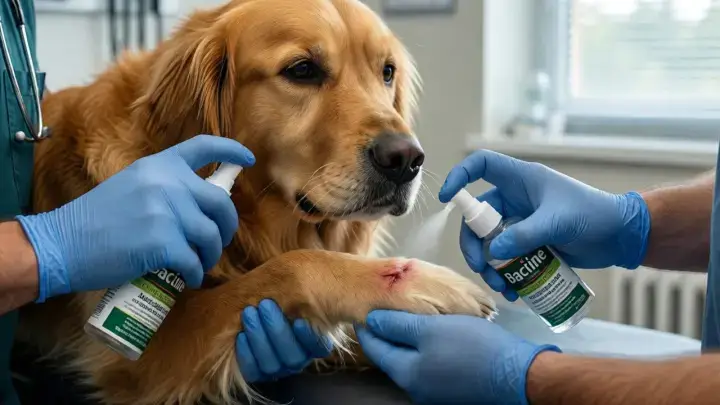
- Apply a Small Amount – Use a cotton ball or gauze to apply a thin layer of Bactine. Do not pour it directly from the bottle onto the wound.
- Prevent Licking – Use a cone or other protective device to prevent the dog from licking the treated area. Ingestion of Bactine can be harmful.
- Observe for Reactions – Watch for redness, swelling, itching, vomiting, or any unusual behavior. Discontinue use immediately if these occur and contact your vet.
Alternatives to Bactine for Dogs
Many veterinarians recommend dog-safe antiseptics over human products like Bactine. These alternatives provide effective wound care without the risks associated with human chemicals:
- Chlorhexidine Solution (0.05%) – A mild antiseptic safe for most dogs’ skin, often used for wound cleaning.
- Betadine (Povidone-Iodine) Diluted – When diluted with water, Betadine is effective at disinfecting cuts without causing irritation.
- Dog-specific Wound Sprays and Ointments – Many pet stores and veterinary offices carry antiseptics formulated specifically for dogs. These are designed to be non-toxic even if ingested in small amounts.
Common Mistakes Pet Owners Make
Pet owners often unknowingly put their dogs at risk by using human products incorrectly. Here are common mistakes to avoid:
- Overusing Bactine – Frequent application increases the risk of chemical absorption and toxicity.
- Not Preventing Licking – Dogs naturally lick wounds, which can lead to ingestion of harmful chemicals.
- Using on Deep Wounds – Bactine cannot replace professional veterinary care for serious injuries.
- Ignoring Allergic Reactions – Some dogs may be allergic to lidocaine or benzalkonium chloride, resulting in rashes, itching, or swelling.
How to Treat Dog Wounds Safely
Proper wound care is critical for your dog’s health. Here’s a safe approach recommended by veterinarians:
- Assess the Wound – Determine whether it is minor or severe. Minor cuts can often be treated at home, but deeper wounds require professional care.
- Clean the Wound Gently – Use lukewarm water or a dog-safe antiseptic solution. Avoid harsh scrubbing.
- Apply a Dog-Safe Antiseptic – Use products specifically designed for dogs to reduce infection risk.
- Cover if Necessary – For wounds on paws or areas prone to dirt, a light bandage can protect the site. Change bandages daily and check for signs of infection.
- Monitor Healing – Healthy wounds should begin healing within a few days. Persistent redness, swelling, or discharge indicates infection and requires veterinary attention.
Signs That a Dog Needs Immediate Veterinary Care
Even small wounds can become serious if not treated properly. Seek veterinary attention if your dog exhibits:
- Heavy bleeding that doesn’t stop within 10 minutes
- Deep puncture wounds or bites from other animals
- Signs of infection such as pus, swelling, or foul odor
- Lethargy, fever, or unusual behavior
- Excessive pain or refusal to move
Prompt intervention can prevent serious complications, including systemic infections.
FAQs About Using Bactine on Dogs
1. Can dogs have an allergic reaction to Bactine?
Yes. Dogs can be sensitive to lidocaine and benzalkonium chloride. Signs include redness, itching, swelling, hives, or vomiting. Always test a small area first and monitor closely.
2. Is there a safe amount of Bactine for dogs?
There is no standard safe amount for general use. If a vet approves, only a thin layer applied to a minor wound is acceptable, and the dog must be prevented from licking it.
3. What if my dog licks Bactine?
If your dog ingests Bactine, watch for vomiting, drooling, tremors, or unusual behavior. Contact your veterinarian immediately.
4. Are there dog-specific alternatives to Bactine?
Yes, there are dog-safe antiseptics like diluted Betadine, chlorhexidine solution, and veterinary wound sprays that are safer and effective.
5. Can Bactine treat infected wounds in dogs?
No. Bactine is only suitable for minor, clean cuts. Infected wounds require professional veterinary care and possibly antibiotics.
Conclusion-Can you use bactine on dogs
Using Bactine on dogs is not generally recommended due to the risks posed by lidocaine and benzalkonium chloride. While it may be used in very small amounts for minor cuts under veterinary supervision, safer alternatives specifically designed for dogs should always be the first choice. Understanding the differences between human and canine skin, monitoring for allergic reactions, and taking preventive steps can protect your dog from harm.
When in doubt, always consult a veterinarian before applying any human antiseptic to your dog. Proper care, timely intervention, and using dog-safe products are key to keeping your furry friend healthy and happy.
For More Visits: Animalsinfo
Also Read: Can Dogs Have Chorizo? 5 Safe Tips 2026