

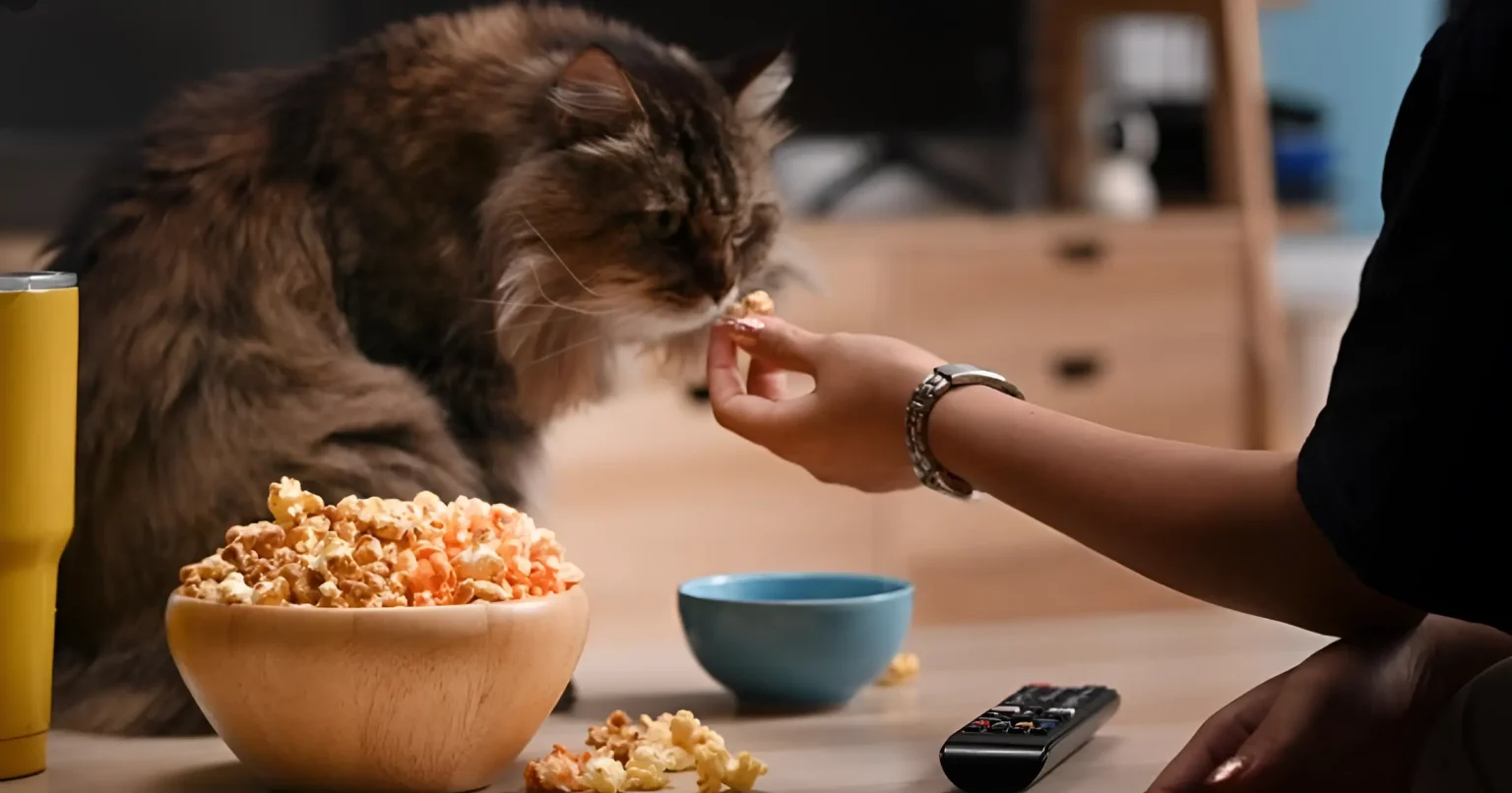
Cats are naturally curious creatures, especially when it comes to food. If you’ve ever sat down with a bowl of popcorn, chances are your cat has shown interest—sniffing, pawing, or even trying to grab a piece. This leads many pet owners to wonder: can cats eat popcorn? It may seem like a harmless snack, but when it comes to cats, even simple foods can have unexpected effects.
Understanding whether popcorn is safe for cats requires a closer look at its ingredients, how it’s prepared, and how a cat’s digestive system works. While popcorn itself is not toxic in its plain form, that does not automatically make it a suitable treat for your feline companion. There are several factors that determine whether it is safe, beneficial, or potentially harmful.
This article explores everything you need to know so you can make the best decision for your cat’s health.
What Is Popcorn Made Of?
Popcorn starts as dried corn kernels. When heated, the moisture inside the kernel turns into steam, causing it to expand and pop into the fluffy snack we recognize. On its own, plain air-popped popcorn is relatively simple in composition.
However, the popcorn most people eat is rarely plain. It is often prepared with butter, salt, oil, sugar, or flavorings. These additions are what turn popcorn into a less suitable option for cats.
The difference between plain popcorn and flavored popcorn plays a major role in determining whether it is safe to share.
Can Cats Eat Popcorn Safely?
Cats can eat plain, air-popped popcorn in very small amounts, but it is not something they need or benefit from. Unlike humans, cats are obligate carnivores. This means their bodies are designed to thrive on animal-based protein rather than plant-based foods.
Popcorn does not provide the nutrients cats require. It lacks the essential amino acids, vitamins, and minerals that come from meat. As a result, even though a small piece may not cause harm, it also does not contribute anything meaningful to a cat’s diet.
Because of this, popcorn should only ever be considered an occasional treat, if offered at all.
Why Most Popcorn Is Not Safe for Cats
The biggest issue with popcorn is not the corn itself but the way it is prepared. Most popcorn consumed by humans contains ingredients that are not suitable for cats.
Butter and oils increase the fat content, which can upset a cat’s stomach. Excess fat can lead to digestive issues such as vomiting or diarrhea. Over time, a high-fat diet can also contribute to weight gain and related health problems.
Salt is another concern. Cats require only a very small amount of sodium in their diet, and excessive intake can lead to dehydration and strain on the kidneys.
Flavored popcorn, such as caramel or cheese varieties, introduces even more risks. Sugar, artificial flavorings, and additives are not appropriate for cats and can lead to further complications.
The Risk of Choking and Digestive Issues
Popcorn may seem light and fluffy, but it can still pose physical risks to cats. Unpopped kernels are hard and can damage teeth or cause choking. Even popped kernels can sometimes get stuck in a cat’s throat or between teeth.
Cats do not chew food the same way humans do. They often swallow quickly, especially if they are curious or excited. This increases the risk of choking or swallowing pieces that are too large.
Additionally, popcorn can be difficult for some cats to digest. While a small amount may pass through without issue, larger quantities can lead to stomach discomfort or irregular bowel movements.
What Happens If a Cat Eats Popcorn?
If your cat eats a small piece of plain popcorn, there is usually no need to worry. Most cats will not experience any serious side effects from a tiny amount.
However, if the popcorn contains butter, salt, or other flavorings, the chances of digestive upset increase. You may notice symptoms such as vomiting, diarrhea, or reduced appetite.
If your cat consumes a large quantity of popcorn or shows signs of distress, it is important to monitor closely. Persistent symptoms or unusual behavior should be evaluated by a veterinarian.
Do Cats Actually Like Popcorn?
Cats are not naturally attracted to popcorn for its taste. Unlike humans, they do not crave salty or buttery flavors. Instead, their interest is often driven by curiosity.
The sound of popping kernels, the movement of the popcorn, and its unusual texture can all catch a cat’s attention. Some cats may enjoy playing with popcorn more than eating it.
This curiosity can sometimes lead to accidental ingestion, which is why it is important to keep an eye on your cat during snack time.
Nutritional Value of Popcorn for Cats
From a nutritional standpoint, popcorn offers very little for cats. It is primarily made up of carbohydrates, which are not a major component of a cat’s natural diet.
Cats rely on protein and specific nutrients found in animal tissue, such as taurine, to maintain their health. Popcorn does not provide these essential nutrients.
Feeding foods that lack nutritional value can lead to imbalances if done regularly. While an occasional treat may not cause harm, it should never replace proper meals.
Healthier Treat Alternatives for Cats
If you want to give your cat a treat, there are far better options available. Cooked chicken or turkey, served plain and without seasoning, is a much more suitable choice.
Small amounts of fish, such as tuna or salmon, can also be offered occasionally. These foods align more closely with a cat’s natural dietary needs.
There are also commercially available cat treats that are specifically designed to be safe and nutritious. These products take into account a cat’s unique requirements and avoid harmful ingredients.
Choosing the right treats ensures your cat enjoys variety without compromising health.
How Much Is Too Much?
Even when offering safe treats, moderation is key. Cats have small stomachs and specific dietary needs. Treats should only make up a small portion of their daily intake.
If you choose to give your cat plain popcorn, limit it to one or two small pieces on rare occasions. Anything more than that increases the risk of digestive upset and adds unnecessary calories.
Consistency in feeding habits helps maintain a cat’s overall health and prevents unwanted issues.
Preventing Accidental Feeding
Cats are quick and curious, which means they can easily grab food when you’re not looking. To prevent accidental feeding, it’s important to keep popcorn out of reach.
Avoid leaving bowls unattended, especially if your cat has a habit of exploring countertops or tables. Supervising your cat during meal and snack times can help prevent unwanted situations.
Training your cat to stay away from human food can also be helpful, although it may require patience and consistency.
When to Contact a Veterinarian
If your cat eats popcorn and shows signs of illness, it is important to take action. Occasional mild symptoms may resolve on their own, but persistent issues should not be ignored.
Contact a veterinarian if you notice repeated vomiting, diarrhea, lethargy, or difficulty breathing. These symptoms could indicate a more serious reaction or complication.
If your cat has swallowed a hard kernel or appears to be choking, immediate attention is necessary.
Final Thoughts
So, can cats eat popcorn? The simple answer is that plain popcorn in very small amounts is unlikely to cause harm, but it is not a recommended food for cats. The risks associated with added ingredients, choking hazards, and lack of nutritional value make it an unnecessary treat.
Cats thrive on diets that are rich in protein and tailored to their biological needs. Popcorn does not meet these requirements and can introduce avoidable risks.
As a responsible pet owner, focusing on safe, appropriate foods is the best way to ensure your cat remains healthy and happy. Avoiding snacks like popcorn, or offering them only in rare and controlled situations, is a smart choice.
Frequently Asked Questions (FAQs)
Can cats eat buttered popcorn?
No, buttered popcorn contains fat and salt that can upset a cat’s stomach and should be avoided.
Is plain popcorn safe for cats?
Plain, air-popped popcorn in very small amounts is generally safe but not necessary.
Can kittens eat popcorn?
No, kittens have sensitive digestive systems and should not be given popcorn.
What should I do if my cat eats flavored popcorn?
Monitor for symptoms like vomiting or diarrhea and contact a veterinarian if issues persist.
Are popcorn kernels dangerous for cats?
Yes, unpopped kernels can pose a choking hazard and may damage teeth.
Why does my cat try to eat popcorn?
Cats are curious and may be attracted to the movement or texture rather than the taste.
What are better treats for cats than popcorn?
Cooked chicken, fish, and specially formulated cat treats are much safer options.
For More Visits: Animalsinfo
Also Read: Can Dogs Eat Sugar Cane? 2026 Safe & Powerful Guide