

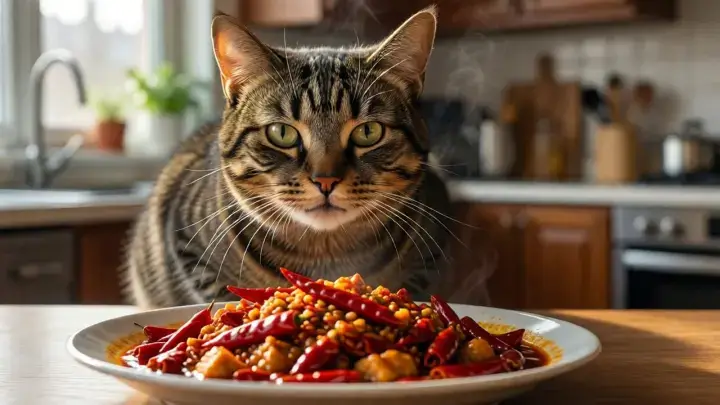
When it comes to feeding pets, many cat owners often wonder about human food safety. One of the most common questions is: can cats eat spicy food? At first, it may seem harmless to share a small bite of spicy meal with a curious cat, especially when they show interest in what we are eating. However, cats have very different digestive systems compared to humans, and what seems like a flavorful treat to us can be uncomfortable or even harmful to them.
Understanding how cats react to spicy food is important for their health, comfort, and long-term well-being. Cats are obligate carnivores, which means their bodies are designed to process meat, not heavily seasoned or spicy ingredients. To truly understand why spicy food is not suitable for cats, we need to look at how their bodies work and what happens when they consume such foods.
Understanding a Cat’s Natural Diet
Domestic cats, including breeds like domestic cat, have evolved from wild hunters. Their natural diet consists mainly of small animals such as birds and rodents. This diet is rich in protein and contains very little to no spices or artificial flavoring.
Unlike humans, cats do not require variety in seasoning to enjoy their food. Their taste receptors are not designed to appreciate spices, chili, or strong flavors. Instead, they rely more on smell and texture rather than complex taste profiles.
This biological difference is the first clue that spicy food does not belong in a cat’s diet.
What Makes Food “Spicy”?
Spicy food usually contains ingredients like chili peppers, hot sauces, or spices such as cayenne pepper. The compound responsible for the burning sensation in spicy food is called capsaicin. Humans experience this as heat or spice, but for cats, it is far more uncomfortable.
Cats do not have the same tolerance or adaptation to capsaicin. Their digestive systems are sensitive, and they lack the natural ability to process these compounds safely. Even a small amount of spicy food can lead to irritation.
What Happens If a Cat Eats Spicy Food?
If a cat accidentally consumes spicy food, several reactions may occur. These reactions vary depending on the amount consumed and the sensitivity of the individual cat. However, most cats will show signs of discomfort fairly quickly.
The most immediate reaction is irritation in the mouth and throat. Cats may begin drooling excessively, pawing at their mouth, or showing signs of distress. This is because capsaicin directly irritates sensitive tissues.
After ingestion, the stomach may also react negatively. Vomiting or diarrhea is common, as the digestive system tries to eliminate the irritant. Some cats may also refuse to eat for a short period due to discomfort.
In more sensitive cases, spicy food can lead to inflammation in the digestive tract, causing longer-lasting discomfort.
Why Cats Cannot Handle Spicy Food
The main reason cats cannot handle spicy food is their biological makeup. Their digestive system is not designed for complex seasoning or chemical irritants. Unlike humans, who may enjoy spicy flavors, cats experience these compounds as pain rather than taste.
Another important factor is their lack of taste receptors for spice. Cats do not actually “taste” spice in the same way humans do. Instead, they react to the irritation it causes. This makes spicy food not just unappealing but physically uncomfortable.
Additionally, cats have a much smaller body size compared to humans, which means even a small amount of spicy food can have a stronger effect on them.
Common Symptoms After Eating Spicy Food
When a cat consumes spicy food, the symptoms can appear quickly. These may include excessive drooling, coughing, vomiting, watery eyes, or even diarrhea. Some cats may also hide or behave unusually due to discomfort.
In some cases, spicy food can cause temporary digestive upset that lasts for several hours. While most cases are not life-threatening, repeated exposure can lead to ongoing digestive issues.
It is also important to note that spicy foods often contain other harmful ingredients such as garlic or onion powder, which are toxic to cats even in small amounts.
Are Any Spices Safe for Cats?
While spicy food is harmful, not all herbs and spices are dangerous in extremely small quantities. However, this does not mean they are necessary or beneficial for cats.
Cats do not require spices in their diet. Their nutritional needs are fully met through properly formulated cat food. Adding spices serves no health benefit and may increase the risk of digestive issues.
Even mild spices should be avoided unless specifically recommended by a veterinarian.
What Should You Do If Your Cat Eats Spicy Food?
If your cat accidentally eats spicy food, the first step is to remain calm. Most cases are mild and resolve on their own. Make sure your cat has access to fresh water to help ease irritation.
Observe your cat closely for symptoms such as vomiting, drooling, or unusual behavior. If symptoms are mild, they usually pass within a few hours.
However, if your cat shows severe distress, persistent vomiting, or refuses to eat for an extended period, it is important to consult a veterinarian.
Safe Alternatives for Treating Cats
Instead of spicy food, there are many safe and enjoyable treats that cats can have. Plain cooked chicken, turkey, or specially formulated cat treats are much better options.
Cats enjoy simple flavors, especially those that resemble their natural diet. It is always best to stick to foods designed specifically for feline nutrition.
Hydration is also important, so ensuring your cat drinks enough water is essential for overall health.
Why People Are Tempted to Share Spicy Food
Many cat owners feel tempted to share their food because their pets show curiosity. Cats often approach humans while they are eating, which can be mistaken for interest in the food itself.
However, this curiosity does not mean the food is suitable for them. Cats rely on smell and habit rather than taste preference when exploring food.
Understanding this behavior helps prevent accidental feeding of harmful foods like spicy dishes.
Long-Term Effects of Feeding Spicy Food to Cats
While a single small exposure may only cause temporary discomfort, repeated feeding of spicy food can lead to long-term digestive sensitivity. Over time, the stomach lining can become irritated, leading to chronic issues.
Cats may also develop food aversions or irregular eating habits if they associate food with discomfort.
Maintaining a consistent, appropriate diet is essential for their long-term health.
Responsible Pet Ownership
Taking care of a cat involves understanding what they should and should not eat. Responsible pet ownership means avoiding human foods that are not suitable for their biology.
Cats depend on their owners to make safe dietary choices for them. This includes avoiding spicy food, processed snacks, and other human meals that may seem harmless but are not safe for feline consumption.
Conclusion
So, can cats eat spicy food? The clear answer is no. Spicy food is not suitable for cats due to their sensitive digestive systems and inability to tolerate capsaicin and other spicy compounds.
While a small accidental bite may not cause serious harm, it can still lead to discomfort, irritation, and digestive issues. Over time, repeated exposure can negatively affect a cat’s health.
Cats thrive on simple, protein-rich diets designed specifically for them. By sticking to proper cat food and safe treats, owners can ensure their pets remain healthy, comfortable, and happy.
Understanding what cats can and cannot eat is an important part of responsible care, and avoiding spicy food is one of the simplest ways to protect their well-being.
FAQs
1. Can cats eat spicy food safely?
No, cats should not eat spicy food as it can cause irritation and digestive discomfort.
2. What happens if a cat eats spicy food?
They may experience drooling, vomiting, diarrhea, or mouth irritation.
3. Is a small amount of spicy food dangerous for cats?
A tiny amount may not be life-threatening, but it can still cause discomfort.
4. Why do cats react badly to spicy food?
Their digestive system is not designed to handle capsaicin and similar compounds.
5. Can spicy food cause long-term damage to cats?
Repeated exposure may lead to digestive sensitivity and health issues.
6. What should I do if my cat eats spicy food?
Monitor them, provide water, and contact a vet if symptoms worsen.
7. Are any spices safe for cats?
Most spices are unnecessary and should be avoided unless vet-approved.
8. What foods are better alternatives for cats?
Plain cooked meat and vet-approved cat food are the safest options.
For More Visits: Animalsinfo
Also Read: Can cats eat sunflower seeds Safe Guide 2026