


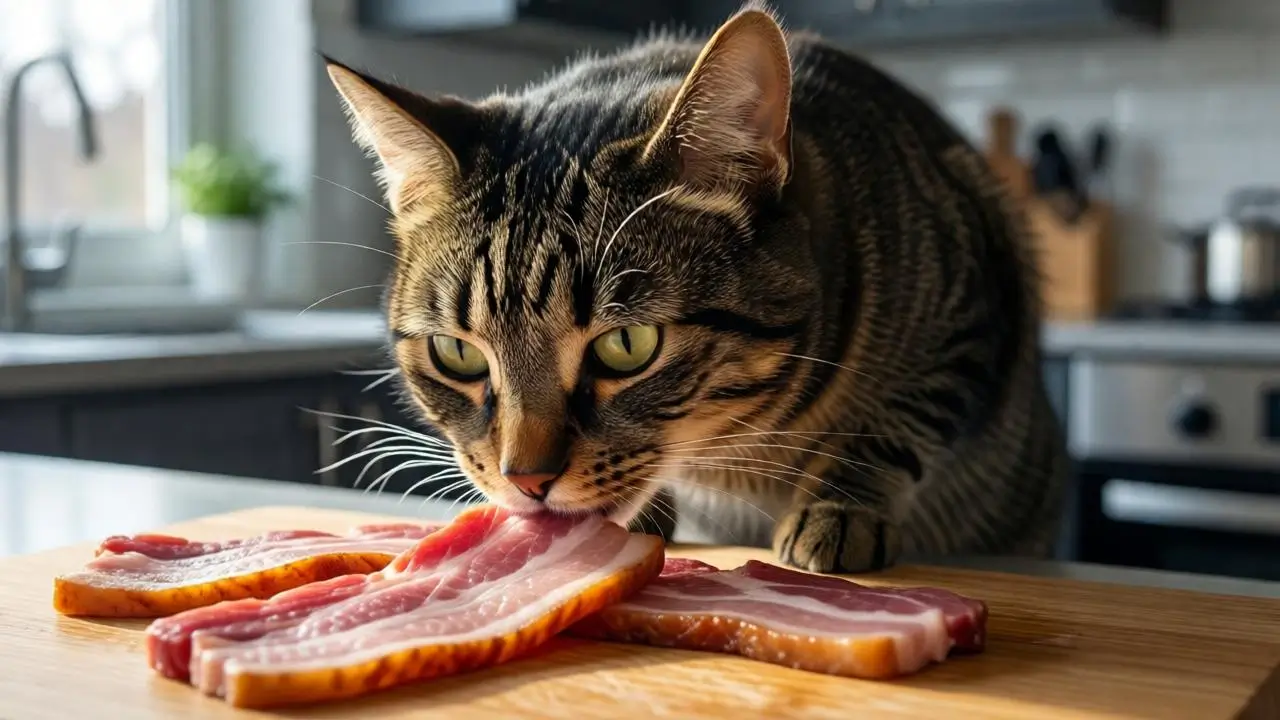
Cats are curious eaters by nature, and if you’ve ever cooked bacon at home, you’ve probably noticed your cat suddenly becoming very interested in what’s happening in the kitchen. The strong smell of bacon is almost irresistible—not just for humans, but for cats too. This often leads to a common question among pet owners: can cats eat raw bacon?
The short answer is no, raw bacon is not a safe or healthy food choice for cats. However, the full explanation is more nuanced and important to understand if you want to keep your cat healthy in the long run.
Understanding a Cat’s Natural Diet
Cats are obligate carnivores, which means their bodies are designed to thrive on animal-based protein. In the wild, cats eat raw meat, so it might seem logical to assume raw bacon would be fine. But there’s a big difference between fresh, natural prey and processed meat like bacon.
Raw bacon is not just raw meat—it is cured, salted, and often treated with preservatives. These additions make it very different from the type of raw food a cat’s body is naturally adapted to handle.
What Makes Raw Bacon Unsafe for Cats?
Raw bacon carries several risks that go beyond simple digestion issues. The main concern lies in how bacon is prepared before it even reaches your kitchen.
First, bacon contains a high level of salt. Cats have a low tolerance for sodium, and even small amounts can disrupt their internal balance. Too much salt can lead to dehydration, increased thirst, and in serious cases, sodium poisoning.
Second, raw bacon often contains preservatives such as nitrates or nitrites. These chemicals are used to enhance flavor and preserve shelf life, but they are not suitable for cats. Over time, these additives can strain a cat’s organs, especially the liver and kidneys.
Another major concern is bacteria. Raw pork can carry harmful pathogens like salmonella or parasites. While some animals have stronger resistance to certain bacteria, domesticated cats are still at risk—especially indoor cats that are not used to raw food exposure.
The Problem with Fat Content
Bacon is extremely high in fat, whether it is raw or cooked. While cats do need fat in their diet, excessive fat intake can quickly lead to health problems.
Feeding raw bacon can cause digestive upset, including vomiting or diarrhea. More seriously, it can contribute to pancreatitis, a painful and potentially life-threatening inflammation of the pancreas. This condition requires immediate veterinary attention and can become chronic if not managed properly.
Regular consumption of fatty foods like bacon can also lead to obesity. Overweight cats are more likely to develop diabetes, joint problems, and heart issues.
Can Cats Eat Cooked Bacon Instead?
Some pet owners think cooking bacon might make it safer. While cooking does reduce the risk of bacteria, it doesn’t solve the core issues. Cooked bacon is still very high in salt and fat, making it an unhealthy option.
An occasional tiny piece of cooked bacon may not harm a healthy cat, but it should never become a regular treat. Even then, it’s better to avoid it entirely and choose healthier alternatives.
Why Cats Are Attracted to Bacon
If bacon isn’t good for cats, why do they seem to love it so much? The answer lies in its strong smell and high fat content. Cats rely heavily on their sense of smell, and bacon’s aroma is particularly intense.
Fat also enhances flavor, making bacon more appealing. However, just because a cat is interested in a food doesn’t mean it is beneficial. Cats often show curiosity toward foods that are harmful to them, so it’s important for owners to make informed decisions on their behalf.
Healthier Alternatives to Raw Bacon
If you want to treat your cat, there are much better options available that align with their dietary needs. Plain, cooked meats like chicken or turkey (without seasoning) are excellent choices. These provide protein without the harmful additives found in bacon.
You can also find specially formulated cat treats that are designed to be both safe and nutritious. These treats are balanced to support your cat’s health rather than compromise it.
Even small portions of boiled fish can be a good occasional treat, as long as it is free from bones and seasoning.
The Risks of Feeding Raw Foods in General
The topic of raw feeding is often debated among pet owners. While some advocate for raw diets, it is important to understand that not all raw foods are equal.
Raw bacon falls into the category of processed raw meat, which is far more risky than fresh raw meat prepared specifically for pets. Feeding raw food without proper knowledge can expose your cat to bacteria and nutritional imbalances.
If you are considering a raw diet for your cat, it is best to consult a veterinarian who can guide you in creating a balanced and safe meal plan.
Signs Your Cat Has Eaten Raw Bacon
If your cat accidentally eats raw bacon, it doesn’t always lead to immediate serious illness, but you should monitor them closely. Some signs that your cat may be having a negative reaction include:
Loss of appetite, vomiting, diarrhea, excessive thirst, or lethargy. In more severe cases, you might notice tremors or unusual behavior, which could indicate sodium toxicity.
If any of these symptoms appear, contacting a veterinarian promptly is the safest course of action.
Long-Term Effects of Poor Diet Choices
Feeding inappropriate foods like raw bacon on a regular basis can have long-term consequences. A cat’s digestive system is sensitive, and repeated exposure to unhealthy foods can lead to chronic issues.
Kidney disease is one of the most common problems in cats, and high sodium intake can increase the risk. Similarly, a fatty diet can strain the pancreas and lead to ongoing digestive troubles.
Good nutrition plays a key role in a cat’s lifespan and quality of life. Making careful food choices today can prevent serious health problems in the future.
Responsible Feeding Practices
Being a responsible cat owner means understanding that not all human foods are suitable for pets. It’s easy to feel tempted to share food, especially when your cat seems eager, but their nutritional needs are very different.
Stick to a high-quality commercial cat food or a vet-approved diet. These are designed to provide the right balance of nutrients, including protein, vitamins, and minerals.
When introducing any new food, even safe ones, do so gradually and in small amounts. This helps prevent digestive upset and allows you to monitor your cat’s reaction.
FAQs
Can cats eat raw bacon in small amounts?
Even small amounts of raw bacon are not recommended due to its high salt, fat, and preservative content.
What happens if my cat accidentally eats raw bacon?
In many cases, a small piece may only cause mild digestive upset. However, you should monitor your cat for symptoms like vomiting or diarrhea and consult a vet if anything unusual occurs.
Is cooked bacon safer than raw bacon for cats?
Cooked bacon is slightly safer in terms of bacteria, but it still contains high levels of salt and fat, making it an unhealthy choice.
Why does my cat like bacon so much?
Cats are attracted to bacon because of its strong smell and high fat content, which enhances its flavor.
What meat is safe for cats to eat?
Plain, cooked meats like chicken, turkey, and certain types of fish (without seasoning) are safe and healthy options.
Can bacon cause serious health problems in cats?
Yes, regular consumption can lead to obesity, pancreatitis, kidney issues, and other long-term health problems.
Final Thoughts
While it might seem harmless to share a bit of raw bacon with your cat, it’s not a good idea. The combination of high salt, unhealthy fats, preservatives, and potential bacteria makes raw bacon unsuitable for feline consumption.
Cats depend on their owners to make the right choices for their health. By avoiding risky foods like raw bacon and opting for safer alternatives, you can ensure your cat stays happy, active, and healthy for years to come.
Understanding what your cat should and shouldn’t eat is one of the most important aspects of responsible pet care. When in doubt, always choose caution over curiosity—your cat’s well-being is worth it.
For More Visits: Animalsinfo