


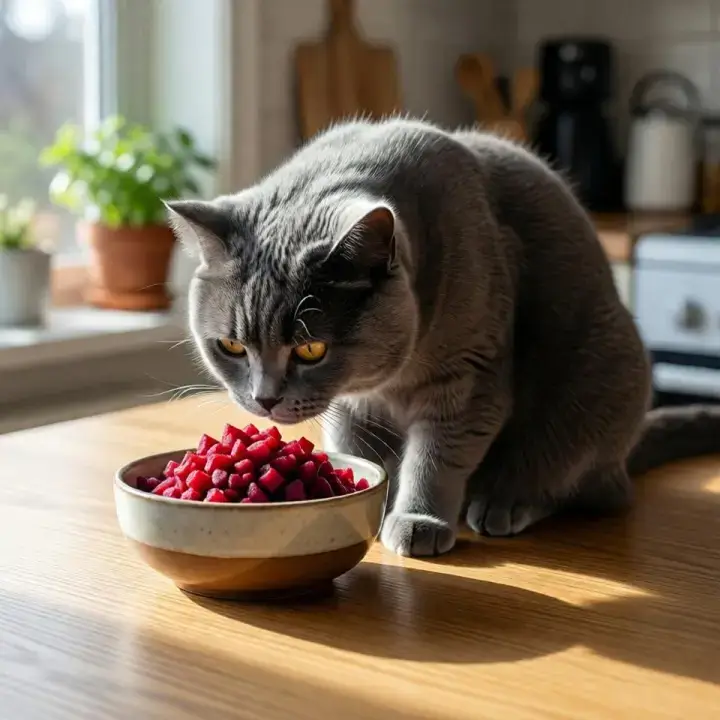
Cats are curious animals, and anyone who lives with one knows they often show interest in whatever their human is eating. From sniffing plates to pawing at vegetables on the kitchen counter, cats sometimes seem eager to taste new foods. This often raises an important question among pet owners: can cats eat beets safely?
Beets are widely known as a nutritious vegetable for humans, packed with vitamins, fiber, and antioxidants. However, cats have very different dietary needs compared to people. Before offering any human food to a feline companion, it is essential to understand whether that food is safe and beneficial for them.
The short answer is that cats can eat beets in small amounts, but they are not necessary for a cat’s diet. While beets are not toxic to cats, they should only be given occasionally and in moderation. Understanding how beets affect cats, their potential benefits, and possible risks will help you make better choices for your pet’s health.
This detailed guide explains everything cat owners need to know about feeding beets to cats.
Understanding a Cat’s Natural Diet
Before discussing beets specifically, it is important to understand what cats are naturally designed to eat. Cats are obligate carnivores, which means their bodies rely on nutrients found primarily in animal-based foods.
In the wild, cats consume prey such as small birds, rodents, and insects. These foods provide essential nutrients including:
- High-quality animal protein
- Taurine
- Essential fatty acids
- Vitamins like A and B12
Vegetables and plant-based foods are not a natural part of a cat’s diet. Their digestive systems are shorter than those of herbivores or omnivores, meaning they are not designed to process large amounts of plant material.
However, this does not automatically mean that all vegetables are harmful. Some vegetables, including beets, can be eaten safely in small portions. The key is understanding their role: they should be treated as an occasional treat, not a dietary staple.
What Are Beets?
Beets, also called beetroot, are root vegetables known for their deep red color and slightly sweet flavor. They are commonly used in salads, juices, and cooked dishes.
For humans, beets are valued for their nutritional content. They contain:
- Fiber
- Vitamin C
- Folate
- Potassium
- Natural antioxidants
These nutrients support human health in several ways. However, the nutritional benefits that apply to humans do not always translate the same way for cats.
Cats process nutrients differently, and many plant-based compounds offer little nutritional value to them.
Are Beets Safe for Cats?
In general, beets are not toxic to cats. If a cat eats a small piece of cooked beet, it is unlikely to cause harm.
That said, safety does not necessarily mean suitability. Because cats are carnivores, vegetables like beets do not contribute significantly to their nutritional needs. Feeding large amounts may even lead to digestive issues.
Most veterinarians agree that small, occasional servings of cooked beet are acceptable, but they should never replace balanced cat food formulated specifically for feline health.
Possible Benefits of Beets for Cats
Although cats do not require vegetables, beets do contain certain compounds that may offer mild benefits when consumed in tiny quantities.
Fiber for Digestion
Beets contain dietary fiber, which can sometimes help support digestion. A small amount of fiber may assist with mild constipation in some cats.
However, cats typically obtain sufficient digestive support from their regular diet, especially if they eat high-quality commercial cat food.
Natural Antioxidants
Beets are rich in antioxidants that help fight oxidative stress. While cats primarily obtain essential nutrients from animal proteins, trace amounts of antioxidants from vegetables may provide minor support for overall health.
Still, these benefits are limited for cats and should not be considered a reason to regularly feed beets.
Hydration Support
Cooked beets contain water, which can contribute slightly to hydration. Cats that eat wet food usually get enough moisture from their meals, so the additional hydration from beets is minimal.
Potential Risks of Feeding Beets to Cats
Even though beets are not poisonous to cats, feeding them incorrectly can lead to problems. Cat owners should understand the possible risks before offering this vegetable.
Digestive Upset
A cat’s digestive system is not designed for large amounts of plant matter. Eating too many beets may cause:
- Stomach discomfort
- Vomiting
- Diarrhea
Cats with sensitive stomachs are especially prone to digestive issues when trying unfamiliar foods.
High Natural Sugar Content
Beets contain natural sugars. While the sugar levels are not dangerous in tiny amounts, frequent feeding could contribute to unnecessary calorie intake.
This may be particularly concerning for cats that are overweight or prone to diabetes.
Urine and Stool Color Changes
One unusual effect of eating beets is the potential change in urine or stool color. The natural pigments in beets can sometimes make urine appear slightly pink or reddish.
For cat owners unfamiliar with this effect, it may cause unnecessary concern because it can resemble blood in urine.
Kidney Concerns
Beets contain oxalates, compounds that may contribute to kidney stone formation in susceptible animals. Cats with a history of urinary or kidney issues should avoid foods high in oxalates unless approved by a veterinarian.
Raw vs Cooked Beets: Which Is Better for Cats?
If you decide to give your cat a small piece of beet, cooked beets are the safer option.
Raw beets are hard and difficult for cats to chew. They can also be harder to digest and may cause stomach discomfort.
Cooked beets are softer and easier for a cat’s digestive system to handle. However, they should be plain, without any seasoning, oil, salt, or spices.
Ingredients commonly used in human recipes, such as garlic and onion, are toxic to cats and must never be included.
How to Safely Feed Beets to Cats
If you want your cat to try beets, preparation and portion size are extremely important.
Start with a very small amount. A tiny cube of cooked beet is enough for a cat to taste. Observe your pet afterward to ensure there are no signs of digestive upset.
The beet should be:
- Fully cooked and soft
- Plain, with no seasonings
- Cut into small pieces
Cats often reject unfamiliar foods, and many will simply sniff and walk away. This is perfectly normal. Beets are not essential, so there is no need to encourage a cat to eat them.
Treat vegetables like occasional experiments rather than regular snacks.
How Often Can Cats Eat Beets?
Beets should only be given occasionally and in very small amounts.
A good guideline is that treats and human foods should not make up more than about ten percent of a cat’s total diet. The remaining portion should consist of nutritionally balanced cat food designed for feline needs.
Offering beets once in a while is unlikely to cause harm, but frequent servings are unnecessary.
Signs Your Cat Should Not Eat Beets
Some cats may not tolerate beets well. If you notice any unusual symptoms after feeding them, it is best to avoid this vegetable in the future.
Watch for signs such as:
- Vomiting
- Diarrhea
- Loss of appetite
- Lethargy
- Excessive grooming of the stomach area
These symptoms may indicate digestive discomfort or sensitivity to certain foods.
When in doubt, sticking to cat-specific treats is always the safer choice.
Healthier Treat Alternatives for Cats
Instead of vegetables, cats usually benefit more from protein-based treats. These align better with their natural dietary requirements.
Good treat options include small portions of:
- Cooked chicken
- Cooked turkey
- Plain fish
- Commercial cat treats designed for feline nutrition
These foods provide protein and amino acids that support muscle health and energy levels.
Compared to vegetables like beets, protein-based snacks are more compatible with a cat’s biological needs.
When to Avoid Feeding Beets Completely
In certain situations, it is better to avoid beets entirely.
Cats with the following conditions should not be given beets unless a veterinarian specifically approves:
- Kidney disease
- Urinary tract issues
- Diabetes
- Sensitive digestion
Because every cat’s health condition is different, veterinary advice is always the safest route when introducing new foods.
Final Thoughts
So, can cats eat beets? Yes, cats can eat small amounts of cooked beets without serious risk. They are not toxic and may be safe as an occasional treat.
However, beets offer very limited nutritional value for cats. Since felines thrive on animal-based protein, vegetables should never replace their primary diet.
If you decide to offer beets, keep the portion extremely small, serve them cooked and plain, and watch for any digestive reactions. Many cats will ignore vegetables altogether, which is perfectly normal.
The most important thing for a cat’s health is a balanced diet formulated specifically for felines. Occasional treats can add variety, but they should never compromise proper nutrition.
By understanding your cat’s dietary needs and introducing new foods carefully, you can keep your feline companion healthy, happy, and safe.
Frequently Asked Questions (FAQs)
Can cats eat raw beets?
Raw beets are not recommended for cats. They are hard, difficult to chew, and may cause digestive discomfort. Cooked beets are safer if offered in very small amounts.
Are beets toxic to cats?
No, beets are not toxic to cats. However, they should only be given occasionally and in tiny portions because they do not provide essential nutrients for feline health.
Can kittens eat beets?
Kittens should not eat beets. Young cats require highly specialized nutrition to support growth and development, and their diet should consist only of kitten-formulated food.
Why did my cat’s urine turn red after eating beets?
Beets contain natural pigments that can sometimes change the color of urine or stool. This effect is harmless, but if the color change continues or appears without beet consumption, a veterinarian should check your cat.
Can cats eat canned beets?
Canned beets are usually not suitable for cats because they often contain salt, preservatives, or added ingredients. Fresh cooked beets without seasoning are a safer option.
How much beet can I give my cat?
A tiny piece, about the size of a small cube, is enough for a cat. Large portions should be avoided because they may cause digestive upset.
Do cats like the taste of beets?
Most cats are not interested in vegetables. Some may sniff or lick them out of curiosity, but many cats simply ignore beets.
For More Visits: Animalsinfo