

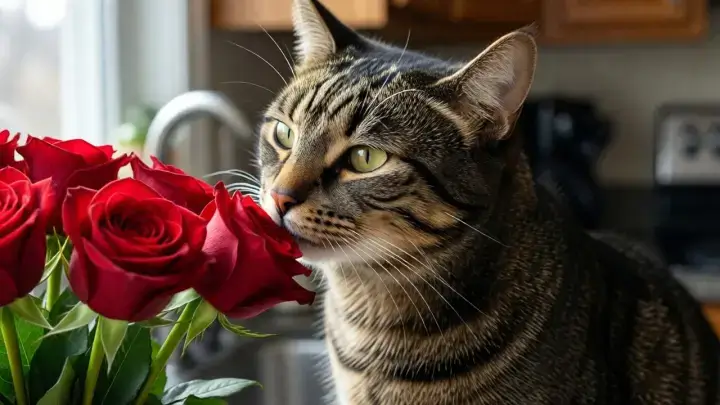
Cats are curious animals that often explore their surroundings by sniffing, chewing, or pawing at objects. Many pet owners enjoy decorating their homes with flowers, and roses are among the most common choices. Their beauty and fragrance make them popular for gardens, bouquets, and indoor decorations. However, when a cat begins investigating a flower arrangement, owners naturally become concerned about safety. This leads to an important question: can cats eat roses?
The reassuring news for cat owners is that roses themselves are generally not toxic to cats. If a cat nibbles on rose petals or leaves, it usually does not result in serious poisoning. However, that does not necessarily mean roses should be treated as a snack for cats. While the plant is considered safe compared to many other flowers, there are still potential concerns related to digestion, plant thorns, and chemicals used during cultivation.
Cats do not need plants or flowers in their diet. Their bodies are designed to thrive on animal-based nutrition, and most plant material provides little nutritional value to them. Roses should therefore never be intentionally fed to cats. Instead, they should simply be treated as decorative plants that curious cats might occasionally investigate.
Understanding whether roses pose a risk, why cats chew plants, and how to keep your pet safe around flowers can help create a secure and comfortable environment for both pets and plants. This guide explains everything cat owners should know about cats and roses.
Understanding a Cat’s Natural Diet
Before discussing roses in detail, it is helpful to understand how cats are naturally meant to eat. Cats are classified as obligate carnivores, meaning their bodies rely primarily on nutrients obtained from animal sources.
In the wild, cats hunt small animals such as birds, rodents, and insects. These prey provide the protein, fat, and essential amino acids that cats require to maintain healthy muscles, organs, and energy levels. One important nutrient found in animal tissue is taurine, which supports heart function, vision, and overall health.
Because of their biological design, cats have digestive systems that are optimized for processing meat rather than plant material. While they may occasionally chew grass or plants, these items are not necessary for their nutrition.
Most commercial cat foods are carefully balanced to provide the nutrients cats need. These foods contain the appropriate levels of protein, fats, vitamins, and minerals that support a healthy life.
When a cat chews on plants such as roses, it is usually not because the plant offers nutritional value. Instead, curiosity or instinct is often the main reason.
Are Roses Toxic to Cats?
The good news is that true roses from the Rosa plant family are generally considered safe for cats. This means that the petals, leaves, and stems do not contain toxic compounds that cause poisoning in cats.
If a cat nibbles on a rose petal or leaf, the most common result is mild stomach irritation at worst. Many cats that taste small pieces of rose petals experience no symptoms at all.
However, it is important to note that not all plants called “roses” are actually true roses. Some plants have names that include the word “rose” but belong to entirely different plant families. These plants can sometimes be harmful to pets.
Because plant names can be confusing, it is always best for pet owners to confirm exactly what type of plant they have in their home or garden.
Even though real roses are not toxic, it is still wise to prevent cats from chewing them frequently.
Why Cats Chew on Plants
Many cat owners notice their pets chewing on plants even when they have plenty of food available. This behavior can be puzzling, but it is actually quite common.
One reason cats chew plants is simple curiosity. Cats explore the world using their senses, especially smell and touch. A moving leaf or colorful petal can quickly capture a cat’s attention.
Another possible reason involves instinct. In the wild, cats sometimes eat grass, which may help with digestion or assist in passing hairballs. Some indoor cats attempt to mimic this behavior by chewing houseplants.
Boredom can also play a role. Cats that lack toys or stimulation may turn to plants as a source of entertainment.
Finally, texture may attract them. Some cats simply enjoy the feeling of chewing soft leaves or petals.
Although this behavior is natural, it can sometimes create risks if the plant involved is harmful. Fortunately, roses are among the safer flowers when it comes to cats.
Potential Risks of Roses for Cats
Even though roses are not toxic, they can still create certain problems for cats if they are chewed or swallowed.
One concern involves the thorns found on rose stems. These sharp structures can scratch a cat’s mouth, tongue, or paws. If a cat attempts to bite a thorny stem, it could experience pain or minor injury.
Another possible issue is digestive irritation. While rose petals are not poisonous, eating large quantities of plant material can upset a cat’s stomach. Symptoms may include vomiting or mild diarrhea.
Chemicals present another risk. Roses purchased from stores or grown in gardens are sometimes treated with pesticides or fertilizers. These substances can be harmful if ingested by pets.
Because of these risks, it is best to discourage cats from chewing roses regularly, even though the plant itself is not toxic.
Are Rose Petals Safe for Cats?
Rose petals are considered the least problematic part of the plant. They are soft, non-toxic, and unlikely to cause injury when touched or lightly chewed.
If a curious cat eats a small piece of a rose petal, it will usually pass through the digestive system without causing harm. However, rose petals still do not provide any meaningful nutrition for cats.
Large amounts of petals could potentially irritate a cat’s stomach. Cats are not built to digest plant material in significant quantities, and eating too many petals could lead to vomiting.
For this reason, rose petals should never be intentionally offered as food. They should simply remain decorative elements that cats occasionally investigate.
The Danger of Chemicals on Roses
One of the most overlooked risks associated with roses is the presence of chemical treatments. Many flowers grown commercially are sprayed with pesticides to protect them from insects and disease.
These chemicals can remain on the surface of petals and leaves. If a cat chews the plant, it may ingest small amounts of these substances.
Even tiny amounts of certain pesticides can irritate a cat’s digestive system or cause other health issues. Fertilizers used in garden soil can also pose risks if a cat digs or chews near the plant.
If you keep roses in your home, it is best to ensure they are free from harmful chemicals. Washing petals or choosing organically grown roses can reduce potential risks.
How to Keep Cats Safe Around Roses
If you enjoy having roses in your home or garden, there are several steps you can take to keep your cat safe.
Placing flower arrangements out of reach is one of the simplest solutions. Cats are less likely to chew on plants that are not easily accessible.
Providing safe alternatives can also help redirect your cat’s attention. Many pet stores sell cat grass or catnip plants designed specifically for feline consumption. These options allow cats to chew plants safely.
Regular playtime and mental stimulation can reduce boredom, which may decrease the likelihood of plant chewing.
Finally, removing thorns from indoor rose stems can reduce the risk of injury if a curious cat decides to investigate.
Signs That a Cat May Have Eaten Too Much Plant Material
If a cat consumes a large amount of any plant material, including roses, it may experience mild digestive discomfort.
Common symptoms may include vomiting, drooling, or reduced appetite. In most cases, these symptoms are temporary and resolve on their own.
However, if symptoms become severe or last longer than a day, veterinary attention may be necessary. Persistent vomiting, lethargy, or unusual behavior should never be ignored.
Monitoring your cat’s behavior around plants can help prevent these situations from occurring.
Safer Plant Options for Cat-Friendly Homes
For cat owners who enjoy houseplants, choosing pet-safe plants can reduce stress and potential risks. Several plants are considered safe for homes with cats.
Cat grass is one of the best options because it satisfies a cat’s instinct to chew greenery. Spider plants and certain types of ferns are also commonly regarded as non-toxic.
Even with safe plants, supervision is still recommended. Cats may chew excessively out of curiosity or boredom, which can still lead to stomach upset.
Creating a balanced environment with safe plants and engaging activities helps maintain both a beautiful home and a healthy pet.
Frequently Asked Questions (FAQs)
1. Can cats eat rose petals safely?
Yes, rose petals are generally safe for cats and are not toxic. However, they should not be eaten regularly because they offer no nutritional value.
2. Are rose thorns dangerous for cats?
Yes, rose thorns can scratch or injure a cat’s mouth or paws. Removing thorns from indoor roses can help prevent accidents.
3. What happens if a cat eats a rose leaf?
Most cats will not experience serious problems after eating a small rose leaf. At worst, mild stomach upset may occur.
4. Are all plants called “roses” safe for cats?
No. Some plants with “rose” in their name belong to different plant families and may be harmful. It is important to identify the exact plant species.
5. Why does my cat chew on roses?
Cats often chew plants out of curiosity, boredom, or instinct. The movement and texture of flowers may attract their attention.
6. Should I remove roses from my home if I have a cat?
Not necessarily. True roses are not toxic, but placing them out of reach and removing thorns can help reduce potential risks.
Final Thoughts-Can cats eat roses
So, can cats eat roses? The answer is that roses themselves are not toxic to cats, and small nibbles of petals or leaves usually do not cause harm. However, roses are not meant to be food for cats, and regular chewing should be discouraged.
Potential risks such as thorns, pesticides, and digestive irritation make it wise for cat owners to supervise their pets around flowers. By keeping roses out of reach, providing safe plant alternatives, and ensuring your cat has plenty of enrichment, you can prevent unwanted plant chewing.
A cat’s diet should always focus on balanced, high-quality cat food that provides the nutrients needed for long-term health. Decorative plants like roses can remain part of your home, but they should never replace proper feline nutrition.
With careful attention and a safe environment, both cats and flowers can coexist peacefully in the same household.
For More Visits: Animalsinfo
Also Read: Can Cats Eat Ham? Surprising Guide for 2026