

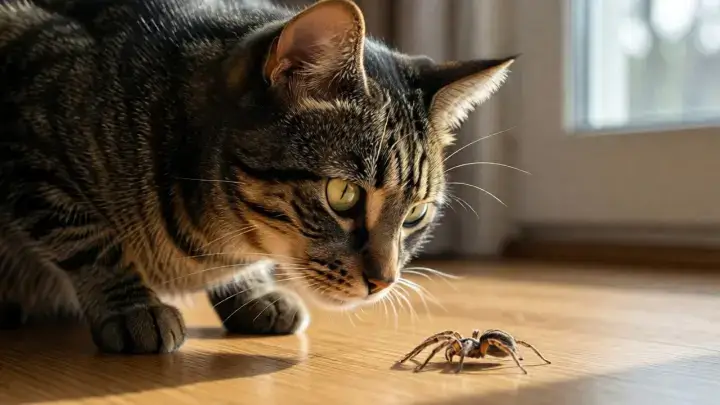
Cats are naturally curious hunters. Even the most well-fed indoor cat will often chase moving objects, including insects and small creatures that appear inside the home. One of the most common encounters pet owners notice is their cat interacting with spiders. This leads to an important question: can cats eat spiders?
The short answer is yes, cats can eat spiders in most cases without serious harm. However, the full answer is more detailed, because not all spiders are the same, and not all situations are completely risk-free. Understanding how cats interact with spiders, whether it is safe, and what risks may exist helps pet owners make better decisions for their pet’s health and safety.
This article explores everything in detail, including feline hunting behavior, spider safety, possible risks, and what you should do if your cat eats a spider.
Understanding a Cat’s Natural Hunting Instinct
Cats are born hunters. Their instincts are deeply rooted in survival behavior that developed long before domestication. Even domestic cats that live indoors retain strong predatory instincts.
Anything that moves quickly or unpredictably can trigger a cat’s attention. This includes flies, moths, ants, and spiders. The movement of spiders, especially their sudden crawling patterns, makes them an easy target for a cat’s natural hunting response.
For cats, chasing spiders is not just about food. It is also mental stimulation and play. In many cases, cats bat, chase, or observe spiders without actually eating them. However, some cats may eventually consume the spider after catching it.
Can Cats Eat Spiders Safely?
In most situations, yes, cats can eat spiders without major health issues. The majority of household spiders are not toxic to cats, and if ingested in small amounts, they usually pass through the digestive system without causing harm.
However, safety depends on the type of spider. While common indoor spiders are harmless, some species can pose risks if bitten or eaten.
It is important to understand that “can eat” does not always mean “should eat regularly.” Spiders are not part of a cat’s natural diet and do not provide nutritional value. They are simply incidental prey.
Why Cats Are Attracted to Spiders
Cats do not eat spiders for nutritional reasons. Their attraction is purely instinctive. Movement is the primary trigger. Spiders move in unpredictable ways, which makes them interesting to cats.
The size of spiders also makes them easy prey. Unlike larger insects, spiders are small enough for cats to catch quickly. Their movement patterns mimic prey behavior, which activates a cat’s hunting response.
Some cats may also play with spiders without eating them. Others may swallow them accidentally during play.
Are Spiders Dangerous for Cats?
Most spiders found inside homes are harmless to both humans and cats. These include common house spiders that feed on small insects. If a cat eats one of these, there is usually no cause for concern.
However, some spiders can be dangerous. Venomous species may cause reactions if a cat is bitten during interaction. In rare cases, ingestion of certain spiders could also lead to mild symptoms depending on venom type.
The main risk is not from eating the spider itself, but from being bitten while playing with it. Cats usually attack spiders with paws first, which reduces the risk of direct ingestion of venom.
What Happens If a Cat Eats a Spider?
If a cat eats a harmless spider, there is typically no noticeable effect. The spider is digested like any small insect. Cats have strong stomach acid designed to break down animal matter, including insects.
In most cases, owners may not even notice that the cat has eaten a spider unless they witness it.
However, if the spider is venomous, mild symptoms may appear. These could include temporary drooling, mild vomiting, or slight discomfort. Severe reactions are extremely rare but should be monitored if they occur.
Venomous Spiders and Cats
While most spiders are harmless, certain species in some regions can be venomous. The risk depends on geographic location and spider type.
If a cat is bitten by a venomous spider, symptoms may include swelling, pain at the bite site, or unusual behavior such as lethargy. In such cases, veterinary attention is important.
It is important to note that cats are naturally cautious animals. They often avoid dangerous situations instinctively, but accidents can still happen during play.
Do Spiders Provide Any Nutritional Value?
Spiders are small insects and contain minimal nutritional value for cats. While they do contain protein, the amount is very small and not significant in a cat’s diet.
Cats require balanced nutrition from high-quality animal protein sources such as meat-based cat food. Spiders do not contribute meaningfully to their dietary needs.
In other words, eating spiders is more of a behavioral action than a nutritional one.
Indoor Cats vs Outdoor Cats
The behavior of eating spiders is more commonly seen in indoor cats because they encounter insects inside the home environment.
Outdoor cats may also eat spiders, but they are exposed to a wider variety of prey, including rodents, birds, and other insects. As a result, spiders are a very minor part of their overall hunting behavior.
Indoor cats, on the other hand, may treat spiders as one of the few moving “targets” available in their environment.
Should You Stop Your Cat from Eating Spiders?
In most cases, there is no need to panic if your cat eats a spider occasionally. It is generally harmless. However, allowing frequent hunting of insects is not always ideal.
The main concern is not spiders themselves but potential exposure to harmful species or chemicals. Some spiders may have been exposed to pesticides or cleaning chemicals, which could indirectly affect your cat.
If you want to reduce spider hunting behavior, you can focus on keeping your home clean and using safe pest control methods.
Behavioral Benefits of Hunting Spiders
From a behavioral perspective, chasing spiders provides mental stimulation for cats. It engages their natural instincts and keeps them active.
Indoor cats especially benefit from activities that mimic hunting behavior. This helps prevent boredom and supports emotional wellbeing.
However, safe alternatives such as cat toys are often better choices because they avoid any risk of venom or contamination.
Signs to Watch After a Cat Eats a Spider
In most situations, cats show no reaction after eating a spider. However, pet owners should still observe their cat for unusual behavior.
If a cat appears normal, active, and continues eating and drinking as usual, there is usually no concern. If mild symptoms such as vomiting or drooling occur once and resolve quickly, it is typically not serious.
Persistent symptoms or unusual lethargy should always be checked by a veterinarian, especially if there is any chance the spider was venomous.
How to Reduce Spider Encounters at Home
If you are concerned about your cat eating spiders, reducing spider presence in your home is a practical approach.
Keeping floors clean, removing webs, and sealing entry points can help reduce insect activity. Regular cleaning also discourages spiders from building webs indoors.
However, it is also important to remember that spiders play a role in controlling other insect populations. Completely eliminating them is neither necessary nor always possible.
Conclusion
So, can cats eat spiders? Yes, in most cases they can, and it is generally not harmful when it involves common household spiders. Cats are natural hunters, and their interaction with spiders is part of their instinctive behavior.
However, not all spiders are safe, and there is a small risk if a cat encounters a venomous species or is bitten during play. While spiders do not offer meaningful nutrition, they are usually harmless when occasionally consumed.
Understanding your cat’s behavior and maintaining a safe environment is the best way to ensure their wellbeing. Occasional spider encounters are normal, but safety and observation remain important for responsible pet care.
FAQs
1. Can cats eat spiders safely?
Yes, most common spiders are harmless if eaten by cats in small amounts.
2. Are spiders toxic to cats?
Most spiders are not toxic, but some rare species can be dangerous if they bite.
3. What happens if a cat eats a spider?
Usually nothing serious; the spider is digested without issues.
4. Do cats get sick from eating spiders?
Only in rare cases involving venomous spiders or allergic reactions.
5. Why do cats hunt spiders?
It is due to natural hunting instincts triggered by movement.
6. Should I stop my cat from eating spiders?
Occasional eating is fine, but reducing exposure is recommended for safety.
For More Visits: Animalsinfo