

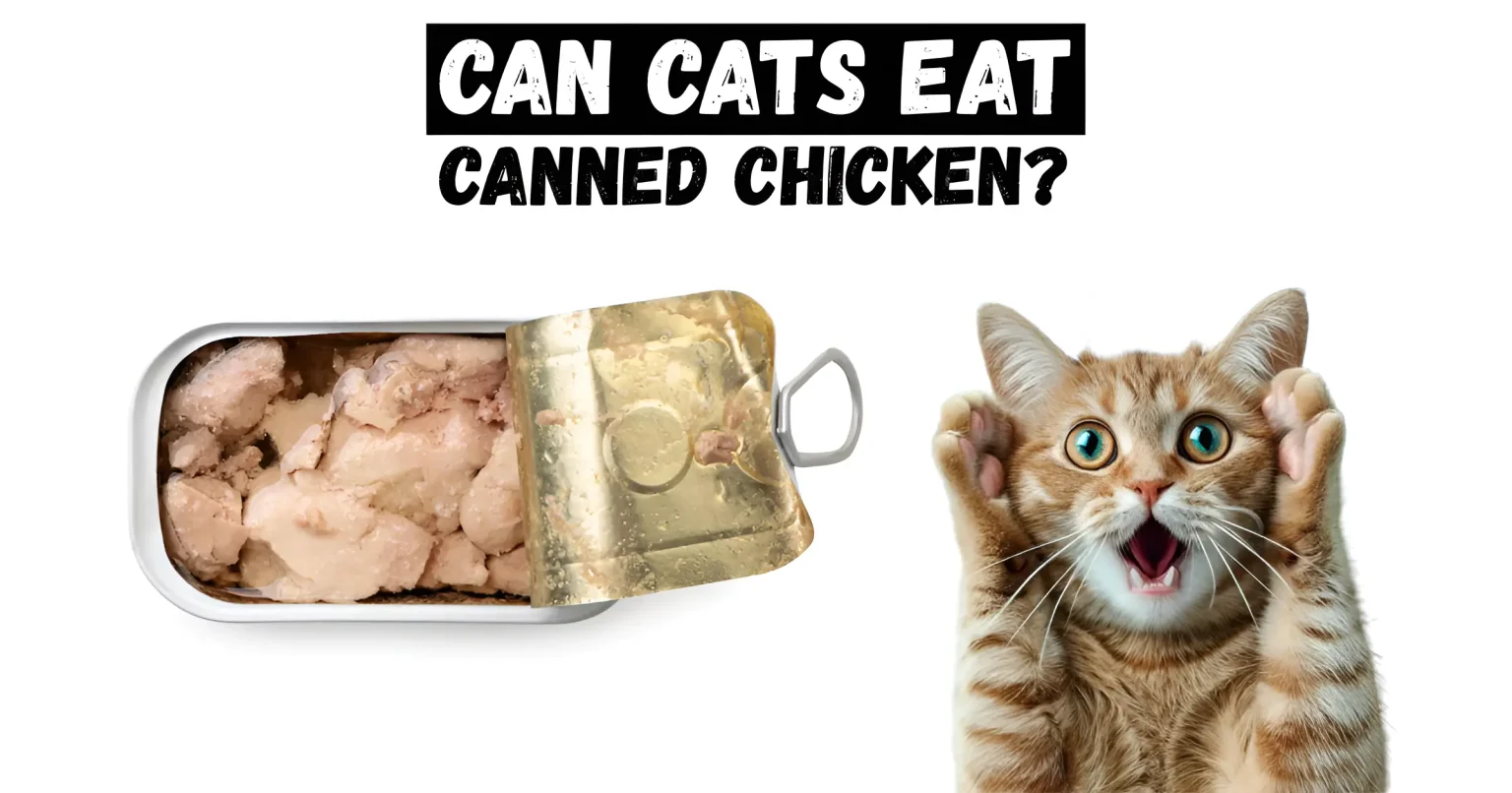
If you have ever reached into your pantry for a can of chicken and found your cat appearing at your side with that particular alertness they reserve for moments involving meat, you have probably wondered whether canned chicken is something you can safely share with them. It seems like it should be straightforward — chicken is one of the most commonly used proteins in commercial cat food, cats are obligate carnivores that thrive on animal protein, and canned chicken is just cooked chicken, right? The reality is more layered than that initial logic suggests. Can cats eat canned chicken? Canned chicken is not toxic to cats in the way that onions, grapes, or citrus are, and in its most ideal form it can actually be a reasonable occasional treat. But the version of canned chicken that is safe for cats and the version sitting in most kitchen pantries are often quite different things, and understanding those differences is what determines whether you are giving your cat a harmless snack or inadvertently causing them harm over time.
Why Cats Are So Interested in Canned Chicken
The attraction most cats show toward canned chicken is rooted in exactly the same biological drives that make them seek out any high-quality animal protein source. Cats are obligate carnivores, meaning their entire metabolic and physiological system is built around consuming and processing animal protein as the primary source of nutrition. Unlike dogs or humans, cats have no meaningful biological need for carbohydrates and derive virtually all of their energy, essential amino acids, and critical nutrients from animal-based foods.
Canned chicken produces an aroma that registers as deeply appealing to a cat’s highly sensitive olfactory system. The smell of cooked, preserved chicken — particularly the broth or liquid that surrounds it in the can — carries protein-based aromatic compounds that trigger a cat’s appetite and food-seeking behavior almost immediately. This is not random curiosity. It is a cat’s instincts accurately identifying something that smells nutritionally appropriate for their biology, even if the specific product comes with complications that those instincts cannot evaluate.
The Core Question — Is Canned Chicken Actually Safe for Cats
The honest answer to whether canned chicken is safe for cats is: it depends almost entirely on which canned chicken you are talking about. There is an enormous range of canned chicken products available, and they vary significantly in their sodium content, added ingredients, seasoning, and overall formulation. That variation is what makes a blanket yes or no answer inadequate and potentially misleading.
Plain, unseasoned canned chicken packed in water with no added salt, no broth additives, no seasonings, and no other ingredients beyond chicken and water is the version that comes closest to being appropriate for cats. In this form, canned chicken is essentially just cooked chicken that has been preserved through the canning process, and plain cooked chicken is one of the more cat-friendly human foods that exists. It is high in protein, relatively low in fat compared to darker meat or skin-on preparations, and free from the carbohydrates and plant-based compounds that cause problems for cats.
The problem is that plain, no-salt-added canned chicken represents only a fraction of what is available on grocery store shelves. The majority of canned chicken products contain added salt, chicken broth with its own sodium content, flavor enhancers, and sometimes additional seasonings or preservatives. These additions are what transform a potentially acceptable cat treat into something that can cause real harm with regular consumption.
Sodium Is the Most Pervasive and Underestimated Risk
Across virtually all categories of human food that cats might encounter, sodium is one of the most consistently problematic elements, and canned chicken is a particularly important example of this because sodium is so universally present in canned food products. The canning industry relies heavily on salt as a preservative and flavor enhancer, and even products that do not taste particularly salty to human palates often contain sodium levels that are completely out of proportion to what a cat’s system can handle safely.
A cat’s daily sodium requirement is extremely modest — far lower than what humans need and dramatically lower than what most processed human foods contain. Cats’ kidneys are already performing demanding work filtering the byproducts of a high-protein diet, and excess dietary sodium adds a significant additional burden to those organs. In the short term, high sodium intake causes excessive thirst and frequent urination as the kidneys work to excrete the surplus. Over time and with repeated exposure, elevated dietary sodium contributes to hypertension and progressive kidney damage.
This matters enormously in the context of canned chicken because kidney disease is one of the most common and serious health conditions affecting domestic cats, particularly those over the age of seven. Estimates suggest that a very significant proportion of older cats develop some degree of chronic kidney disease during their lifetime, and dietary management — including careful sodium restriction — is one of the primary tools veterinarians use to slow the progression of this condition. Feeding sodium-containing human foods like standard canned chicken to a cat with kidney disease, even occasionally, actively works against that management.
A typical can of standard canned chicken contains anywhere from 200 to 400 milligrams of sodium per serving, depending on the brand and formulation. Even the lower end of that range represents a meaningful sodium load for a cat, and many cats are considerably smaller than the human serving size calculations that produce those numbers are based on. A small cat consuming what seems like a modest amount of canned chicken could be receiving a disproportionately high sodium dose relative to their body weight and kidney capacity.
Added Broth and Flavoring Compounds Compound the Problem
Beyond straightforward salt addition, many canned chicken products are packed in chicken broth rather than plain water, and the broth itself introduces additional complications. Commercial chicken broth almost universally contains onion, garlic, or both as flavor components, along with additional salt and sometimes other seasonings. Even broth that does not list garlic or onion as primary ingredients often contains them in small quantities as part of natural flavoring blends.
This matters enormously for cats because garlic and onion are toxic to them. Both belong to the Allium family of plants, whose organosulfide compounds cause oxidative damage to feline red blood cells, leading to hemolytic anemia — a condition in which red blood cells are destroyed faster than the cat’s body can replace them. The resulting anemia deprives tissues of adequate oxygen and, depending on severity, can cause lethargy, weakness, pale or yellowish gums, rapid breathing, and in serious cases collapse requiring emergency veterinary intervention.
What makes broth-based Allium exposure particularly concerning is that the quantities involved are often invisible. A can of chicken packed in broth does not list garlic or onion prominently because these are flavor components rather than primary ingredients, but their toxic compounds are present in the liquid that saturates the chicken meat throughout the canning process. A cat eating chicken from such a product is not just eating chicken — they are eating chicken that has absorbed broth containing compounds that are harmful to their red blood cells.
The delayed onset of Allium toxicity adds another layer of difficulty. Symptoms may not appear for 24 to 72 hours after ingestion, meaning a cat can seem completely normal while the biological process of harm is already underway. This delay makes it easy to incorrectly conclude that a food was safe based on the absence of immediate symptoms.
Preservatives and Additives in Canned Chicken
The canning process itself requires preservatives to ensure food safety and shelf stability, and many canned chicken products contain additional chemical preservatives, flavor enhancers like monosodium glutamate, and various stabilizers that have no established safety profile for cats. Cats metabolize many compounds differently than humans do because of specific enzymatic differences in their liver, and substances that are harmless in humans can accumulate to problematic levels in cats with repeated exposure.
Monosodium glutamate, commonly known as MSG, is present in many canned chicken products either as a direct additive or as a component of added broth and natural flavor blends. While MSG is not classically toxic to cats, it contributes to the overall sodium load of the product and may cause digestive sensitivity in some individual cats. The broader principle of minimizing unnecessary chemical additives in a cat’s diet applies directly here — every additive a cat consumes is something their liver must process, and the cumulative burden of multiple additives consumed regularly adds up over time.
How Plain Canned Chicken Compares to Cat Food
A question worth addressing directly is how plain, no-salt-added canned chicken compares to the canned cat food that is specifically formulated for feline nutrition. The comparison reveals why, even in its most ideal form, canned chicken cannot replace or fully substitute for proper cat food.
High-quality canned cat food is formulated to meet the complete nutritional needs of cats, including specific requirements for taurine — an essential amino acid that cats cannot synthesize in sufficient quantities and must obtain from their diet. Taurine deficiency in cats causes serious and potentially irreversible damage to the heart and eyes, leading to dilated cardiomyopathy and retinal degeneration respectively. Plain canned chicken contains taurine, but not in the carefully calculated amounts that complete cat food provides, and it does not contain the full spectrum of vitamins, minerals, and fatty acids that a formulated cat food delivers.
This distinction matters because it draws a clear line between using plain canned chicken as an occasional treat and using it as a regular dietary component or meal replacement. As a treat — a small amount offered infrequently alongside a complete and balanced primary diet — plain unseasoned canned chicken is relatively low risk for healthy cats. As a dietary staple or frequent supplement that meaningfully replaces formulated cat food, it creates nutritional gaps that accumulate into real health consequences over time.
What to Look for If You Want to Offer Canned Chicken to Your Cat
If you want to use canned chicken as an occasional treat for your cat, the label of the product you choose matters enormously. Look for products with an ingredient list that contains only chicken and water — nothing else. No salt, no broth, no natural flavors, no preservatives, no seasonings of any kind. These products exist, though they require deliberate searching among the much larger category of standard salted, broth-packed options.
No-salt-added canned chicken products are available from several brands and are often marketed toward health-conscious human consumers rather than pet owners, but they serve the purpose well when their ingredient list is genuinely clean. Reading the label carefully every time is important because formulations can change, and products that were previously suitable can be reformulated with added sodium or broth.
Even with a perfectly clean ingredient list, the portion should be small — a tablespoon or two at most — and the frequency should be genuinely occasional rather than regular. Once or twice a week is the upper boundary of what makes sense as a treat for healthy adult cats, and less frequent is always safer from a nutritional balance perspective.
What to Do If Your Cat Already Ate Standard Canned Chicken
If your cat got into standard canned chicken — the variety with added salt and broth — the appropriate response depends on how much was consumed and what the specific product contained. For a small amount of standard salted canned chicken consumed by a healthy adult cat, mild digestive upset is the most likely outcome, and monitoring at home for 24 to 48 hours while ensuring access to fresh water is generally sufficient.
If the product your cat ate was packed in broth and the ingredient list includes garlic, onion, or natural flavors that may include Allium derivatives, contacting your veterinarian is the right move even if your cat appears completely normal. Describe the product, the approximate quantity consumed, and your cat’s size and weight. The veterinarian can advise you on whether monitoring at home is appropriate or whether an examination is warranted given the specific exposure details.
For cats with existing kidney disease, heart conditions, or any other health condition that affects how they process sodium or protein, any consumption of human-grade canned chicken warrants a call to your veterinarian rather than a wait-and-see approach.
Frequently Asked Questions
Can cats eat canned chicken every day? No. Even plain, no-salt-added canned chicken should not be offered to cats daily. Daily consumption of any single treat food creates nutritional imbalances over time, and the protein and mineral profile of plain chicken does not fully meet all of a cat’s dietary requirements the way formulated cat food does. Occasional treats a few times per week at most is the appropriate frequency, and the primary diet should remain high-quality, complete cat food.
Is canned chicken better or worse for cats than canned tuna? Both have their concerns, but canned tuna intended for human consumption typically carries higher mercury levels than canned chicken and is also high in sodium in most commercial preparations. Plain, no-salt-added canned chicken is generally considered a slightly more appropriate occasional treat than canned tuna for cats, though neither should be a regular dietary fixture.
Can I use canned chicken to encourage a sick cat to eat? Some veterinarians suggest using small amounts of plain, appealing foods to encourage appetite in cats recovering from illness or surgery. If your veterinarian has recommended this approach for your specific cat, follow their guidance on type and quantity. Plain, no-salt-added canned chicken can serve this purpose in the short term under veterinary guidance, but it is not a long-term dietary solution.
Can kittens eat canned chicken? Kittens should not be given canned chicken as a treat. Their nutritional needs during growth are highly specific and are best met exclusively through high-quality kitten food formulated to support development. Introducing human foods during kittenhood can disrupt proper nutrition and establish habits that are difficult to manage as the cat matures.
What is the difference between canned chicken for humans and canned food made for cats? Canned cat food is formulated to meet the complete nutritional requirements of cats, including precise levels of taurine, essential fatty acids, vitamins, and minerals. Human canned chicken is simply cooked, preserved chicken with no consideration for feline nutritional requirements. Even in its cleanest form, human canned chicken is nutritionally incomplete as a cat food and should only ever function as an occasional treat alongside a complete primary diet.
My cat refuses to eat their regular food but loves canned chicken. What should I do? A cat that is refusing regular food in favor of human food treats is a situation that requires behavioral management rather than accommodation. Consistently offering canned chicken as a substitute rewards the food refusal and makes the problem progressively harder to resolve. Consult your veterinarian to rule out any medical reasons for food refusal, and follow their guidance on transitioning your cat back to appropriate nutrition. Temporarily withholding treats while maintaining access to regular food is often part of the recommended approach.
The overall picture with canned chicken is one where the details matter more than the category. Plain, no-salt-added canned chicken in small, infrequent amounts is one of the more reasonable human food treats available for healthy adult cats, sitting well above many other options in terms of biological appropriateness. But the version of canned chicken that meets that description requires deliberate selection and careful portion management, and most of what lines grocery store shelves does not qualify. The sodium content, broth additives, and potential Allium derivatives in standard canned chicken products mean that the default assumption should be caution rather than casualness. When in doubt about a specific product, reading the label thoroughly and consulting your veterinarian will always serve your cat better than guessing based on the assumption that chicken is chicken regardless of what surrounds it in the can.
For More Visits: Animalsinfo
Also Read: Can Cats Eat Salmon Skin? 5 Safe Facts 2026