


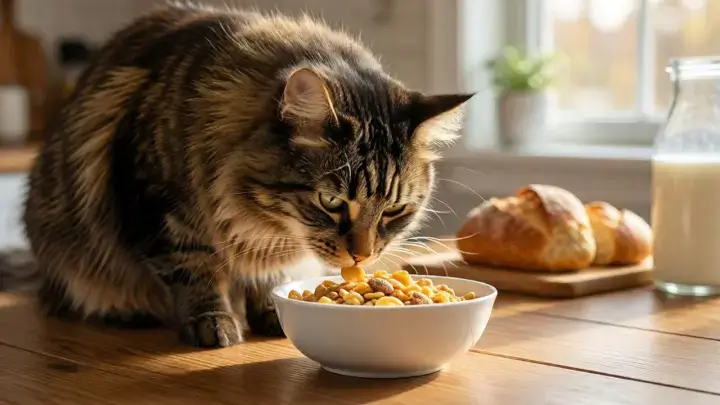
Cats often show curiosity about human food, especially when their owners are eating nearby. Breakfast time is one moment when this behavior becomes obvious. A cat may jump on the table, sniff the bowl, or try to lick a spoon filled with cereal and milk. This situation leaves many pet owners wondering: can cats eat cereal safely?
Cereal is a common breakfast choice for humans, but cats have completely different dietary requirements. Their bodies are designed to process meat-based nutrients rather than grains or sugary foods. Because of this, many everyday foods that seem harmless to humans may not be appropriate for cats.
The short answer is that cats can eat small amounts of plain cereal without immediate harm, but cereal should never become part of their regular diet. Most cereals contain ingredients that provide little nutritional benefit for cats, and some may even cause health problems if eaten frequently.
Understanding how cereal affects cats, what ingredients to watch for, and how to protect your pet from unhealthy snacks is important for every cat owner.
Understanding What Cats Naturally Eat
To understand whether cereal is suitable for cats, it helps to first look at what cats are meant to eat. Cats are classified as obligate carnivores, which means their bodies depend on nutrients found mainly in animal-based foods.
In the wild, cats survive by hunting small animals such as mice, birds, and insects. These prey provide the nutrients that cats need to stay healthy. Important components of a cat’s natural diet include high-quality protein, essential amino acids like taurine, and healthy fats.
Grains and carbohydrates play a very small role in a cat’s nutritional needs. Their digestive system is shorter and more specialized compared to omnivores, making it less efficient at processing plant-based foods. While cats can technically digest some carbohydrates, they do not rely on them for energy in the same way humans do.
Because cereal is primarily made from grains, it does not align well with a cat’s natural diet.
What Is Cereal Made Of?
Cereal comes in many varieties, but most breakfast cereals share similar ingredients. They are usually made from processed grains such as wheat, corn, rice, or oats. These grains are often combined with sugar, flavorings, and sometimes dried fruits.
Many cereals also contain additives that improve taste and texture. While these ingredients are safe for human consumption, they are not always ideal for animals, especially cats.
Typical ingredients found in cereal include carbohydrates, added sugar, salt, artificial flavors, and sometimes dairy when served with milk. These components make cereal appealing for people but offer little nutritional value to cats.
In some cases, certain cereal ingredients may even cause digestive discomfort in felines.
Is Cereal Safe for Cats?
Plain cereal without sugar or additives is not toxic to cats. If a cat eats a small piece of plain cereal, it will likely pass through the digestive system without causing serious harm.
However, most cereals sold in stores are far from plain. Many contain sweeteners, chocolate, artificial flavorings, or other ingredients that are not suitable for cats.
Because of these factors, cereal should only be treated as an accidental snack rather than a deliberate treat. Feeding it regularly can lead to nutritional imbalance or digestive issues.
Cats thrive best when their diet consists mainly of balanced cat food designed specifically for their needs.
Why Cats Are Attracted to Cereal
It may seem strange that a carnivorous animal would be interested in cereal. In many cases, the attraction is not actually the cereal itself.
Cats are naturally curious creatures. They investigate anything that smells new or interesting. If their owner is eating something, they often assume it might be worth exploring.
Another reason is milk. Many people eat cereal with milk, and the smell of dairy products can attract cats. Even though cats may enjoy milk, many adult cats have difficulty digesting lactose.
The combination of milk and cereal may therefore appear appealing to a cat, even though it is not particularly healthy for them.
Possible Risks of Feeding Cereal to Cats
While a small piece of plain cereal is unlikely to cause immediate harm, regular consumption can create problems for a cat’s health.
One concern is the high carbohydrate content. Cats do not require large amounts of carbohydrates, and too many carbs can contribute to weight gain. Obesity is a growing issue among domestic cats and can lead to other health problems such as diabetes and joint stress.
Another risk involves sugar. Many breakfast cereals are heavily sweetened. Sugar offers no nutritional benefit to cats and can contribute to dental issues, weight gain, and metabolic problems.
Certain cereals also contain ingredients that are harmful to cats. Chocolate-flavored cereals, for example, may contain compounds that are toxic to animals. Raisins or dried fruits included in some cereals may also cause digestive distress.
Even salt levels can be problematic. Some cereals contain more sodium than a cat should consume, particularly if eaten frequently.
Because of these factors, cereal should not be considered a safe or healthy treat for cats.
Can Cats Eat Cereal With Milk?
Many people assume that cats naturally love milk, but the reality is more complicated. While kittens can digest their mother’s milk, most adult cats gradually lose the ability to process lactose.
When an adult cat drinks cow’s milk, it may experience digestive problems such as stomach pain, diarrhea, or bloating. When milk is combined with cereal, the risk of stomach upset becomes even higher.
Even if a cat seems interested in milk and cereal, it is better to avoid offering this combination. Clean drinking water remains the best source of hydration for cats.
Plain Cereal vs Sweetened Cereal
If a cat manages to eat a small piece of cereal, the type of cereal makes a difference.
Plain cereals made from simple grains are less likely to cause harm. These cereals usually contain fewer additives and less sugar.
Sweetened cereals, on the other hand, are much less suitable for cats. They often contain large amounts of sugar, artificial flavors, and sometimes chocolate or other ingredients that should never be consumed by pets.
Highly processed cereals also provide no meaningful nutritional value for cats. Even if they are not immediately dangerous, they do not support a cat’s health.
How Cereal Affects a Cat’s Digestion
Cats have digestive systems designed to process meat efficiently. When plant-based foods like cereal are introduced, the body may struggle to break them down properly.
A small amount may pass through without noticeable effects, but larger portions can lead to digestive upset. Some cats may experience symptoms such as mild stomach discomfort, gas, or loose stools.
Because cats vary in sensitivity, reactions may differ from one animal to another. Some may tolerate a small bite without issues, while others may show signs of irritation quickly.
For this reason, it is best to keep cereal away from your cat whenever possible.
What to Do If Your Cat Eats Cereal
If your cat steals a few pieces of cereal from your bowl, there is usually no need to panic. In most cases, the amount consumed is too small to cause serious harm.
However, it is still wise to monitor your pet for any unusual behavior. Signs of digestive discomfort might include vomiting, diarrhea, or a sudden loss of appetite.
If the cereal contained chocolate, raisins, or other questionable ingredients, contacting a veterinarian may be a good idea. Quick guidance from a professional can help ensure your cat remains safe.
Keeping cereal bowls out of reach is the easiest way to prevent these situations.
Healthier Snack Options for Cats
Since cereal is not a suitable treat, many cat owners look for alternatives that are both safe and nutritious.
Cats generally benefit from snacks that are rich in protein and low in carbohydrates. Small portions of cooked meat are usually a much better choice than grain-based foods.
Cooked chicken, turkey, or fish can be offered occasionally as a treat. These foods align more closely with a cat’s natural dietary needs.
There are also commercial cat treats available that are formulated specifically for feline nutrition. These treats are designed to provide flavor while maintaining a healthy balance of nutrients.
Offering species-appropriate snacks helps ensure your cat stays healthy and satisfied.
Preventing Cats From Eating Human Food
Cats develop habits quickly, especially when it comes to food. If they receive human snacks regularly, they may begin to beg or steal food from the table.
One of the best ways to prevent this behavior is consistency. Avoid feeding your cat from your plate and keep human food out of reach.
Feeding your cat at regular times with high-quality cat food can also reduce their interest in human meals. A well-fed cat is less likely to search for extra snacks.
Creating clear boundaries during mealtime helps maintain a healthy diet for your pet.
Final Thoughts
So, can cats eat cereal? Technically, a small amount of plain cereal is unlikely to harm a cat. However, cereal is not an appropriate food for felines and should not be offered intentionally.
Most cereals contain high levels of carbohydrates, sugar, and additives that provide little nutritional value for cats. When combined with milk, cereal may also cause digestive discomfort due to lactose intolerance.
Cats thrive on diets rich in animal protein and balanced nutrients specifically formulated for their needs. Instead of sharing breakfast foods, it is better to offer cat-safe treats that support their health.
Protecting your cat’s diet is one of the simplest ways to ensure a long, happy life. By understanding which foods are suitable and which should be avoided, cat owners can make smarter choices for their pets every day.
Frequently Asked Questions (FAQs)
Can cats eat cereal occasionally?
Cats can eat a very small amount of plain cereal occasionally without serious harm, but it should not become a regular treat.
Is cereal harmful to cats?
Most cereals are not toxic in tiny amounts, but many contain sugar, salt, and additives that make them unhealthy for cats if eaten frequently.
Can cats eat cereal with milk?
It is not recommended. Many adult cats are lactose intolerant, and milk can cause digestive issues such as diarrhea or stomach discomfort.
What happens if my cat eats sweet cereal?
If a cat eats a small piece of sweet cereal, it may not cause immediate harm. However, sugary cereals should be avoided because they offer no nutritional benefit.
Can kittens eat cereal?
Kittens should not eat cereal. Their developing bodies require a carefully balanced diet designed specifically for young cats.
Why does my cat try to eat my cereal?
Cats are curious animals and often investigate whatever their owners are eating. The smell of milk or curiosity about new food may attract them.
What human foods are safe treats for cats?
Small amounts of cooked chicken, turkey, or fish can be safer treat options compared to cereal or sugary foods.
For More Visits: Animalsinfo
Also Read: Can Cats Eat Beets? 7 Safe Benefits for Cats in 2026