


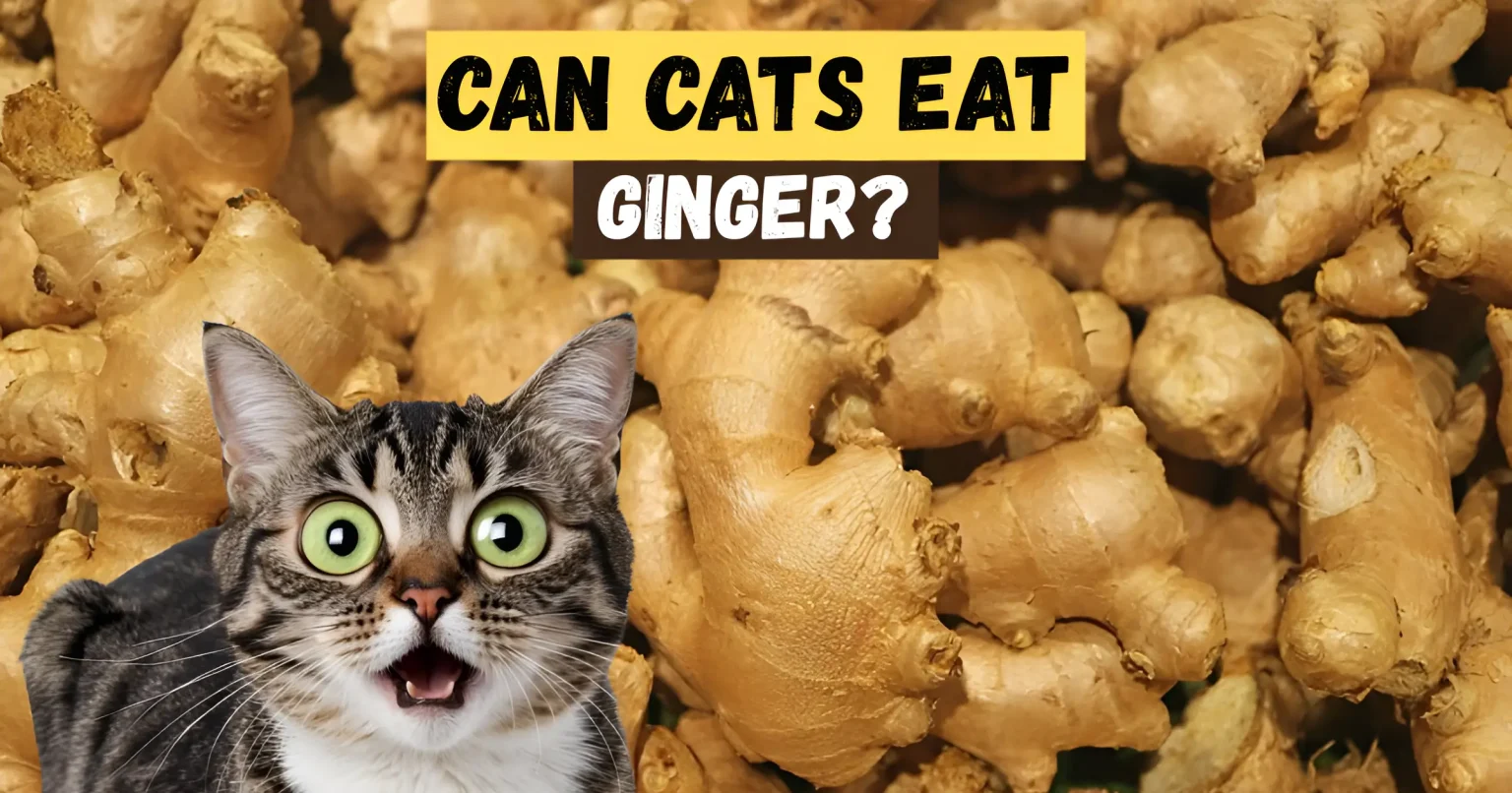
If you have ever been cooking with fresh ginger and noticed your cat sniffing around with that characteristic investigative curiosity, or if your cat accidentally got into something ginger-flavored, you are probably wondering whether ginger is safe for cats or whether it belongs in the same danger category as some other human foods. Can cats eat ginger? Ginger occupies an interesting and somewhat nuanced space in the world of feline nutrition — it is not classically toxic to cats the way onions, grapes, or citrus are, but it is also far from a straightforward safe food, and the form in which ginger appears, the quantity involved, and your individual cat’s health status all play meaningful roles in determining whether exposure is something to brush off or something to take seriously.
What Ginger Actually Is and Why Cats React to It
Ginger is a flowering plant whose root, commonly called ginger root or ginger rhizome, has been used for thousands of years in cooking and traditional medicine across many cultures. The sharp, warm, slightly spicy flavor and aroma of ginger come from a collection of active compounds, most notably gingerols in fresh ginger and shogaols in dried or cooked ginger. These compounds are responsible for the medicinal properties attributed to ginger in humans — anti-nausea effects, anti-inflammatory properties, digestive support — and they are also the compounds that make ginger a complicated ingredient when it comes to cats.
Most cats, when they encounter fresh ginger, will show a reaction somewhere between indifference and mild aversion. The sharp, pungent aroma of ginger is not in the same category of overwhelming repulsion that citrus produces in cats, but it is strong enough that many cats simply walk away from it. Some cats, however, show curiosity rather than aversion, particularly toward ginger that has been cooked into food and carries additional aromas from other ingredients. This curiosity does not indicate that ginger is safe for them — it just reflects the individual variation in feline scent preferences.
Is Ginger Toxic to Cats
The question of toxicity is always the first and most important one to address. Ginger is not listed among the foods that are classically and definitively toxic to cats by major veterinary poison control organizations. It does not cause the acute kidney failure associated with grape and raisin ingestion, the red blood cell destruction caused by onion and garlic, or the neurological damage linked to certain other toxic substances. In that specific sense, ginger does not sit in the most dangerous category of foods cats might encounter.
However, the absence of acute toxicity does not translate to safety, and this is a distinction that matters enormously in practical terms. Ginger contains active compounds that can cause real physiological effects in cats, and those effects are not always benign. The gingerols and shogaols present in ginger are bioactive substances that interact with the digestive system, the circulatory system, and potentially the blood’s clotting mechanisms. A food does not need to be classified as toxic to cause harm, and ginger is a clear example of that principle.
The Specific Ways Ginger Can Affect a Cat’s Body
Understanding what ginger actually does inside a cat’s body is the most useful framework for making informed decisions about exposure. The effects vary considerably depending on the amount consumed, the form of ginger involved, and the individual health status of the cat.
The digestive system is where ginger’s effects are most immediately noticeable. In humans, ginger is well known for its ability to soothe nausea and settle an upset stomach, and there is some veterinary literature suggesting that very small amounts of ginger may have a similar mild anti-nausea effect in dogs. For cats, the picture is less clear and considerably less straightforward. A cat’s digestive system is far more sensitive than a human’s and is optimized for processing animal protein rather than plant compounds. When a cat consumes ginger, the sharp bioactive compounds can irritate the gastrointestinal lining rather than soothe it, resulting in vomiting, diarrhea, and stomach discomfort. This is somewhat paradoxical — a substance associated with anti-nausea effects in one species can cause the very symptoms it supposedly prevents in another.
The blood-thinning properties of ginger are another area of legitimate concern, particularly for cats with certain health conditions. Ginger has demonstrated antiplatelet effects, meaning it inhibits the clotting of blood by interfering with platelet aggregation. For a healthy human consuming ginger in normal dietary amounts, this effect is mild and generally beneficial. For cats, particularly those with clotting disorders, those recovering from surgery, or those taking any kind of medication that already affects blood coagulation, ginger’s antiplatelet properties could contribute to problematic bleeding or slow wound healing. This is a concern that most cat owners would never think to connect to something as seemingly innocuous as ginger, but it is medically real and worth understanding.
Ginger also has mild hypoglycemic properties, meaning it can influence blood sugar levels. For cats with diabetes who are being managed on insulin or other glucose-regulating treatments, even small amounts of ginger could theoretically interfere with blood sugar stability in ways that complicate their management. This is not a reason for panic if a diabetic cat gets a minor exposure to ginger, but it is a reason to mention any ginger exposure to your veterinarian if your cat has diabetes.
Fresh Ginger vs. Dried Ginger vs. Ginger Powder vs. Ginger in Processed Foods
The form in which ginger appears makes a significant difference in the level of concern associated with a cat’s exposure to it, and this is something that rarely gets discussed with sufficient depth in general pet health content.
Fresh ginger root in small amounts is probably the least concerning form of ginger from a concentration standpoint. The bioactive compounds are present but are diluted within the water content of the raw root, and a cat that licks or nibbles a small piece of fresh ginger is unlikely to consume enough of the active compounds to cause serious harm. Mild digestive upset remains possible, but acute toxicity from a small fresh ginger exposure in a healthy cat is unlikely.
Dried ginger and ginger powder are considerably more concentrated than fresh ginger. The drying process removes water while leaving the bioactive compounds intact, which means a much smaller physical quantity of dried ginger delivers a much higher dose of gingerols and shogaols than the equivalent volume of fresh ginger. A cat that gets into ginger powder in a kitchen spice cabinet or ingests food heavily seasoned with dried ginger has consumed a more potent dose than the fresh root equivalent would suggest.
Ginger in processed human foods is often the most problematic category of all, not because of the ginger itself but because of what accompanies it. Ginger cookies, ginger snaps, gingerbread, ginger ale, ginger candies, ginger stir-fry sauces, and ginger-flavored marinades all combine ginger with other ingredients that range from inappropriate to genuinely toxic for cats. Sugar, artificial sweeteners including xylitol which is extremely toxic to pets, butter, flour, garlic, onion, and various artificial flavors and preservatives all appear alongside ginger in processed foods and create a combined risk profile that is far more serious than ginger alone. A cat that eats a ginger snap is not just encountering ginger — they are encountering a combination of ingredients, most of which have no place in a cat’s diet.
Ginger essential oil deserves the same serious caution that applies to all essential oils where cats are concerned. Essential oils are highly concentrated plant extracts, and cats’ limited ability to metabolize certain organic compounds through their liver makes essential oil exposure a genuine toxicity risk. Ginger essential oil should never be applied to a cat’s skin or coat, should not be diffused in enclosed spaces where a cat spends significant time, and should be stored completely out of a cat’s reach.
What a Tiny Amount of Ginger Actually Does to Most Cats
For the majority of healthy adult cats, a genuinely small, incidental exposure to plain fresh ginger — a brief lick of a ginger root, a small nibble of a piece that fell on the floor — is unlikely to produce anything more serious than temporary digestive upset or no symptoms at all. Many cats will simply show no interest in ginger and walk away, making the entire question moot in practical terms.
When symptoms do occur from minor ginger exposure, they typically include mild vomiting, loose stools, or excessive drooling that resolves within a few hours as the compound passes through the digestive system. These symptoms are uncomfortable for the cat but not dangerous in the context of a small, one-time exposure in an otherwise healthy animal.
The threshold for concern rises significantly with larger amounts, more concentrated forms, ginger combined with other problematic ingredients, and cats that have underlying health conditions affecting their digestive system, blood clotting, or blood sugar regulation.
When to Contact Your Veterinarian After Ginger Exposure
Reaching out to your veterinarian is the right move in several specific situations following ginger exposure. If your cat consumed a large quantity of ginger in any form, contact your vet and describe what was eaten and approximately how much. If your cat ate ginger as part of a processed food that contained other ingredients — particularly anything containing xylitol, garlic, or onion — treat it as a potentially serious situation and call your vet without delay.
If your cat has diabetes, a clotting disorder, liver disease, or is currently taking any medication, even minor ginger exposure is worth mentioning to your veterinarian at the next available opportunity, or sooner if any symptoms appear. Cats showing persistent vomiting beyond a few hours, signs of abdominal pain, unusual lethargy, loss of appetite lasting more than a day, or any bleeding from the gums or elsewhere after ginger exposure need veterinary evaluation promptly.
Should You Ever Deliberately Give Your Cat Ginger
Some online sources suggest that tiny amounts of ginger can be used to help cats with nausea or motion sickness, drawing on the established anti-nausea reputation ginger has in human medicine. While this idea is not entirely without basis, it is important to approach it with significant caution. Using any substance medicinally in a cat — even something considered relatively low risk — should only be done under the guidance of a veterinarian who knows your specific cat’s health history. Self-medicating a cat with ginger based on general internet advice is not recommended, particularly because the same properties that might theoretically ease nausea also carry the blood-thinning and gastrointestinal irritation risks discussed earlier.
If your cat has chronic nausea or motion sickness issues, a conversation with your veterinarian will yield far safer and more reliably effective solutions than experimenting with ginger. There are veterinary-approved medications and dietary approaches specifically designed for these situations in cats that do not carry the same uncertainty.
Frequently Asked Questions – Can cats eat ginger?
Can cats eat ginger biscuits or ginger snaps? No. Ginger biscuits and ginger snaps contain ginger combined with sugar, butter, flour, and often artificial flavorings or sweeteners. None of these ingredients are appropriate for cats, and some — particularly artificial sweeteners like xylitol — are outright toxic. Even if the ginger itself were not a concern, the other ingredients make these foods completely off-limits for cats.
Can I use ginger essential oil around my cat? This should be approached with real caution. Cats have limited ability to metabolize the concentrated organic compounds in essential oils, and ginger essential oil should not be applied to a cat’s skin or coat under any circumstances. Diffusing it in a well-ventilated space occasionally is lower risk than direct contact, but cats with respiratory sensitivities may still react negatively to diffused oils, and prolonged exposure in enclosed spaces is not advisable.
My cat ate ginger in a stir-fry. What should I do? Contact your veterinarian and describe all the ingredients in the stir-fry, not just the ginger. Stir-fry dishes commonly contain garlic, onion, soy sauce with high sodium content, and various seasonings — several of which are more immediately dangerous to cats than ginger. The full ingredient picture matters more than the ginger component alone in this situation.
Is ginger tea safe for cats? No. Cats should not drink ginger tea. Beyond the ginger content itself, hot liquids are obviously inappropriate for cats, and ginger tea often contains other additives like honey, lemon, or herbal blends that add their own concerns. Plain water is always the appropriate beverage for cats.
Can ginger help a cat with an upset stomach? While ginger has anti-nausea properties in humans, it is not a reliable or recommended remedy for feline digestive issues and can actually worsen gastrointestinal irritation in cats. If your cat has an upset stomach, contact your veterinarian rather than experimenting with home remedies including ginger.
Is powdered ginger more dangerous than fresh ginger for cats? Yes, significantly so. Ginger powder is far more concentrated than fresh ginger root because the drying process removes water while retaining the active compounds. A small amount of ginger powder delivers a much higher dose of bioactive substances than the equivalent volume of fresh ginger, making accidental exposure to ginger powder a more serious concern.
For More Visits: Animalsinfo