

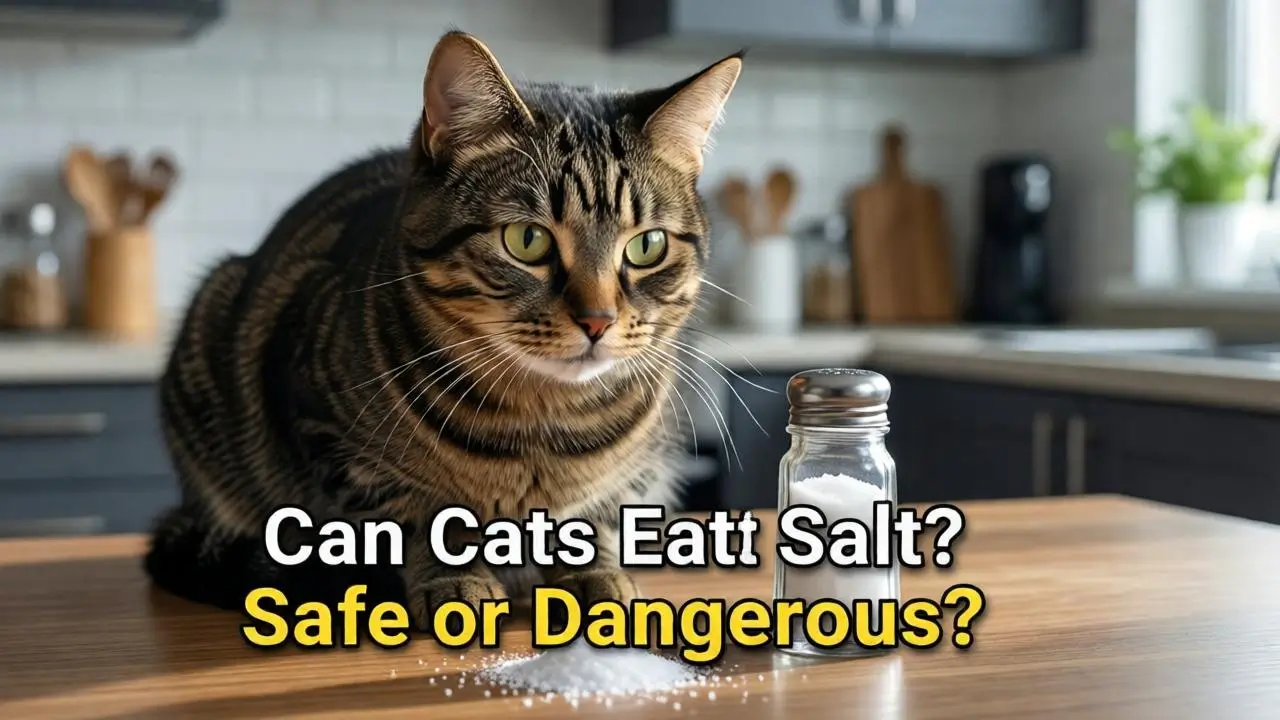
If you’re a cat owner, you’ve probably wondered at some point whether it’s safe for your cat to eat salt. It might seem like a small concern, but understanding how salt affects your cat’s body is essential for keeping them healthy. Many common foods in our homes contain salt, and even accidental exposure can raise questions about safety.
In this detailed guide, we’ll explore whether can cats eat salt, how much is safe, the risks of excessive intake, and how you can protect your pet from hidden dangers. By the end, you’ll have a clear and practical understanding of how to manage your cat’s diet responsibly.
Do Cats Need Salt in Their Diet?
Cats do require a small amount of sodium (a component of salt) to maintain normal bodily functions. Sodium plays a role in nerve function, muscle contraction, and fluid balance. However, the amount they need is extremely small compared to humans.
In the wild, cats get their sodium naturally from the prey they consume. Similarly, high-quality commercial cat foods are carefully formulated to include the right balance of nutrients, including sodium. This means your cat already gets all the salt it needs from its regular food.
There is no need to add extra salt to your cat’s diet. In fact, doing so can be harmful.
Can Cats Eat Salt?
Yes, cats can technically consume small amounts of salt without immediate harm. If your cat licks a tiny bit of something salty by accident, it usually won’t cause a problem.
However, this does not mean salt is safe as a regular part of their diet. Cats are not built to handle high sodium levels, and even moderate excess over time can lead to health complications.
So while salt isn’t toxic in tiny amounts, it should never be intentionally fed to cats.
Why Too Much Salt Is Dangerous for Cats
Excessive salt intake can lead to a condition known as sodium poisoning, or hypernatremia. This occurs when there is too much sodium in the bloodstream, disrupting the body’s natural balance.
When sodium levels rise, the body tries to compensate by pulling water out of cells. This leads to dehydration, which can quickly become serious in cats. Unlike humans, cats are not naturally heavy drinkers, so they may not compensate for this fluid loss effectively.
In severe cases, sodium poisoning can affect the nervous system and become life-threatening.
Signs of Salt Poisoning in Cats
Recognizing the symptoms early can make a big difference. If a cat consumes too much salt, you may notice several warning signs developing over time.
Common symptoms include excessive thirst and increased urination. You might also see vomiting or diarrhea, which can worsen dehydration. As the condition progresses, your cat may appear weak, tired, or disoriented.
In more serious cases, neurological symptoms can develop. These may include muscle tremors, twitching, loss of coordination, and even seizures. At this stage, immediate veterinary care is critical.
How Much Salt Is Too Much?
There is no simple number that applies to every cat, because safe intake depends on factors like age, weight, and overall health. However, one rule is universal: cats do not need added salt in their diet.
Even small but repeated exposure to salty foods can build up over time and create problems. That’s why it’s best to avoid giving your cat any food that contains added salt, even as an occasional treat.
Common Sources of Salt That Can Harm Cats
Many cat owners don’t realize how often salt appears in everyday foods. Human diets are typically high in sodium, and sharing these foods with your cat can expose them to unhealthy levels.
Processed snacks like chips, crackers, and salted nuts are obvious examples. But there are also less obvious sources, such as processed meats, canned soups, fast food, and ready-made meals. Even small amounts of these foods can be too salty for a cat’s system.
Another overlooked source is seasoned leftovers. Foods that seem harmless may still contain hidden salt and spices that are not suitable for cats.
Do Cats Even Like Salty Food?
Cats experience taste differently than humans. They lack the ability to taste sweetness and have a limited response to salty flavors. This means they are not naturally drawn to salt in the way people are.
If a cat eats something salty, it’s usually due to curiosity, texture, or smell rather than a preference for salt itself. This is another reason why there’s no benefit in offering salty foods—they don’t enhance your cat’s enjoyment in any meaningful way.
The Role of Hydration
Salt and hydration are closely connected. When sodium levels increase in the body, more water is required to maintain balance. If a cat doesn’t drink enough water, dehydration can develop quickly.
Cats are naturally low-thirst animals because they evolved to get moisture from their food. This makes them more vulnerable to dehydration when exposed to high salt levels.
Providing fresh, clean water at all times is essential. Wet food can also help support hydration, as it contains a higher moisture content than dry food.
Special Health Considerations
Some cats are more sensitive to sodium than others. Cats with kidney disease, heart conditions, or high blood pressure may require carefully controlled sodium intake.
In such cases, even normal levels of salt might need adjustment. However, these decisions should always be made under veterinary guidance. Making dietary changes on your own can do more harm than good.
Hidden Dangers: Salt Lamps and Unusual Sources
One surprising risk that many pet owners overlook is salt lamps. Some cats are attracted to these objects and may lick them repeatedly. This can lead to a dangerous buildup of sodium in their system.
Other unusual sources include playdough, certain cleaning products, and de-icing salts. Keeping these items out of reach is an important part of maintaining a safe environment for your cat.
Safe Alternatives to Salty Treats
If you want to treat your cat, there are far better options than salty foods. Specially made cat treats are designed with their nutritional needs in mind and contain safe levels of sodium.
You can also offer small portions of plain, cooked meat such as chicken or fish, as long as it is unseasoned and free from added salt. These options are much healthier and more appropriate for your cat’s diet.
What to Do If Your Cat Eats Too Much Salt
If you suspect your cat has consumed a large amount of salt, it’s important to act quickly. Do not try to treat the situation at home without guidance.
Contact a veterinarian as soon as possible. Early intervention can prevent serious complications and improve the chances of a full recovery.
Pay close attention to any unusual behavior, even if symptoms seem mild at first. Salt poisoning can develop gradually, and early signs should never be ignored.
Preventing Salt-Related Problems
Prevention is always better than treatment. Keeping your cat safe from excess salt doesn’t require complicated steps, but it does require awareness.
Avoid sharing human food with your cat, especially anything processed or seasoned. Store salty snacks securely, and make sure your cat cannot access them. Keep potentially harmful items like salt lamps out of reach.
Maintaining a consistent feeding routine with high-quality cat food is the best way to ensure your pet gets proper nutrition without unnecessary risks.
FAQs
1. Is a small amount of salt harmful to cats?
A tiny accidental amount is usually not harmful, but it should not become a regular part of their diet.
2. Can cats eat salty human food occasionally?
It’s not recommended. Even occasional exposure can contribute to long-term health issues.
3. Do cats need salt supplements?
No, cats get all the sodium they need from balanced cat food.
4. What happens if a cat eats too much salt?
It can lead to dehydration, vomiting, neurological symptoms, and in severe cases, life-threatening complications.
5. Are kittens more sensitive to salt than adult cats?
Yes, kittens are generally more vulnerable due to their smaller size and developing systems.
6. Can cats recover from salt poisoning?
Yes, with prompt veterinary care, many cats recover. However, severe cases can be dangerous.
7. Is wet food better for managing sodium intake?
Wet food helps with hydration, but sodium levels still need to be appropriate and balanced.
Final Thoughts
Salt might seem harmless, but for cats, it’s something that should be carefully controlled. While their bodies do need a small amount of sodium, they already get everything they need from properly formulated cat food.
Adding extra salt or sharing salty human foods introduces unnecessary risk. By keeping your cat’s diet simple, balanced, and free from excess sodium, you can help ensure a healthier and longer life.
A little awareness goes a long way. When it comes to your cat’s health, even small dietary choices can make a big difference.
For More Visits: Animalsinfo